
Why New England Looks Like Old England Should!
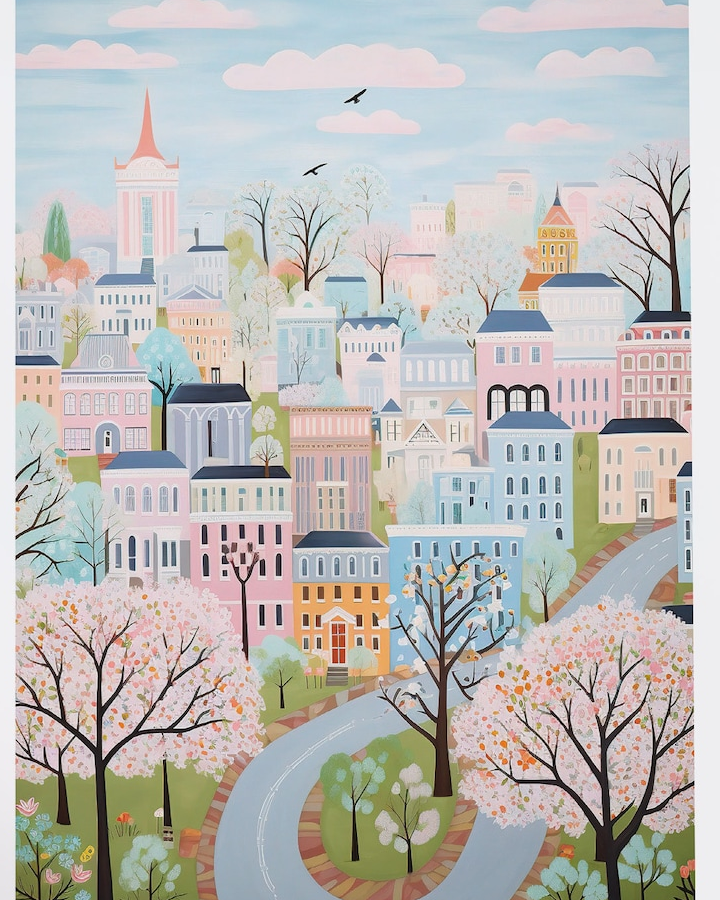
You have noticed that this site features lots of beautiful art, to inspire how England could look, if there was no litter, no vape shops, no multi-storey car parks and no massive ugly shopping centres!
What’s interesting is that despite the USA sometimes representing the worst of ‘urban sprawl’, the six states of New England are so beautiful, they kind of look like England should look, if councils and town planners had some vision!
Most of these states were founded by pilgrims who left England (that’s why you’ll find cities and towns called Plymouth, Boston etc). The six states of New England (which is on the northeast corner of the USA, near New York) are:
- Vermont
- Connecticut
- Maine
- Rhode Island
- Massachusetts
- New Hampshire
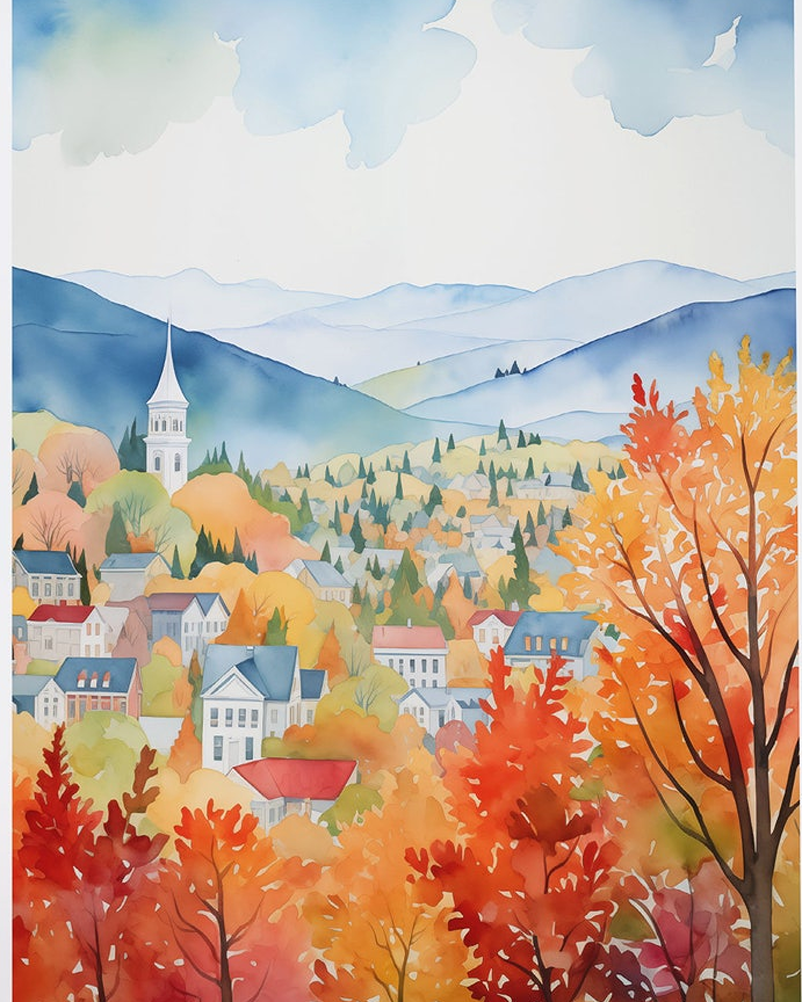
These (rather affluent) states are home to quiet roads, pretty white churches, lovely little main streets, maple trees, village greens, clean villages and community shops. Interestingly, the folks here tend to be quite liberal in their beliefs.
So unlike Texas (which supports the death penalty but has higher crime), here locals vote against it, and have lower crime rates.
Compare this with England: a traffic-logged country with litter strewn on streets and in rivers, noise and drunks on the street, and you have to drive to get to a supermarket or any other shop:
In New England (which feels more like old England), locals still meet up for coffee in local shops, and browse independent bookstores. People walk to the organic farmers’ market, to find pumpkins in autumn, to make soup and pie!
The Sunrise Guide is a coupon book in Maine, that is a great idea we could use. Each year, it produces tips on green living, with discount codes for small green shops and services. The books sell themselves (they pay for themselves in no time). And schools and non-profits can buy them on a sell-or-return basis, to raise local funds.
Main’s green campaigner Amara Ifeji says her favourite place is Chick Hill. Which in autumn foliage, ‘kind of looks like a Bob Ross painting’.
Life Moves Slower in New England
At the coast, small harbours have little boats that bob along, and there are preserved lighthouses where people can take in the history and sea air.
There are hundreds of miles of public footpaths, and vast belts of protected woodland like Vermont’s Green Mountain National Forest.
The architecture in New England is stunning. From colonial mansions to red brick townhouses, the churches all have white steeples, within walkable communities.
Inspired by Georgian English buildings, the simple detail is also found in meeting houses (Quakers had a strong influence here, which still remains in the simple yet beautiful building styles).
Summer brings music at local bandstands, and historic inns offer comfy beds, good coffee and home-cooked food. Old mills have been turned into artisan bakeries or artist studios. And streets keep their small-scale scale, so people walk, meet and chat. These towns have not lost their souls.
Give Your Town a Beauty Makeover!
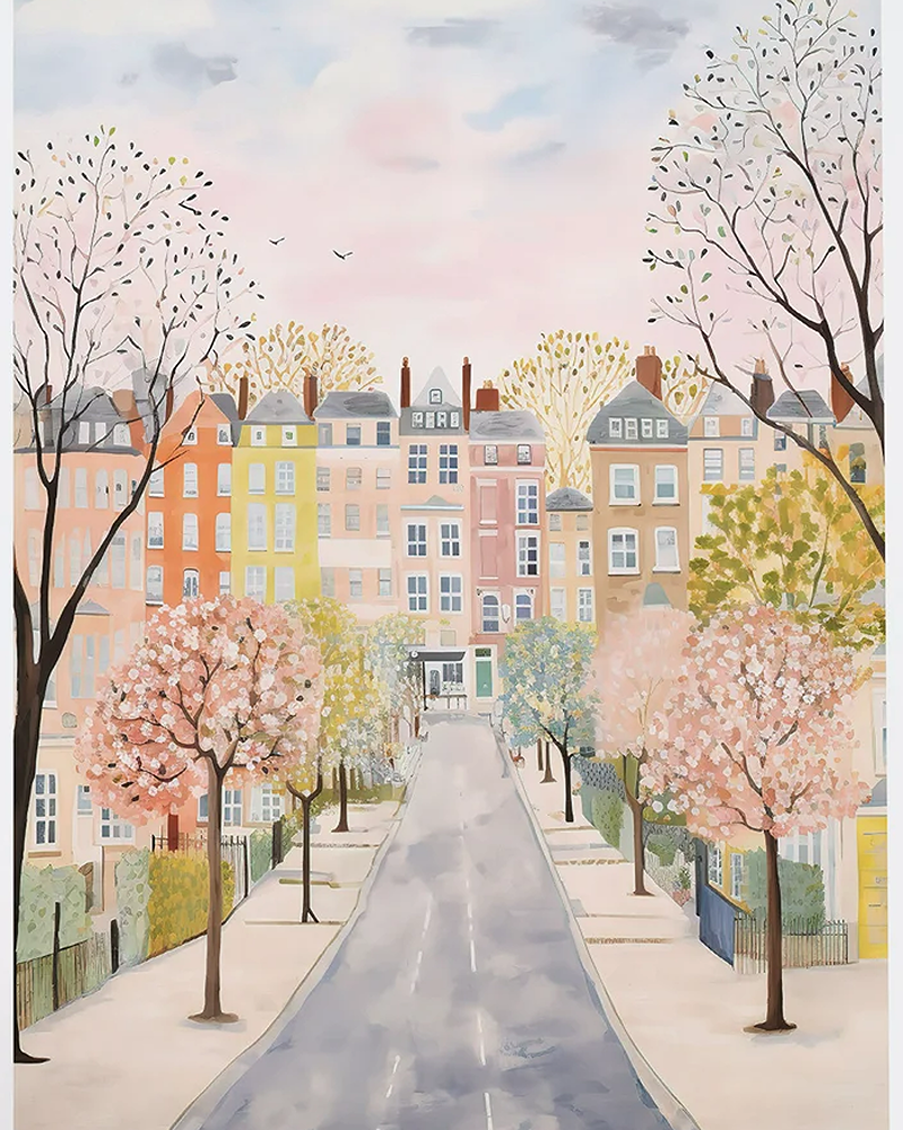
Although councils and businesses have a role to play, local people can do a lot to transform their town or village into a community paradise.
Giving your town or village a beauty makeover not only makes it a nicer place to live and work, but encourages (the right kind of) tourists, and also helps to do everything from improve mental health to reduce crime (which tends to reduce, in areas full of community spirit).
Often councils may mean well, but have not read the right kind of town planning books to know that it’s more lack of vision than lack of money, which is why towns are often ugly. But they can easily be transformed, quickly, with little legal hoops.
Before landscaping, read up on pet-friendly gardens (many plants/mulches are unsafe) and use nontoxic humane slug and snail deterrents. Also read about wildlife-friendly gardens.
Don’t plant flowers in railings, as deer eat flowers and could get stuck at night. Read more on helping wild deer.
Conduct a Community Survey
Get feedback from residents. Ask them what they would like to see. Create a simple questionnaire online and on paper, to reach everyone in your community. What do they want?
- More walkable spaces?
- More pocket parks?
- Are they concerned over litter?
- More indie shops?
- More spaces for old people
- More pet-friendly places?
- More stuff for youth to do?
- Any eyesore buildings?
Create a Vision – then a plan!
Once you know what you all want, it’s time to get to work. Create some kind of plan (find a creative landscape or graphic designer to come up with a good idea). Then find people with the skills to do the jobs that are needed – green building, litter-clearing, gardening, painting, landscaping etc.
Ask the council for permission, then get to work. You could makeover local animal shelters and homeless hubs, create community gardens and find urban areas for transform into teen meet-up areas.
Make areas inclusive:
- Add ramps, tactile crossings, and dropped kerbs.
- Brighten paths with wildlife-friendly lighting (avoid light pollution).
Makeover Your Town in Just 7 Weeks
David Engwicht (a former window washer and son of a gospel singer) is known worldwide for his inspiring ideas to re-imagine towns and reduce traffic (he helped to create the ‘walking shool bus’, and now has created a new website with a book to help makeover your town in 7 weeks. The book has 140 diagrams and 36 steps to work through, most are free or low-cost.
Creative Communities also offers a program where you download materials and support to makeover your community in a week. There’s a free sponsor’s guide to locate funding.
There was a time when people could build a building wherever they liked, which resulted in classic French villages and Italian hill towns, whose streets have an organic feel. Now we rely on one or two planners.
Cities define residents as ‘customers’ so the resident says ‘You provide the roads, remove the rubbish and fix the conflicts I have with my neighbours. I pay the money, you give me the product’.
At the same time, residents are saying ‘I no longer belong to a vibrant community, I no longer have a connection to my neighbours’. Cities need to hand back that responsibility to residents. David Engwicht