Toast Brewing (vegan beers made with bread waste)
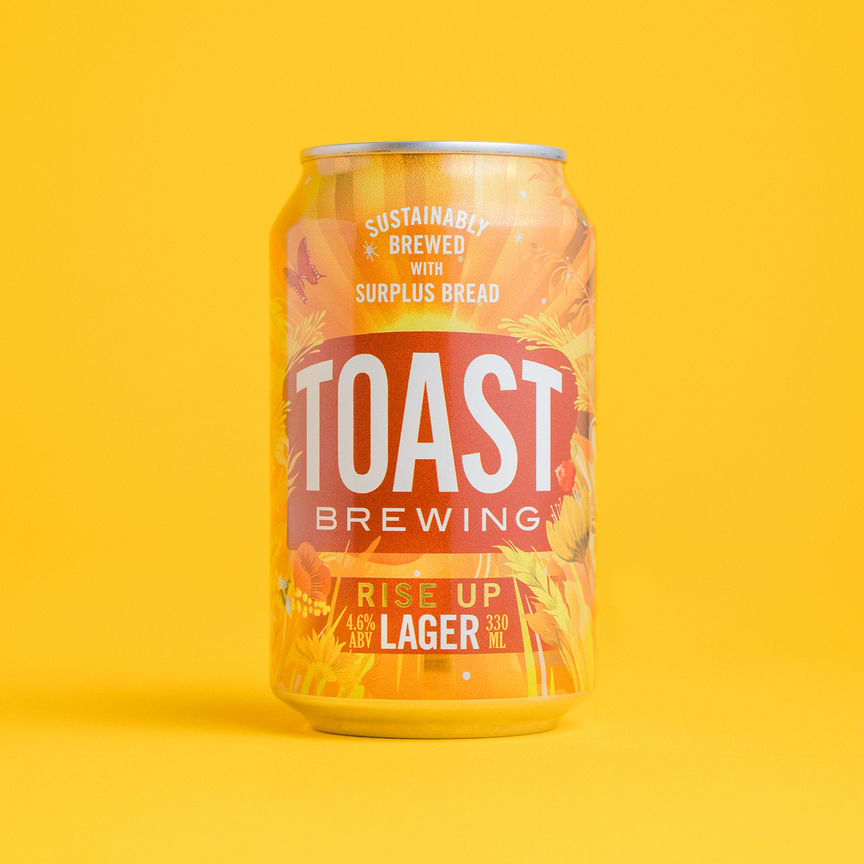
Toast Brewing is a unique range of vegan beer. Brewed in Staffordshire, it replaces around 25% of malted barley in their brewing recipes with surplus bread from bakeries, to help prevent food waste.
Before recycling cans, rinse then pop ring-pulls over holes. Step on upper cans to ‘pinch’ inner rims together, to stop wildlife getting trapped at recycling plants.
Due to being made with bread, the beers are not gluten-free.
Don’t give stale/mouldy/crusty bread to garden birds or wildlife, as it could choke (fat also smears on feathers, affecting waterproofing/insulation).
The brand was founded by food waste campaigner Tristram Stuart, who holds a Golden Share, to protect the mission of the company. 100% of profits help support his campaigns to prevent food waste worldwide (there is enough food thrown out each day, to feed everyone on earth).
Around 44% of bread bought in England is simply thrown away. So far it’s saved over 4 million slices from going to landfill.
The cans are made from aluminium, printed to avoid the need for labels. In the hospitality industry, labels are typically plastic due to set bottling and canning lines, and condensation from moving between ambient and chilled environments. Call your council or provide for appropriate recycling advice.
The range includes:
- Rise Up Lager – a refreshing Helles-style beer with English hops
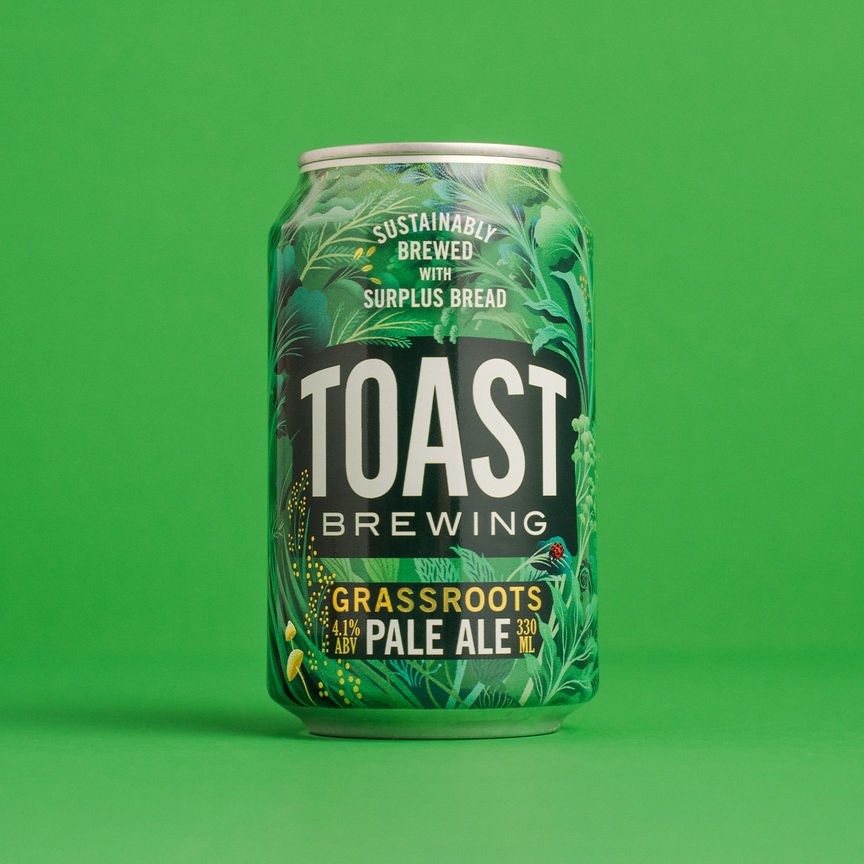
- Grassroots Pale Ale – a hazy pale ale with tropical flavours of passionfruit, peach and pineapple.
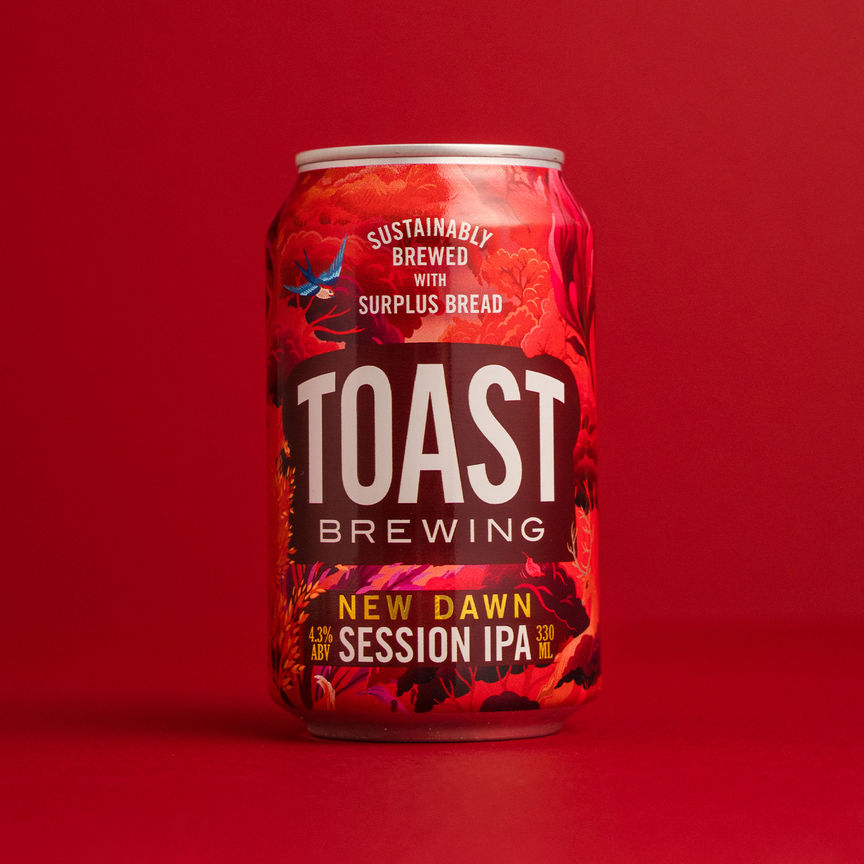
- New Dawn Session IPA – citrus and floral notes, with American hops.
You can buy online as single beer types or mixed cases (free delivery for orders over £40), with discounts for regular subscriptons. Also find stockists online (sold in many off licenses and Waitrose).
Changing Tides (a 0.5% alcohol beer)
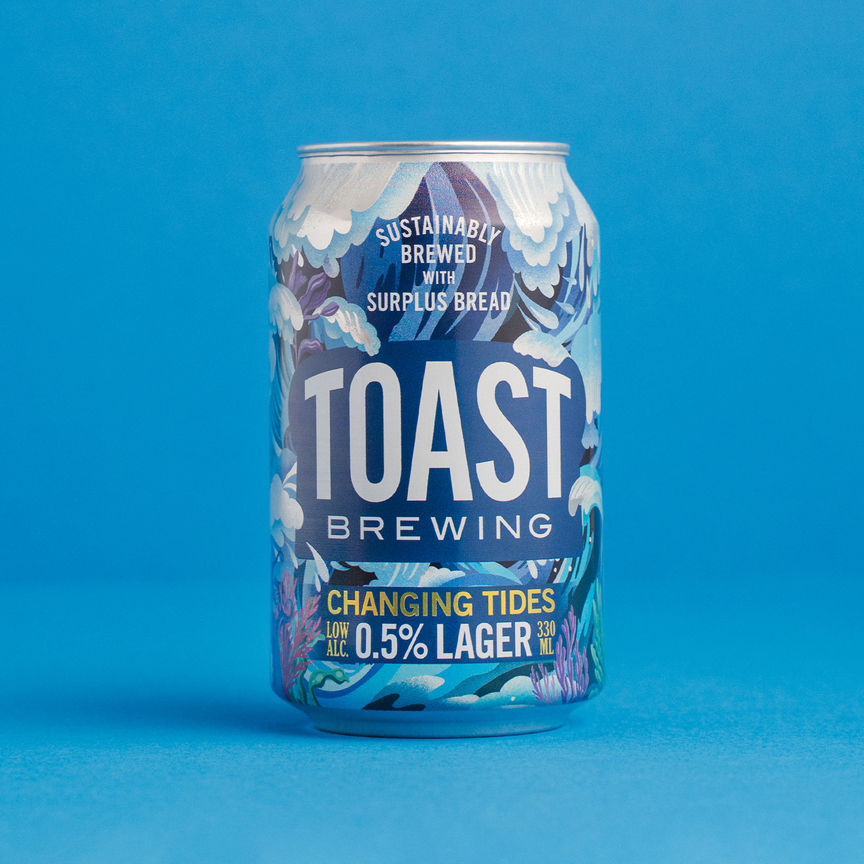
This beer is flavoured with citrus and spice, malted barley and English hops.
No alcohol can be 0% (even fruit or bread has a little). So 0.5% is the official percentage, best still avoided for pregnancy/nursing.