Emerald Green Economy: Zero-Waste Lessons from Ireland

Ireland is a beautiful place with lots of wild animals, many of which you won’t find here (and likewise, Ireland has no snakes – the common lizard is Ireland’s only reptile).
Wild Atlantic Women is the story of a second-generation London Irishman who walks the 2500 km from Cork to Donegal, in the footsteps of 11 pioneering women. The journey begins with the author’s own great-grandmother (a lacemaker on Cape Clear Island (just off Cork, the southern most inhabited place on the Emerald Isle).
At a crossroads in her life, Gráinne sets out to travel Ireland’s west coast on foot. Walking through history, her journey reveals unexpected insight into travelling alone as a woman, the trappings of an ‘ideal life’ and emigrant identity. All against the backdrop and power of this great ocean.
Gráinne Lyons is a writer and documentary maker from London, whose Irish parents still live on the Emerald Isle. She holds an MA in Creative and Life Writing and a BA in English Literature.
Always follow the Countryside Code to keep all creatures safe. Keep dogs away from steep banks, mushrooms (and toxic plants/trees) and on leads near birds, barnyard friends and wild ponies.
If at the coast, keep away from nesting birds and never walk on sand dunes. Learn how to keep dogs safe by the seaside (check beach bans before travel).
If you see a sheep on its back (due to pregnancy or rain-soaked wool), grab a handful of wool on the sheep’s side and gently roll it away from you (to right it back up (simple video). Then stay with it, until the sheep recovers and rain has drained off the wool. Sheep stomachs will ferment grass even when upside down, and this puts pressure on the lungs and heart, so they will die if nobody helps them get back upright.
Places to note include:
- The Cliffs of Moher stretch along County Clare’s western edge, battered by the sea and wind, and home to thousands of nesting seabirds, from puffins and kittiwakes to razorbills and guillemots. On a clear day, you can see the Aran Islands and Galway Bay.
- Killarney National Park has over 25,000 acres of woodlands, lakes, rivers and mountains. It’s the only place in the country where native red deer have survived since the last Ice Age. The landscape is alive with ferns, mosses, and wildflowers.
- The Burren stretches across northern Clare and southern Galway, one of Ireland’s most beautiful places: cracked limestone that bursts with wildflowers in summer (orchids and gentians).
- Connemara (County Galway) has mountains and rivers, and a wild coast with rocky islands, here you’ll find Twelve Bens mountains and wild ponies, along with rich birdline (golden plovers, merlins and even peregrine falcons).
- The Wicklow Mountains (just south of Dublin) have rolling moors and thick forests amid rain and morning mist, shaped by Ice Age glaciers, that left behind deep lakes. Lough Tay has dark water and white sand, and is known as ‘the Guinness lake!’
Wild creatures on the Emerald Isle

- With a beak as bright as a circus clown’s nose, puffins bring a splash of colour to Ireland’s cliffs. These seabirds (only found mostly in Northumberland in England) thrive here, only spending a few months on land to breed. In England, there has been a recent ban on sandeel fishing to protect dwindling numbers of both puffins and kittiwakes.
- Red squirrels in England are still endangered, but this country has got things right by rewilding pine martens (natural predators of greys) to keep nature in balance, without culls or laws banning wildlife rescues to help grey squirrels, as happens in England.
- Ireland has the same controversy with badgers, with many culled, despite solutions already known like stopping cattle-to-cattle transmission). In Northern Ireland, a Bill for badger culls got thrown out.
- Corncrakes are Irish birds with haunting raspy calls, related to coots and moorhens. They are almost extinct in England, with most numbers only found in Scotland.
Three Books on Irish Nature and Wildlife

Step Into Nature is a beautifully illustrated weekly Irish nature diary, showcasing intricate ecosystems of old stone walls, to a rare pink grasshopper resting on the seed head of a bird’s foot trefoil on Finnamore Lake in Lough Boora.
Hand-drawn sketches accompany beautiful photographs. Meet colourful fungi nestled in decaying leaves, unusual finds (candlesnuff, glistening inkcap, scarlet caterpillarclub). There’s a fungus called ‘yellow brain’ that feeds off fungi grown on fallen brunches plus orchids, robins and beautiful birdsong.
Rachel McKenna is a naturalist and architect who has spent the last five years observing, recording, photographing and drawing a diverse range of Irish wildflowers, insects and mammals.
An Irish Nature Year
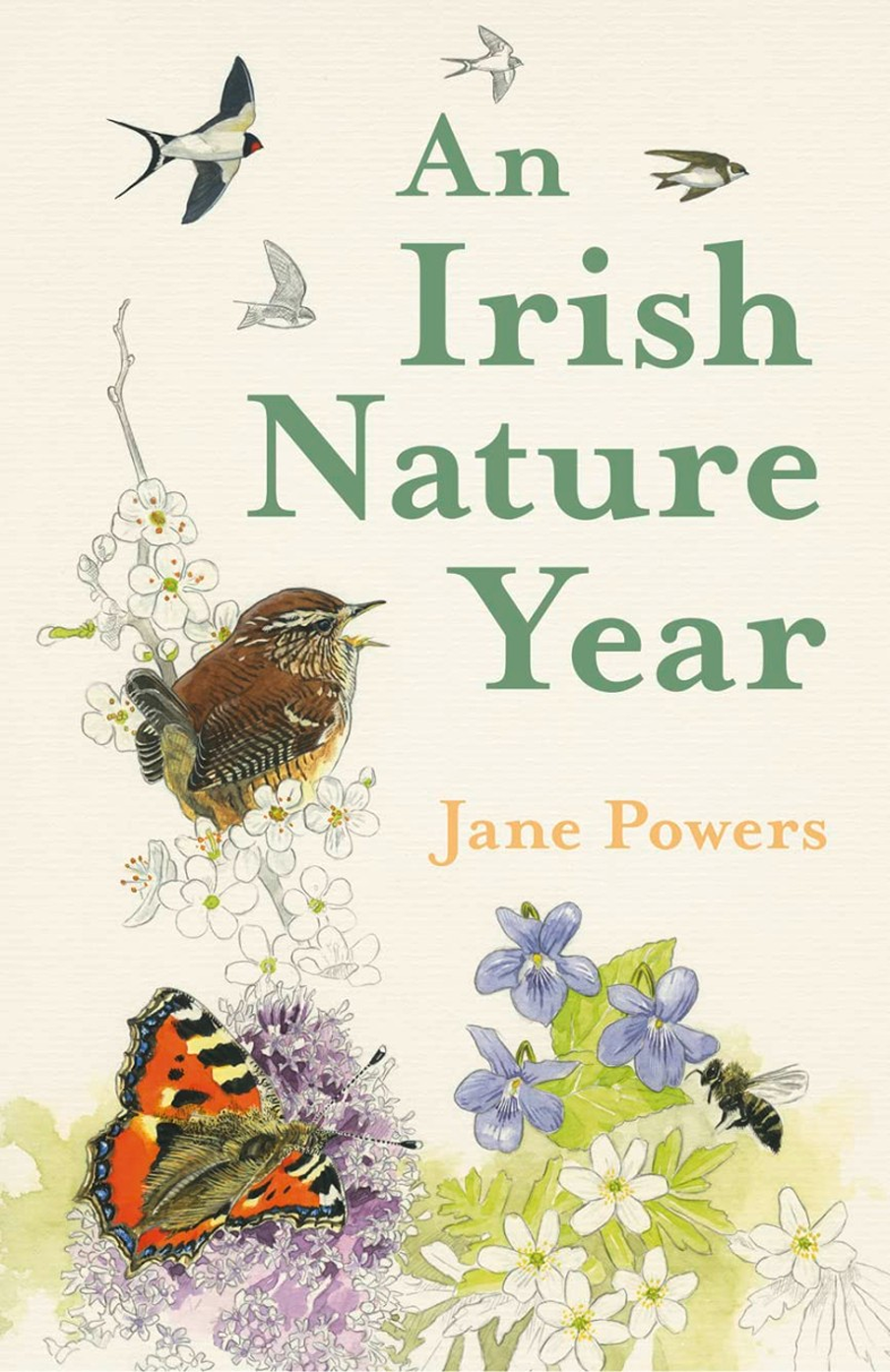
An Irish Nature Year offers a daily meditation, in this illustrated yearbook, for you to enjoy 5 minutes each day exploring the mysteries of the seasons. From ‘weeds’ in the pavement cracks to surprising inhabitants of vacant lots to unusual finds alongside our shoreline and hedgerows, you’ll find Ireland’s natural world makes for great bedtime reading!
- Who’s cutting perfect circles in your roses?
- Which birds wear feathery trousers?
Whales can be seen from the headlands, as can basking sharks, the gentle giants of the fish world. Some of our plants and animals are bafflingly absent from Britain. Among these are the Kerry slug and Saint Patrick’s Cabbage.
Jane Powers is a nature writer and newspaper columnist who was gardening correspondent for many years for both the Irish Times and Sunday Irish Times.
More treasures of Irish nature
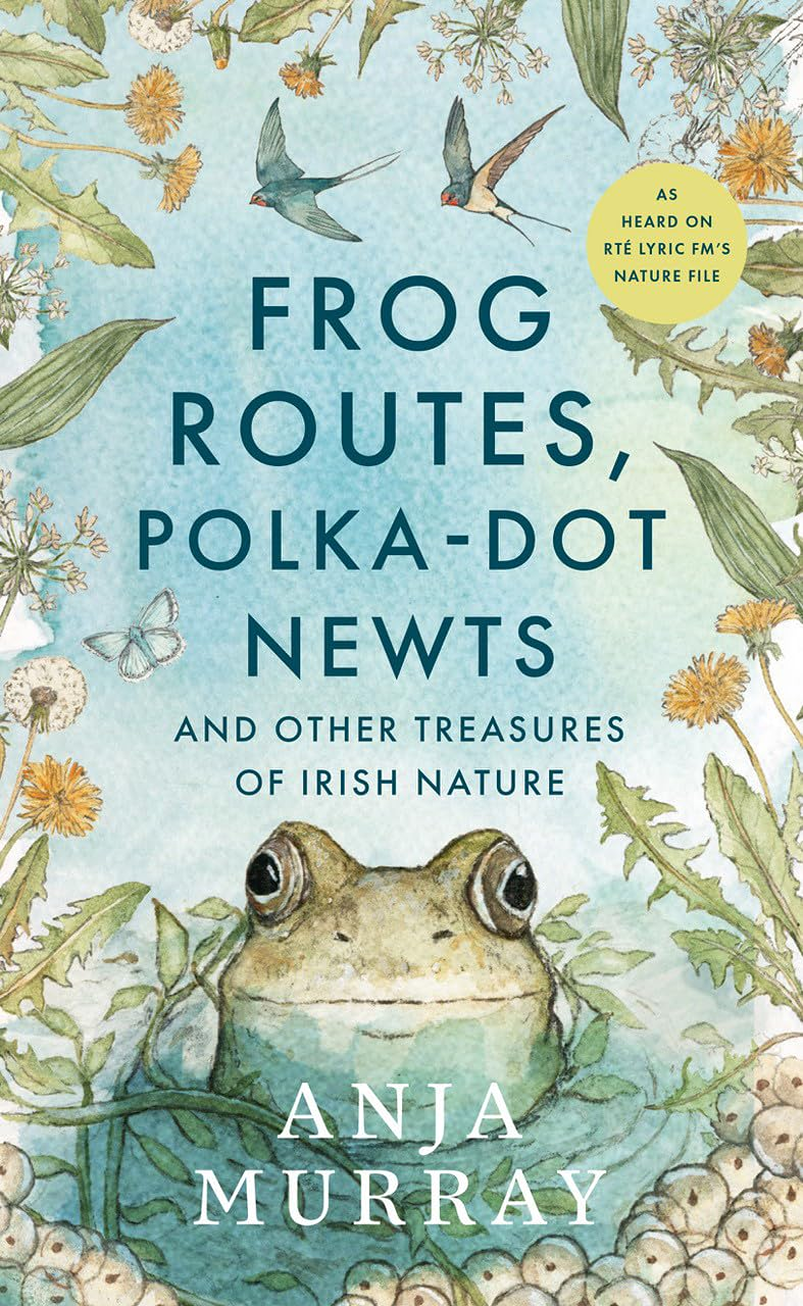
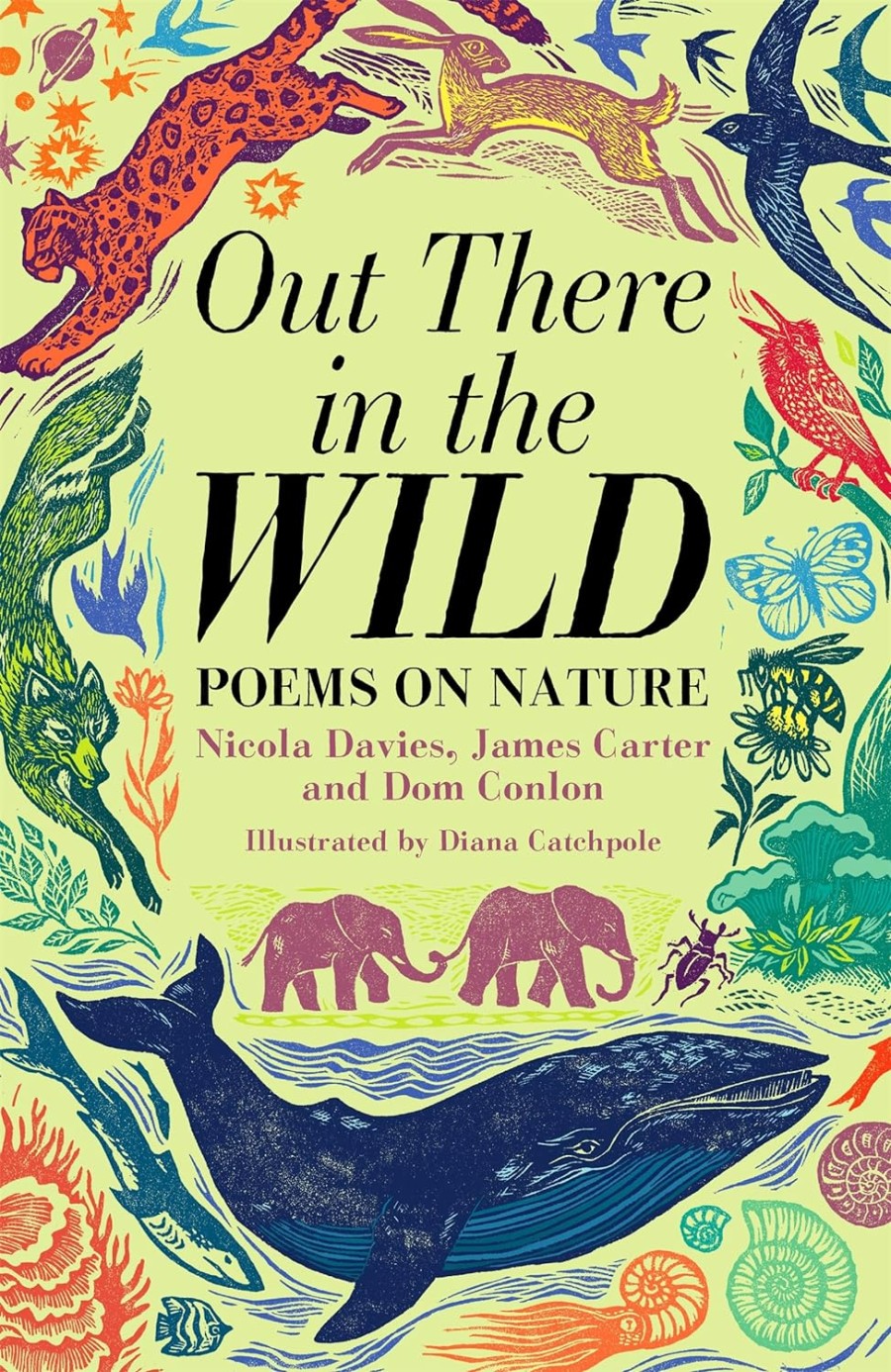
Frog Routes, Polka-Dot Newts and Other Treasures of Other Nature will instil a love and appreciation for the natural world. You’ll learn about the origins of feral pigeons and primroses to endangered sea turtles. Witness the extraordinary mating rituals of frogs and hares. And discover the secret language of wild mice, in their epic daily battle to survive.
The antics that go on, honestly! Caterpillars that sing, squeezing body parts together to make a squeaky chirping noise, calling in ants for assistance and protection. Wood mice using sticks, stones and shells to make signposts for themselves, to a grove for a fresh spring feast. Life is unfathomably elaborate.
Anja Murray is an ecologist, environmental broadcaster and writer, who has devoted her career to the protection and restoration of nature. Her first book Wild Embrace was a bestseller in Ireland.
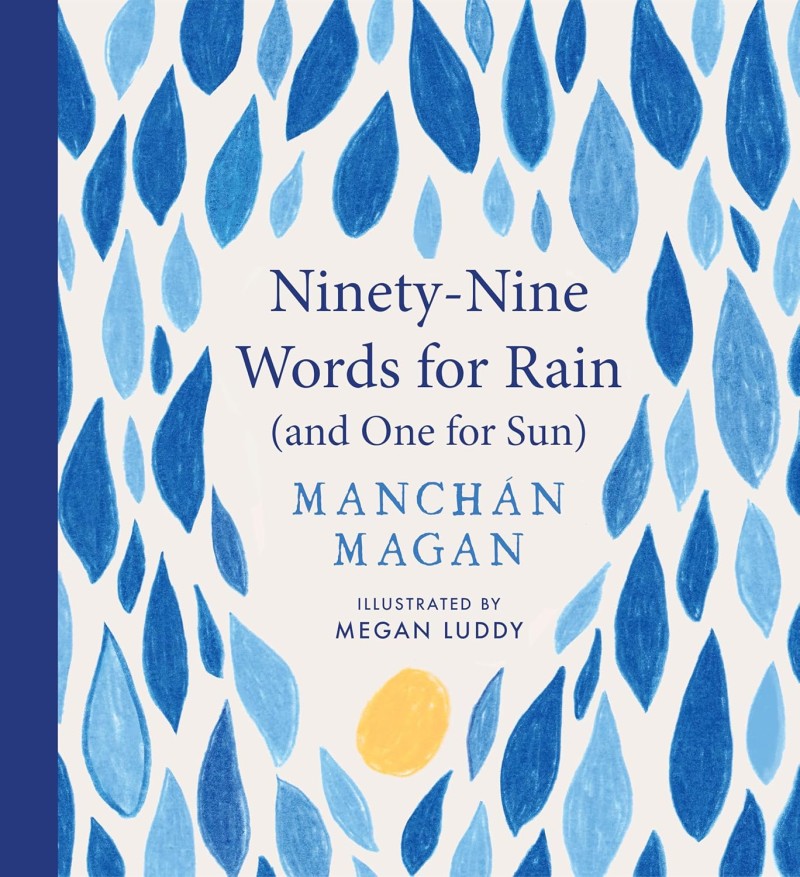
Ninety-Nine Words for Rain (and one for Sun) meets the néaladóirí (cloud-watchers) and réadóirí (star-gazers) from our past who without the luxury of Met Éireann observed birds, trees and animals (plus markers on land and sea) for signs of changing weather.
The heron’s behaviour offered hints: Aimsir chrua thirim nuair a bhíonn an corr éisc suas in aghaidh srutha chun na sléibhte (when the heron flies upstream to the mountains, the weather will be dry). Fearthainn nuair a thagann sí an abhainn anuas (when she goes downstream, it will rain!)
Evoking countless shivery experiences on this Atlantic-swept Emerald Isle, this beautifully illustrated gift book uses Irish words to grasp an almost-lost world through the wisdom stored in the Irish language.
Manchán Magan is a writer and documentary-maker, who writes for the Irish Times and reports on radio. He lives in County Westmeath.
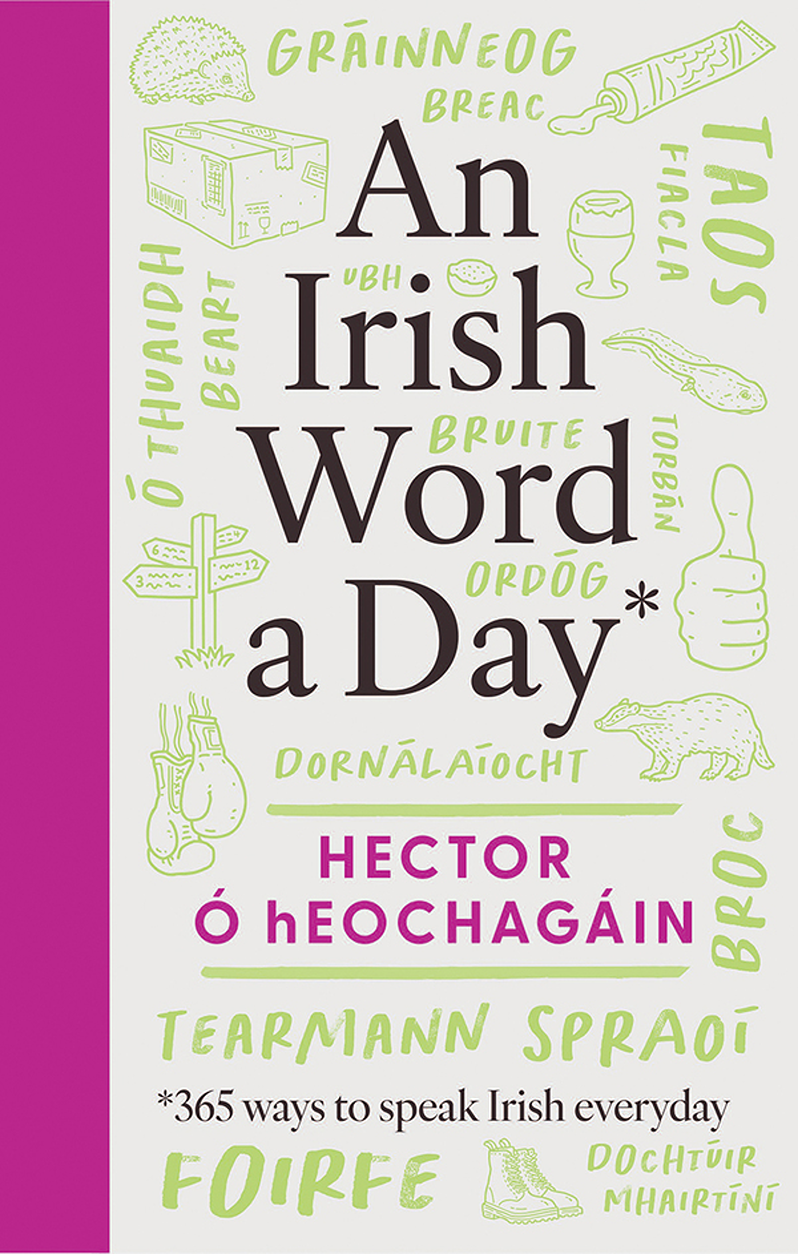
An Irish Word a Day is a unique book to teach us how to learn one word of this very difficult language each day. So in a year, you’ll have quite the vocabulary.
In England, many people have Irish heritage (especially in Liverpool), and considering our country is renowned for being complete rubbish at learning other languages, this is a book much-needed.
Wales and Scotland have their own languages (and so does Cornwall). So it’s about time we all learned a few words to get by in the Emerald Isle!
Around half the people in Ireland know how to speak Gaelic, as it’s taught in schools. But only around 72,000 people use it on a daily basis, usually in the far west and on remote islands.
By the end of this book, you’ll be able to start your day and greet others, including the spiteog (robin), building his spring nest.
Aon scéal agat? (any stories?)
Diabhal scéal muna bhfuil scéal ‘ad fhéin.
I’ve no story, unless you’ve a story for me yourself.
Hector Ó hEochagáin is a TV and radio presenter. He lives in Ireland (obviously!)
George Bernard Shaw (an Irish writer who loved animals)
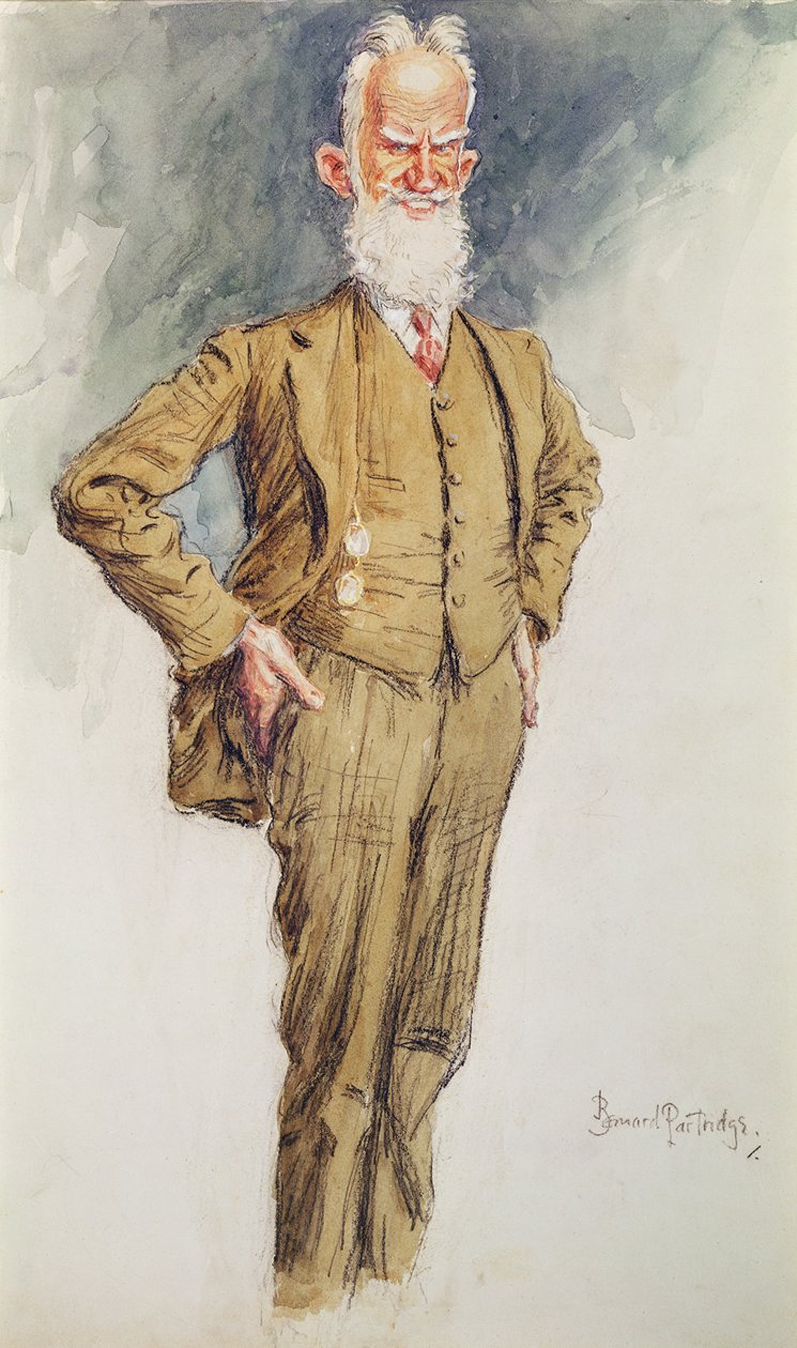
George Bernard Shaw was an Irish playwright (who lived with his wife in Hertfordshire), who wrote over 60 plays (including Pygmalion, which later was made into the film My Fair Lady with Audrey Hepburn).
Known for his strong political views (he was against organised religion), he was a vegetarian passionate about animal welfare. He also was teetotal, did not smoke, nor even drink tea or coffee!
Animals are my friends. And I don’t eat my friends. George Bernard Shaw
Apparently he ate a very frugal diet for the first 42 years of life, until he married (his wife was wealthy and a good cook, and would serve him vegetarian feasts until their 80s, when she died).
She noted that despite his healthy lifestyle, he had a very sweet tooth, and would enjoy rich chocolate desserts that the vegetarian societies would not have approved of!
George was pretty eccentric! He and his wife lived in a house in Hertfordshire, and he would orient his shed, so that it would rotate to face the light through the day, so he could keep writing!
Although he was the only writer to receive both an Oscar and a Nobel Prize for Literature, he credited the National Gallery of Ireland for almost all his education, not his school!
And he was so passionate about helping underprivileged people, that his dream was to create a new simpler alphabet, so it would make it easier for everyone to literate, to find jobs and income!
He did indeed create a Slavian alphabet (with more – 40 letters). But it never came to fruition, although purists still apparently use it today. We think it looks terribly complicated!
But there is no doubt that this wonderful man and writer, did all he could to make the world a better place. He died at the ripe old age of 94, not long after he fell and broke his thigh, while planting a fruit tree.
This is the true joy in life, being used for a purpose, instead of a selfish little clod of grievances, complaining that the world will not devote itself to making you happy. My life belongs to the community, I want to be thoroughly used up when I die.
Life is a sort of splendid torch which I have got hold of for the moment. And I want to make it burn as brightly as possible, before handing it on to future generations. George Bernard Shaw
Northern Ireland is of course geographically part of the island of Ireland and the British Isles. But it has an ugly past, with many people killed as part of ‘the troubles’. But today it’s more peaceful, and home to some of the most stunning scenery on earth.
Northern Ireland is a small land mass area. It has coasts on the Irish Sea (facing northwest England) and Atlantic Ocean (facing the USA). The largest city is Belfast, followed by the smaller walled city of Londonderry.
The area has a strong history of ship-building (one ship built here was the doomed Titanic, its sinking due to many factors, but not its construction).
UK media tends to focus on urban areas and politics. But actually, Northern Ireland is kind of like a ‘mini Switzerland’, known for stunning lakes and ancient volcanic rocks.
Always follow the Countryside Code, to keep all creatures safe.
Giant’s Causeway: A World Heritage Wonder
The Giant’s Causeway is perhaps Northern Ireland’s most iconic natural site. Thousands of interlocking basalt columns, formed by ancient volcanic activity, create a landscape that’s both odd and beautiful.
It stretches into the sea, drawing curious minds and camera lenses from around the world. You can walk along the stones, listen to the wild North Atlantic waves, and catch glimpses of seabirds overhead.
The 40,000 rocks are named after Giant Fionn and Giant Benandonner. The legend goes that one lived on the Irish coast, the other on the Scottish coast. After being separated to stop them fighting, a bridge was built to try to start a fight!
The Mourne Mountains: Peaks and Peace
The Mourne Mountains rise from the County Down landscape, their rolling peaks and deep valleys waiting for boots and bikes. Slieve Donard, the highest mountain in Northern Ireland, is popular with hikers, and the views from the top stretch far across the land and out to the Irish Sea.
These mountains offer a mix of challenging hikes and gentle rambles, with heather-clad hills, granite tors, and quiet lakes.
Locals love the open skies, fresh air, and sense of space. The Mournes inspired C.S. Lewis’s fantasy worlds, and it’s easy to see why. Walk beside old stone walls, rest by hidden streams, and feel the world slow down for a while.
Lough Neagh: The Heart of Northern Ireland
Lough Neagh is the largest freshwater lake in the British Isles, and it holds a special place in local culture. Its waters touch five counties, providing habitats for birds, fish, and all sorts of plant life.
It was formed apparently when Giant Fionn scooped earth to throw at his Scottish fiend – obviously these guys did not get on! Oxford Island Nature Reserve nearby offers lots of walking and wildlife-watching.
Birdwatchers flock here to spot whooper swans, tufted ducks, and waders in the wild, especially during migration seasons. The lough’s shores are gentle and open, making them perfect for walks, cycling, and quiet moments by the water.
There are small villages and nature reserves dotted about, giving you the choice to find company or solitude. A visit to Lough Neagh is a chance to connect with a slower, quieter side of life.
Glens of Antrim: Hidden Valleys & Waterfalls
The Glens of Antrim are nine deep valleys carved by glaciers, stretching from the Antrim Plateau to the sea. Each glen has its own character, with woodlands, rivers, and waterfalls hidden away in folds of green.
Glenariff, the ‘Queen of the Glens,’ is especially popular with walkers, and its waterfalls and trails provide stunning sights at any time of year.
You’ll find wildflowers in spring, cool shade in summer, and gold leaves in autumn. Quiet roads and paths connect the glens, inviting you to slow down and explore.
The coast nearby offers sandy coves and rocky headlands, while small villages provide a warm welcome and a good cup of tea after a day out.
Strangford Lough: Wildlife and Tidal Magic
Strangford Lough sits on the east coast, south of Belfast, and is known for its natural beauty and rich habitats. The lough is a marine nature reserve, supporting seals, otters, and a riot of birdlife.
At low tide, mudflats stretch out, full of feeding waders and wildfowl. The water changes constantly with the tides, creating shifting views and endless interest.
Kayaking and sailing are popular here, letting you get close to islands that seem lost in time. You can also walk or cycle along the scenic shoreline, with regular stops to watch wildlife or admire the scenery.
Strangford village and the National Trust’s Mount Stewart gardens lie close by and are worth a visit if you want a cosy spot to recharge.
Fermanagh Lakelands: Islands and Quiet Waters
Fermanagh in the west is a land of lakes, islands, and gentle hills, with Lough Erne at its heart. The Upper and Lower loughs are dotted with wooded islands, some home to ancient churches and stone carvings. Boating is a big part of life here, but there’s plenty for walkers and cyclists.
Nature reserves like Crom Estate protect rare habitats and old-growth woodlands. Wildflowers, butterflies, and red squirrels add to the magic. The water is clear and slow, perfect for peaceful reflection or a gentle paddle.
Many leave Fermanagh feeling that it’s a place apart, where nature feels close and life slows down.
Rathlin Island: Seabirds and Solitude

A short ferry ride from Ballycastle brings you to Rathlin Island, a small, windswept place with dramatic cliffs and rugged beauty.
Rathlin is especially loved by birdwatchers, who come for puffins, razorbills, and guillemots in the nesting season. Seals bask on the rocks, and you can spot the occasional dolphin or porpoise offshore.
There are a handful of marked walks, ranging from easy to challenging, which take you past lighthouses, wildflower meadows, and ancient ruins. The island’s quiet, friendly atmosphere is a big draw.
The Causeway Coast: Cliffs and Sandy Beaches
Beyond the Giant’s Causeway, the Causeway Coast stretches for miles, offering a mix of towering cliffs, sandy bays, and dramatic headlands.
Walk the coastal paths for views of the Atlantic, or explore beaches like Whitepark Bay and Portstewart Strand. The area is rich in fossils, and sharp eyes can sometimes spot ancient remains along the shore.
Read our post on keeping dogs safe by the seaside.
This coastline is also home to places like Carrick-a-Rede Rope Bridge and Ballintoy Harbour, where the sea carves new shapes with every tide. You’ll find a lively mix of open space and tucked-away spots, ideal for picnics, sandcastles, or a bracing swim.
Coastal wildflowers add a splash of colour from spring through summer, making every visit just a bit different. Many coastal flowers are unsafe near dogs.
Glenariff Forest: Woodland and Waterfalls
Tucked within the Glens of Antrim, Glenariff Forest Park is a haven for walkers and nature lovers. The park’s main draw is its series of waterfalls, which tumble through green woodland before joining the main river below.
Well-maintained trails wind along boardwalks and through thick forest, giving you a real sense of immersion in nature.
Spring brings carpets of bluebells and wild garlic, while autumn sets the leaves ablaze with gold and red. Red squirrels, songbirds, and even deer make their homes here, and there are peaceful corners for resting or picnicking.
Peat Bogs and Blanket Bogs: Unique Habitats
Peat bogs are blanket bogs that spread across uplands like the Sperrin Mountains and the Antrim Plateau, storing carbon, filtering water, and providing habitat for rare plants and birds. Sphagnum moss, cotton grass, and insect-eating sundew are just a few of the oddities you’ll find.
In these parts, the air carries the call of endangered curlew and snipe. Conservation groups work hard to protect these landscapes, keeping their wild beauty safe for the next generation.
Home to Many Artists, Writers and Musicians
Just like southern Ireland, Northern Ireland is home to many artists, writers and musicians. Irish poet Seamus Heaney was from Londonderry, and other Northern Ireland exports are footballer George Best, singer Van Morrison and actor/director Sir Kenneth Branagh.
Donegal is in southern Ireland, but only because it was left out of the ‘northern Ireland’ boundary, due to nearly everyone being Catholic. The most famous residents to come out of this county make up the Irish band Clannad (their sister is popular singer/songwriter Enya).
The Green Party of Northern Ireland
The media often talks of the main political parties in Northern Ireland, who thankfully get on better these days. But there is another smaller party, Green Party of Northern Ireland, which is more concerned about preserving nature and wildlife in this beautiful area of the world, than squabbling over political borders.
It’s also the only political party in Northern Ireland, to publish all donations over £500.
Leader Mal O’Hara was recently elected as a senator (the upper house of Parliament) in the Irish Republic, and was also a Belfast councillor. Before that, he worked in the community and voluntary sector for 20 years. The party also has several local councillors.
Just like England, there are problems right now in Northern Ireland with the quality of fresh water, and appeals for greater legislation to prevent pollution and sewage output. One local triathlon recently had to be cancelled, as a major lake was clogged with toxic blue-algae.
Lack of habitat and pesticide use has also been blamed for huge reduction in populations of Northern Ireland’s birds of prey, including rare hen harriers. Northern Ireland has over 400 members of the Nature Friendly Farming Network, who are helping local birds and wildlife.
Northern Ireland has its own ‘RSPCA’
USPCA is Northern Ireland’s version of our RSPCA, where people can report cruelty and find help to rescue injured wildlife. Or simply get involved in making life better for animals across Northern Ireland.
It also shows how to register pets (for better results of finding lost pets) and offers discounted vet care for people on low incomes.
Why the Trade Deal Ignores Locality
You may remember in the dying days of Boris Johnson’s premiership, about arguments over the Northern Ireland Trade Deal, following Brexit.
In a nutshell, it caused anger as it meant that rather than free trade, Northern Ireland (with its violent political history) would have to go through border checks and tariffs, in order to import or export milk, eggs and meat.
Any locavore would tell you that the way to create peaceful communities is to restore locality – locally grown organic food (with better animal welfare) in walkable communities, so people can easily reach places that sell such food, if they have no cars.
The arguments also forgot the welfare of the animals themselves (live transport of animals that often die of heat, or arrive to be slaughtered after a long stressful journey).
The sooner we move away from economic growth to communities that feed themselves (rather than rich EU bankers) – the better for people, people, animals and the planet.