How (often wealthy) Churches Can Help Communities

England has many thousands of churches. Some are tiny beautiful buildings that struggle to make ends meet, often needing help even to pay for roof repairs. But the two main Christian religions of Catholicism and the Church of England have heaps of money, with only a small percentage being used say to help homeless people (and their dogs.
It of course does make one wonder why if you ever go to church, you are asked to donate money, when the Church of England owns a billion pounds’ worth of property, and the Roman Catholic church (which rents out a McDonald’s outlet for 30,000 Euros in Vatican City and refuses to denounce the ‘Catholic’ spectacle of bull-fighting (where bulls often drown in their own blood) is one of the richest churches in the world.
How Wealthy is The Church of England?
Very. Plus of course the head of the Church of England is King Charles III, of whom some people wish him (like Jesus did) to pay his taxes (he pays voluntary income tax but it’s not compulsory like for the rest of us). And he along with Prince William pays no corporation tax on the Duchies of Lancaster and Cornwall, nor inheritance tax.
The Church of England’s main wealth is from its property portfolio (including cathedrals and London’s Hyde Park estate), along with over £11 billion in investment funds and more land. Yet many of its smaller churches struggle to pay for repairs.
All Church of England dioceses pay into a ‘parish share’ (presumably raised through donations) so that in theory, those in need can then ‘dip in’ to pay for anything they might need. So why they need to raise money to repair a roof, when its ‘head office’ has so much money, is a mystery.
The average Church of England pastor earns around £30,000 a year, which is a healthy income for an important job (and presumably also includes a house and food), but that still leaves an awful lot of money going somewhere else, or sitting in the bank.
The Church is now spending millions to try to repair the damage (through media coverage and internal investigations) after the recent scandal that led to the resignation of an Archbishop, when the church knew (but did nothing) about one of its lay preachers, who was regularly beating boys for several years – including his own son) until they bled.
How Wealthy is the Roman Catholic Church?
There are no official stats for the UK, as it all comes under the worldwide church, based in Vatican City. But its estimated that the church’s wealth runs from tens of billions to possibly trillions of pounds in property, art (it owns the Sistine chapel) and investments.
It’s interesting how so many US politicians hell-bent on propping up the oil industry, are going against the policy of Vatican City, which does not anymore invest in fossil fuels (not to say it’s ethical – it rents out to McDonald’s, and refuses to denounce bull-fighting).
Jesus was the poorest of the poor. Roman Catholicism, which claims to be His church, is the richest of the rich. How come that an institution ruling in the name of this same preacher (whose want was such that he had not even a pillow upon which to rest his head) is now the wealthiest institution on earth? I would love to hear the Pope answering this question. Avro Manhattan
The Orthodox Church again worldwide is worth billions (and the second largest-landowner in Greece). Even smaller churches (like United Reform) manages over £130 million in investments.
Quakers work a bit differently in that funds are invested ethically with The Quiet Company, (to fund work for peace, animal welfare and prison reform). Local meetings manage their own (simple) properties.
George Cadbury who invented drinking chocolate to stop his workers drinking gin (!) built the green village of Bournville near Birmingham, to get them out of slums and into good homes with green space.
Should People Practice Tithing?
Years ago, everyone tithed (gave 10% of their income to the church). This was back in the day when lives were simple, and one would now be forgiven for asking why they should be spending their grocery bill to give a to multi-billion pound organisation.
Also, many people’s idea of ‘money to a good cause’ differs. For example, a Catholic may prefer to give to an animal welfare charity, than to a church that still supports bull-fighting or rakes in rental money from McDonald’s.
It’s also important not to be controlled by churches, that say something like ‘You have to give to us, in order to get to Heaven’. In fact, the New Testament offers blessings from faith in Jesus’ work, not from performing rituals to earn favour. It encourages giving ‘as you have decided in your heart’. So if that means a hedgehog sanctuary over a big rich church, Jesus gives His blessing!
How are Churches Funded Abroad?
The days of asking people to put a tenner in the pot is soon to be over. Many people these days don’t use cash (either because it’s a hassle or due to boycotts as they are made with animal fat). And people increasingly see churches with a lot of wealth asking people on the breadline for money, not popular with all the abuse scandals.
Almost cashless Sweden is different in that people pay an optional church tax. This means that if the church does not use the money wisely, payments can be taken away. It seems to work, and restores trust in givers too. The same happens in Germany where church tax is usually automatically collected, and then you have the option to opt out.
Something happens similarly in Austria, a country where it’s the law that after 14, you are allowed to choose what you believe. So here churches have to collect tax from parishioners. The state believing it unfair to collect tax from someone who does not follow that particular religion.
The Finances of TBN (Trinity Broadcasting Network)
If you’ve ever been stuck for something to watch on TV, many have come across TBN, a free-to-air Christian TV channel, that to its credit, does sometimes offer nice music concerts and a few interesting programs, when there’s bilge on the other channels.
Founded in 1973, it has however face criticism for ‘false gospel’ preaching, and a heavy emphasis on prosperity and ‘getting rich’. Some of its presenters live in multi-million pound mansions and even have private jets, which does not sit with the simple living message of Jesus Christ.
Preaching that if you pray the Bible you’ll get rich is not just untrue, but insulting to the many millions of true Christians who live in poverty (often due to politics created by the people these preachers endorse, like ‘America first’ President Trump).
The organisation even (before funding ran out) tried to build a Holy Land theme park in Orlando, with replicas of Jerusalem (and its programs never mention the genocide in Gaza).
In 2022, many older and low income residents of a Florida mobile home park (owned by TBN) were served with eviction orders to make way for development, only stopped due to public outcry.
No one can serve two masters. Either you will hate the one and love the other, or you will be devoted to the one, and despise the other. You cannot serve both God and money. Matthew 6:24

England has tens of thousands of churches, with kind volunteers. And in a society where so many people need free or affordable help, our churches offer many ways to be of service, to be of any faith or none.
Also read our posts on how churches are helping homeless people and sustainable churches.
Reaching Out with Community Programmes
Churches run events for all ages, like parent and toddler groups, after-school clubs, and youth sessions. Older adults can find coffee mornings or gentle exercise classes. Holiday clubs and community fairs bring the whole neighbourhood together.
These activities let people connect and draw new people in who might not visit otherwise. Church outreach groups also visit those who feel left out, such as the elderly or isolated.
Offering Affordable Church Hall Hire
Local churches often make their halls available for local events at a much lower cost than commercial venues. Community groups, schools, fitness classes, and support groups use church halls for meetings or activities. The lower hire fees are a massive help for groups with tight budgets.
This keeps social groups running and gives people places to meet and share interests, without breaking the bank.
Giving Confidential Pastoral Care
Churches offer a quiet space for people to talk about worries or personal problems. Pastoral workers or ministers listen in confidence, whatever your background or beliefs.
This service is free and doesn’t require you to join the church. Support could range from help with grief, relationship problems, stress, or family issues. Knowing someone will listen without judgement brings relief and can help people feel less alone.
Supporting Mental and Emotional Wellbeing
Many people turn to local churches during tough times for emotional support. Churches run listening services, prayer groups, and drop-in sessions for those facing stress, anxiety, or loss. They may also signpost people to professional help if they need it.
Warmth and empathy are at the heart of what they do, whether it’s a quiet chat or a safe space for reflection. This ongoing support makes a big difference in people’s daily lives. Like family disputes or domestic abuse force people to leave home with nowhere to turn.
The Proud History of England’s Chaplaincy Teams

England has a proud history of chaplaincy teams, religious groups who band together to give help to people needing mental health support, including those at risk of suicide.
Never preachy, NHS England has more information on what chaplains do. Churches Together in England go into greater detail on the benefits of chaplaincy, and how it makes a difference.
The only time the media has ever promoted them, was when they were laughing at some, who were given out free flip-flops to young girls, whose feet were sore from dancing in heels! On a more serious note, they were actually there to keep the girls safe, in case any needed a talk or lifts home.
Another name given to chaplaincy teams these days is ‘street angels’, just google your area, and you’ll likely find a group near you (the one in Guildford has great testimonials).
One Scottish group of street angels help out at festivals, saying that Jesus liked a good party, as much as anyone! They are not there to ruin people’s fun. If anything, they often join in the fun (as well as giving directions to toilets and helping people out of the mud!)
Beachy Head Chaplaincy Team
Perhaps England’s best known chaplaincy team is at Beachy Head Lighthouse (Sussex), known for its red and white striped, against a dramatic backdrop of white cliffs. The lighthouse was built in 1902 in an area often shrouded in mist, in order to keep boats safe.
When someone visits here to end their life, the chaplains are nearby, ready to listen to someone in despair. All the chaplains are volunteers from local churches, who never preach. They just reach out with skilled crisis intervention, to anyone who needs help.
If it weren’t for the chaplaincy team at Beachy Head, my wife would now be a widow. Thank you for being there are my lowest.
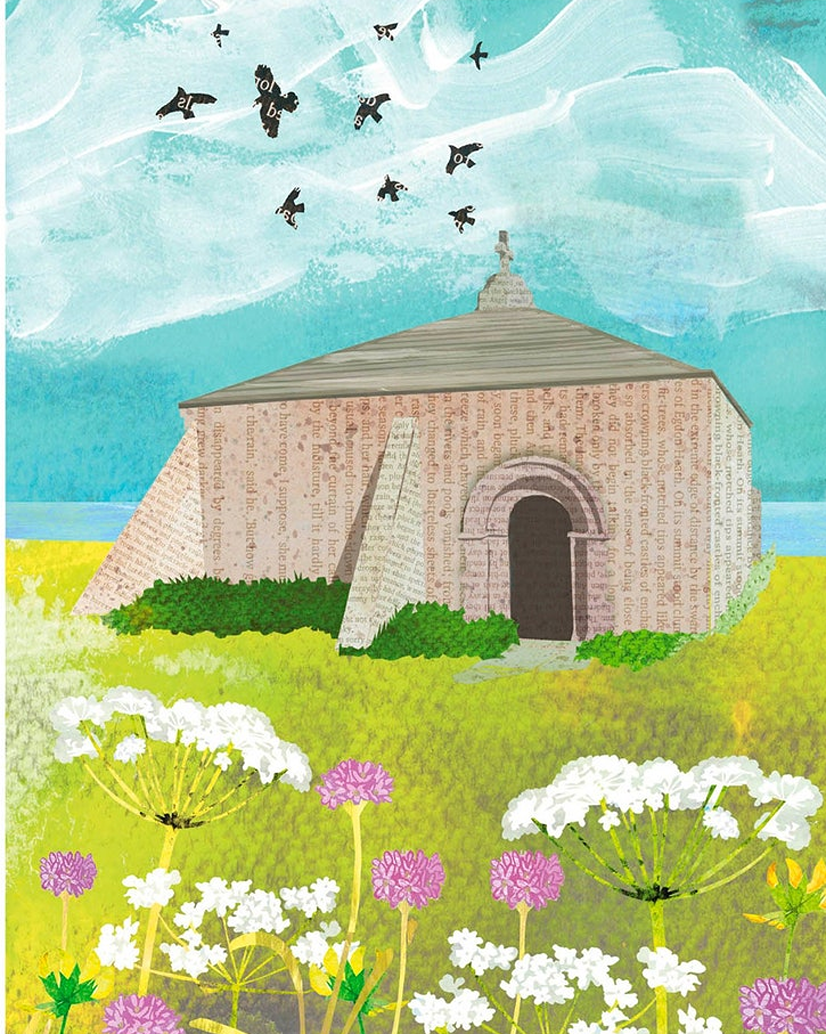
England’s churches stand at the centre of many towns and cities, visible reminders of our shared past. With their soaring towers and beautiful windows, many churches are both spiritual homes and pieces of living history.
Development pressures, though, put some of our finest buildings at risk. From threats of conversion to flats and offices, to rising traffic and noise, these sacred spaces face new challenges in a rapidly changing country.
Town Planning Laws and Their Impact
Planning laws are the first line of defence against insensitive building projects near historic churches. Local councils decide on new building work and changes of use, considering if the plans harm the character of an area.
In England, churches often benefit from tighter planning rules linked to their heritage importance. Even so, developers sometimes push for exceptions. Strong planning rules help protect both the sightlines and peace around these precious sites.
The Power of Local Campaigns
Communities can be strong defenders of their churches. Residents join local campaigns when they see plans for nearby developments that might harm their church. These groups can raise awareness, collect signatures, and lobby councillors to rethink plans for new flats, offices or roads that would spoil the setting.
Local newspapers and social media sites help get more people involved. Persistent, well-organised campaigns have stopped many unwelcome projects in their tracks.
The Role of Churches in History
Churches are more than just buildings. They hold the stories of their parish, reflect changes in society, and often keep important archives and monuments. From medieval times through the centuries, they’ve hosted everything from market days to concerts.
The engraved stones and stained glass tell vivid stories about local families and major events. Losing a church to new development would mean losing links to these fascinating layers of history.
Cathedrals as National Icons
Cathedrals like Canterbury, Salisbury, York Minster, and St Paul’s (London) show the very best of our architecture and craftsmanship. These buildings are known all across the country, drawing in millions of visitors every year.
Their sheer size and beauty demand respect. Cathedrals also act as visual anchors for towns and cities. Any development that spoils their settings or blocks their views would not only ruin the skyline but also affect tourism and local pride.
Threats from Commercial Developments
Converting old churches into luxury flats or glossy office blocks is tempting for developers due to their central locations and striking features. These changes can gut the interiors, rip out pews and altars, and erase centuries of history. Increased noise from new residents, heavy traffic, and commercial uses can also disrupt quiet church yards and peaceful services.
Without firm rules and public support, some churches risk being lost to high-end housing and business schemes.
Listed Building Status: A Shield for Heritage
Many churches are protected by listed status, which means they’re recognised by law as important historic buildings. This status limits what changes can be made and ensures that major work needs proper permission.
Listed status covers key features like towers, windows and even walls surrounding the churchyard. Local planning officers and Historic England inspect proposed developments to check they won’t harm the character or setting of these buildings.
Conservation Areas Offer Wider Protection
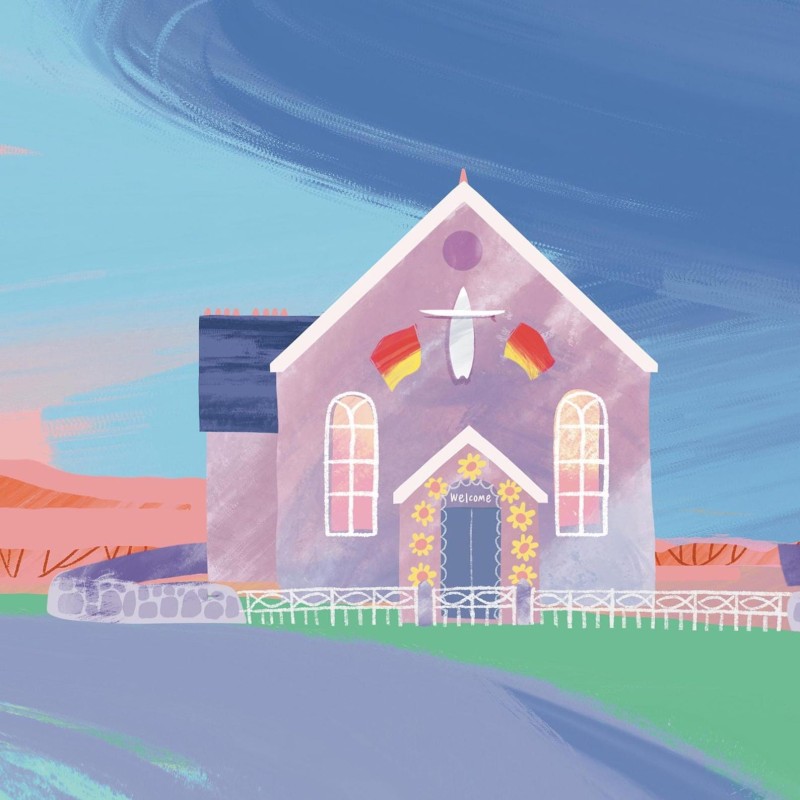
Some churches sit within conservation areas, where special rules limit new development and big changes. Conservation area status not only helps churches but also protects trees, old walls, and the surrounding neighbourhood look.
Development in a conservation area faces tough checks compared to other parts of town. This extra layer of protection means churches aren’t singled out but safeguarded as part of a wider historic scene.
Community Action and the Future
Churches that stay active and open to all tend to have a better future. When a church doubles as a venue, food bank or youth club, it gets support from more people. Volunteers and church friends often keep graveyards tidy and buildings in good repair.
Flexible use helps a church stay at the heart of community life, which makes it much less likely to fall into disrepair and risk redevelopment. Well-loved churches attract both funding and campaigners ready to fight for their future.
How are Churches Funded Abroad?
The days of asking people to put a tenner in the pot is soon to be over. Many people these days don’t use cash (either because it’s a hassle or due to boycotts as they are made with animal fat). And people increasingly see churches with a lot of wealth asking people on the breadline for money, not popular with all the abuse scandals.
Almost cashless Sweden is different in that people pay an optional church tax. This means that if the church does not use the money wisely, payments can be taken away.
It seems to work, and restores trust in givers too. The same happens in Germany where church tax is usually automatically collected, and then you have the option to opt out.
Around Britain (by Church)

Steeple Chasing is a book by an award-winning writer who decides to tell the story of Britain, by visiting church steeples that remain landmarks in our towns, villages and cities. Even if their influence and authority have waned, they contain art and architectural wonders – a gallery scattered (like jewels) across these isles.
Join Peter as he visits the unassuming Norfolk church with a disturbing secret and London’s mighty cathedrals with their histories of fire and love. Meet cats and bats, monks and druids, angels of oak and steel.
The book celebrates churches for their beauty and meaning, but also for the tales they tell. It is about people as much as place, flesh and bone (not just flint and stone). From the painted hells of Surrey to the holy wells of Wales, consider this a travel book … with bells on.
Exploring England’s Forgotten Churches
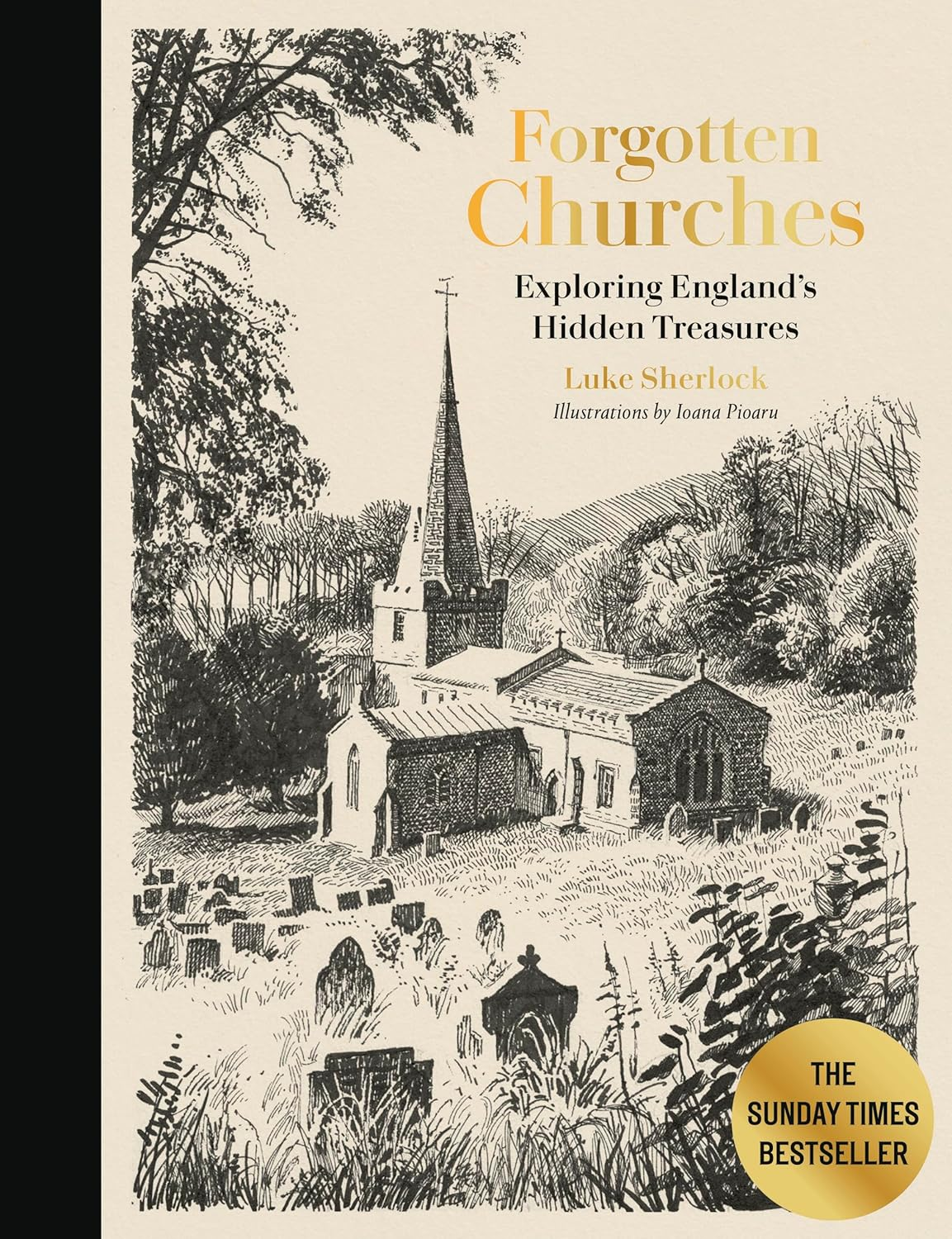
Forgotten Churches is a unique look at England’s most beautiful and overlooked churches, hidden treasures that need to be protected.
For centuries, England’s churches have stood as quiet witnesses to history, filled with remarkable craftmanship, untold stories and layers of cultural heritage.
Yet many of these extraordinary buildings remain overlooked – until now.
Luke Sherlock (the ‘English pilgrim’) has spent years travelling across England to uncover hidden architectural gems and sharing their beauty with thousands of people online.
Now in book form, he invites you on a journey through 70 of our most atmospheric churches, from 1000-year old Saxon chapels and striking Gothic landmarks, to hidden Romanesque sanctuaries and ornate Victorian treasures.
From the remote landscapes of Northumberland and Cornwall to the Norfolk fens, Yorkshire Dales and Somerset hills, he reveals their stories – of of local communities, master builders, and the shifting tides of history.
Whether you love history, architecture, or simply the charm of England’s rural landscapes, this book will appeal.
Luke Sherlock is a writer, pilgrim and bookshop owner, with a love for heritage and art. There’s little he loves more than throwing on a backpack, heading off down an unknown footpath to explore a hushed, ancient church.
The drawings are by Romanian-British artist Ioana Pioaru.
A Stonemason’s Guide to British Churches
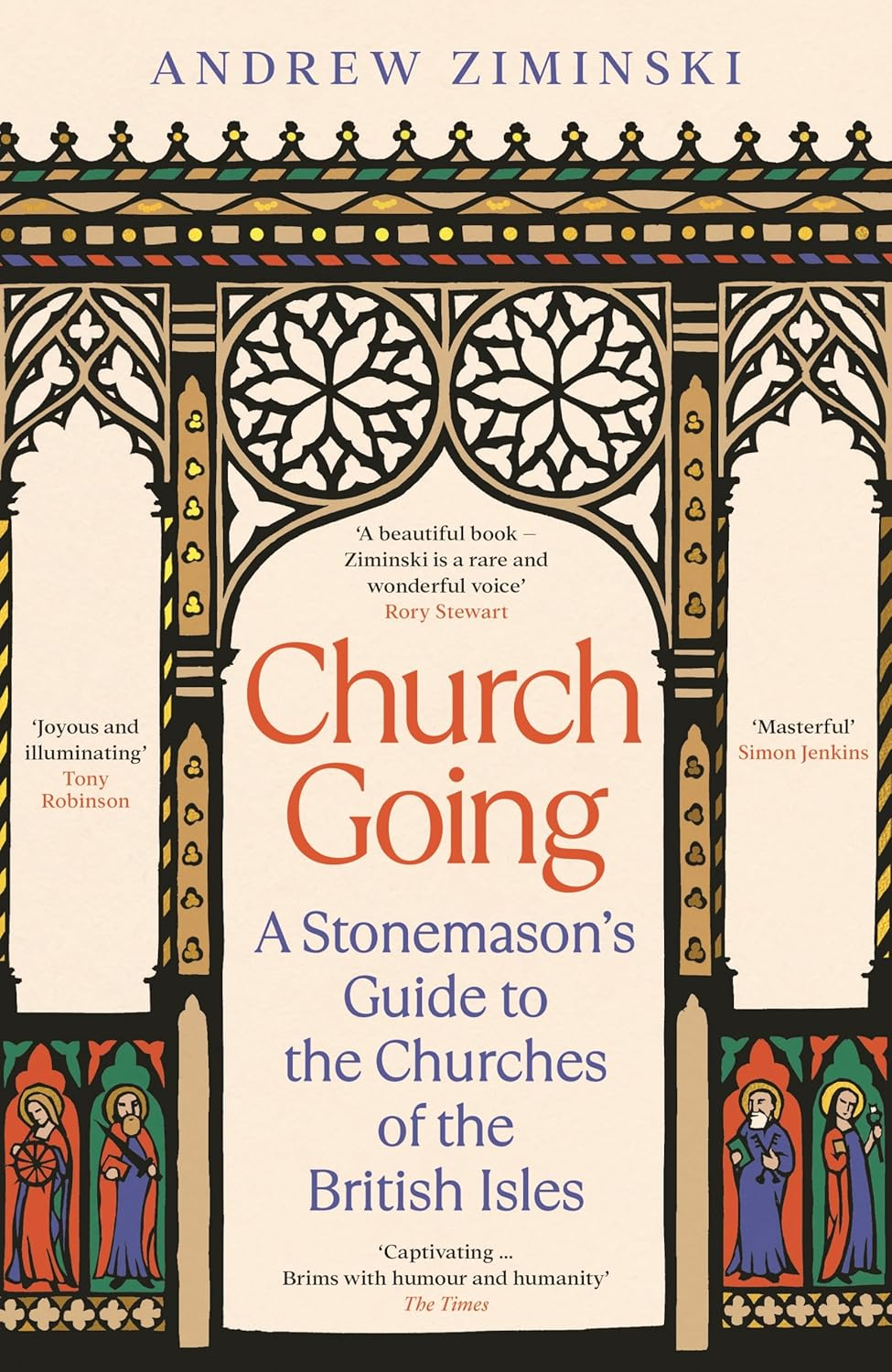
Church Going is an illuminating exploration of our glorious ancient churches. Discover the history of your local parish church, for a glimpse into craftsmanship of old.
The author look at beehives in church walls to bullet-holes in weathervanes, in this glorious bedtime read for religious and architectural peeps.
Churches are not just place of worship, but also vibrant community hubs, and oases of calm reflection. To know a church, is to hold a key to the past, which unlocks an understanding of our shared history.
Andrew Ziminski has spent decades as a stonemason and church conservator, often acting as an informal guide to curious visitors. This is his handbook, which reveals their fascinating histories, features and furnishings. Beautifully written and richly illustrated, it’s a celebration of British architectural history.
Now here’s a question. If we have a country of around 250,000 homeless people (that includes people living in bed-and-breakfasts, rough sleepers, those staying in Travelodge and ‘sofa-surfers’), what are the churches doing?
Also read our post on helping dogs that live with homeless people.
There’s no doubt that small local churches do try to help. But we have the official (Church of England) that owns billions of pounds worth of properties and an income of around £900 million a year.
And the Catholic church (the other main religion) is one of the richest organisations in the world. Hello? Jesus Christ? Simple living?
Churches are often at the heart of neighbourhoods. And whether residents are religious or not, churches remain one of the few places where often you can find help, where there is no ulterior motive (to buy something, to vote for someone etc).
Local faith groups have both people power and compassion, to help prevent homelessness in towns and cities, something that most councils have failed at.
Understanding Root Causes of Homelessness
Unlike politicians or the media, most church leaders are compassionate towards the main causes of homelessness, and know that often it’s not a cause of ‘roll up your sleeves, get on your bike and find work’. Most homelessness in modern society is due to:
- Economic hardship: Lost jobs, low wages, and rising bills can leave people unable to pay rent or mortgage.
- Mental health challenges: Depression, anxiety, or addiction can push someone out of stable housing, if support isn’t available.
- Lack of affordable housing: With rents outpacing incomes, even working families can find themselves at risk.
- Relationship breakdowns: Family disputes or domestic abuse force people to leave home with nowhere to turn.
Providing Emergency Accommodation
Not all, but many churches open their halls on cold nights, to offer emergency shelter. They work with local councils and charities to make sure people have a safe place to sleep, while they get back on their feet. Many train volunteers to support and welcome guests.
Running Food Banks and Community Meals
When money’s tight, food becomes a worry. Churches can run food banks or weekly meals for people struggling to stretch incomes. These small acts give families breathing space while working towards longer-term stability.
Churches can collection food donations from parishioners and local shops (also reduces food waste). They can then organise meal nights in community halls.
Distributing Clothing and Hygiene Essentials
Clean clothes and basic hygiene can feel out of reach, during hard times. Churches often work with donors to run drives collecting coats, socks, toiletries, and more.
Note clean clothes usually only ‘works’ if homeless people also have access to regular showers and laundries.
Churches Investing in Homeless People
Green Pastures is a unique social enterprise run by Christians, that works a bit like an ethical investing firm. The difference here is that your savings are used for them to buy up properties, which are then used to house homeless people, and transform lives.
You eventually receive your money back (with interest). And you get to completely alter the course of someone’s life in a positive way. As well as a home, each homeless person receives ‘wraparound support’, to get their life back to one of stability and comfort.
You can invest from £1000 for one or more years, choosing to earn interest of up to 5% each year. Every £30,000 or so helps them to house someone in need. Investments are unsecured (so not secured by say a property).
There’s a calculator online, to estimate how much you would earn, and how you could help. For instance, if you invested £30,000 over 3 years at an interest rate of 3%, you would earn £2,700. While also helping to provide a home for at least one homeless person.
A big company that invested £500,000 over 1 year, would earn £15,000 in interest, and provide homes for 17 homeless people. Longer-term investments with lower interest rates, allow them to help more homeless people.
So far, Green Pastures has managed to buy up property and give homes to almost 2000 people nationwide (UK) and already has almost 2000 investors saving a collectively £50 million or so.
Two similar organisations are:
Hope into Action lets investors retain ownership of the house, who leases it for 5 years. This organisation then finds tenants to live in the house, and provides support and maintenance. This offers a 2% annual return on your investment, a method that has proven successful with tenants, churches and investors.
Church Homeless Charity is a tiny organisation that receives no funding from the Church of England (despite it having an income of over £900 million plus billions worth of property). So it asks churches to assist personal givers, to donate towards grants for homeless people.
Examples are new clothes for interviews, passports (so people can pass ID checks for jobs & homes), and furnishing/deposits on new homes.
And don’t believe all you read in the papers. This is a Christian charity that will help anyone, no matter their gender, sexuality, race or religion. Or for whatever reason they became homeless.
More Ways Churches Help Homeless People
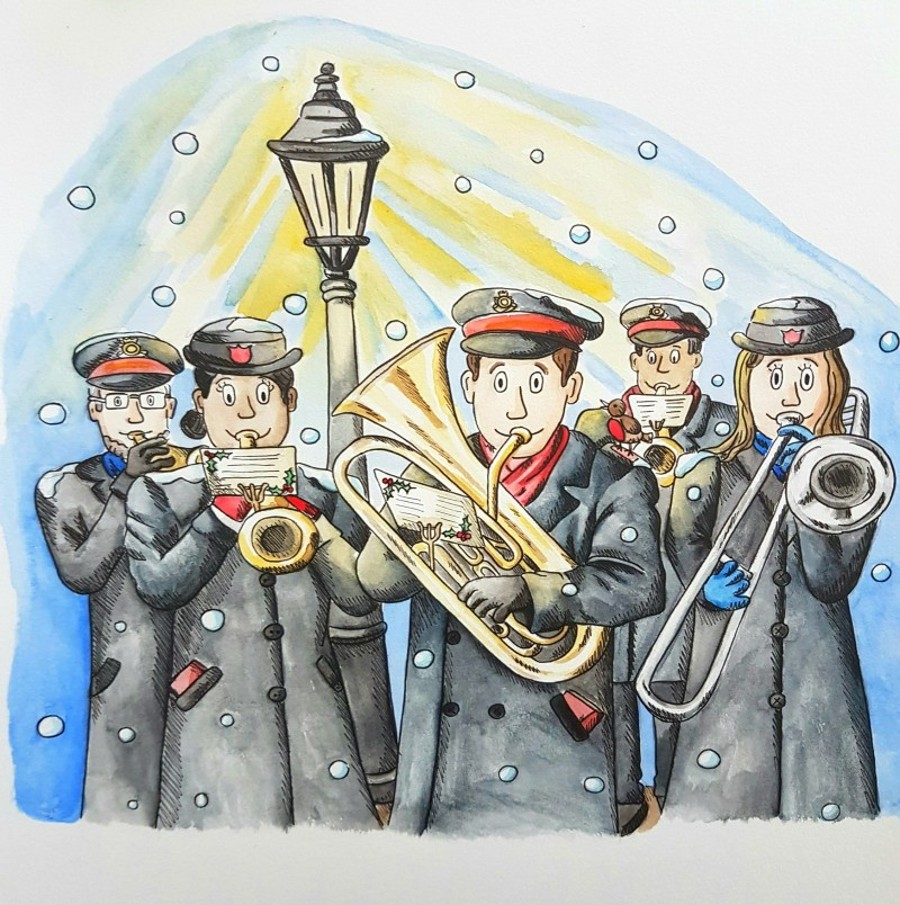
The Salvation Army is our main ‘Christian charity’ that helps homeless people. As well as donating unwanted clothing in their charity banks, you can bank with Reliance Bank Ltd (which gives a lot of its profits to the Sally Army), as does SAGIC Insurance.
Donations also help this organisation to provide Nap Pads (emergency accommodation in small pods that are light & airy with a window, secure front door, bed, toilet, hand basin and storage area, plus connection to heat, running water and phone charging).
They even have sensors (similar to that preventing crib death) to alert people, if someone stops breathing.
Churches Don’t Open Doors Abroad
A recent experiment in the Pacific Northwest (which has similar cold rainy weather to us in England) asked local churches to open their doors to homeless people, during a very cold snap of weather.
The US states of Washington, Oregon and Idaho (along with British Columbia in Canada) were covered in snow, with freezing temperatures and high winds.
So the mayor of Washington asked 227 places of worship to consider temporarily housing homeless people, to stop them getting hypothermia. She expected that as they all worshipped Jesus Christ, they would say yes. Just four did.
Of course, they all made excuses. They were fearful of property damage or they had no liability insurance, or they feared local people would be upset. Despite reassurances from volunteers that each church would have 20 to 25 (vetted) homeless people, who would have people to keep watch.
In 2017, one of those millionaire mega-pastors (that travel on private planes while preaching the simple living of Jesus), refused to open its huge church during a major hurricane. Again it was due to ‘safety issues’.
How to Help Homeless People in England
There are presently around 250,000 homeless people in England (this includes rough sleepers, sofa-surfers and people living in temporary bed-and-breakfast accommodation).
Homeless people can claim benefits (usually Universal Credit), giving the address of a family member or friend, or a local hostel or job centre. Having this income helps pay for food (and pet food), interview clothes, and accommodation deposits.
People without a bank account can use the government’s Payment Exception Service to collect benefits from a local post office or PayPoint outlet.
If you see someone sleeping rough, send a report to StreetLink, whose local outreach teams visit rough sleepers at night, to alert them of support to find benefits and accommodation (if the person is under 18, call 999).
10 Ways Churches Strengthen Communities
Local churches have always played a strong role in building better neighbourhoods. Their impact often reaches far beyond Sunday services. Churches bring people together, offer practical help, and add hope where it’s needed most. Here’s how local churches support and uplift the communities around them.
Providing Food and Basic Needs
Many churches run food banks or help distribute groceries to families who are struggling. These programmes often include essentials like fresh fruit, tinned goods, toiletries, and clothing. Families facing hard times know they can count on their local church for support, turning worry into relief.
Running Youth and Children’s Activities
Churches often provide a safe place for children and teenagers. Sports clubs, homework help, music groups, and after-school programmes keep young people busy and supported. These groups build friendships and offer encouragement, especially for those who might not find it elsewhere.
Supporting Mental Health and Wellbeing
Trained volunteers and ministers offer someone to talk to when life feels tough. Churches host support groups for grief, addiction recovery, and stress. Many partner with mental health professionals or charities to help people access the care they need, showing every person matters.
Hosting Community Events and Social Gatherings
From summer fairs to Christmas markets, churches invite everyone to join in. These events connect neighbours, create fun memories, and strengthen the bonds that hold a town or village together. They help keep loneliness at bay and make newcomers feel welcome.
Offering Practical Help for the Elderly
Many seniors rely on their church for lifts to appointments, shopping runs, or a friendly visit at home. Churches often organise coffee mornings, meals, or day trips for older adults. This practical care makes ageing less lonely and keeps people independent for longer.
Promoting Volunteering and Community Service
Churches encourage their members to get involved in the wider community. This often means helping local schools, caring for green spaces, or joining clean-up days. By working together, they show what can be achieved by giving time and effort for others.
Providing Emergency and Crisis Support
When disaster strikes, churches respond fast. Whether it’s a house fire, flood, or loss of income, many churches distribute emergency funds or shelter. They partner with local councils or charities to meet urgent needs and help families recover.
Championing Education and Life Skills
Some churches run free classes in reading, English, digital skills, or financial advice. These programmes break down barriers and help people gain confidence. Parents, new arrivals, and jobseekers all benefit from practical learning right in their own neighbourhood.
Sharing Faith and Spiritual Guidance
Many turn to the church for comfort, prayer, or guidance in hard times. Churches offer a calm space for reflection and support, regardless of personal beliefs. Even those not attending regularly can find peace talking with a minister or joining a quiet moment of worship.
Standing Up for Justice and Community Needs
Churches often speak up for the most vulnerable, raising awareness of poverty, homelessness, or injustice. They organise petitions, host forums, and work with other groups to make local leaders pay attention. Their presence helps shine a light where it’s needed most.