How to Make Your Own Vegan Sushi
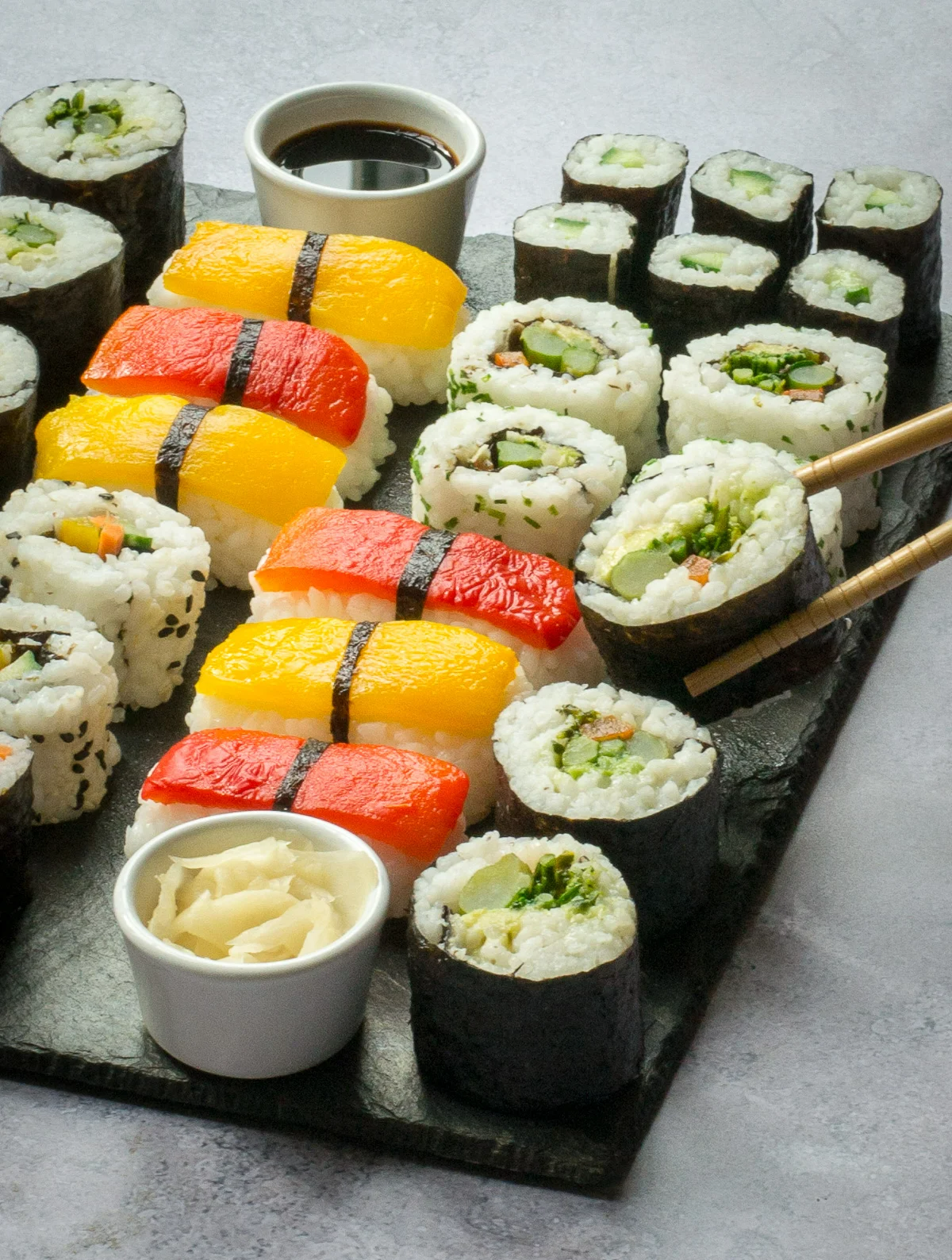
Forget issues with mercury and by-catch. Easy Vegan Sushi (The Veg Space) offers four varieties, using rice, rice vinegar, ginger and nori sheets. Then just assemble with veggie fillings (cucumber, broccoli, carrots, peppers).
Moving Mountains sell fishless fillets, which you can use to make vegan sushi (mix with cucumber, pepper, spring onion and vegan mayo, then layer with cooked rice).
Inspiring Lessons from Japan

Japan is a unique country, likely most of us has never visited. You may consider Japan as home of lovely buildings, macaque monkeys (who like to throw snowballs in hot springs), but what else do we know about this most unusual of countries?
In fact, it’s home to some of the healthiest people on earth, who regularly live to over 100 with no ill health until end-of-life.
Japan is mostly islands, with only a few urban areas, one of which is Tokyo. But all cities are better at protecting the planet than here, with hardly any litter (like Switzerland).
Animal welfare in Japan is a hot topic right now, after a horse died during a 680-year old Shinto festival. The charity has a long history, beginning after World War II when the founders began to raise money to help emaciated and dying dogs and horses.
Key Japanese Cooking Ingredients

Key Japanese ingredients are pretty easy to find in England:
- Tofoo (made in Yorkshire) is organic.
- Miso is another popular ingredient. It’s one of the few foods rich in all the tastes for ‘good umami’ and also good for your tummy! It’s unpasteurised so not for children, pregnancy, nursing or affected immune conditions.
- Seaweed (nori, wakame and kombu) is best to buy, as it’s not sustainable nor safe to harvest yourself and dogs should be kept away from seaweed, as the fronds can dry in the stomach and swell). Avoid seaweed for thyroid issues.
- Look in stores for vegan fish sauce.

Learning to cook your own food is empowering, as you no longer have to rely on expensive plastic-wrapped ready-meals and takeaways. Master your favourite cuisines at home. Then every night is restaurant night!
Never eat rice after 24 hours (a food poison hazard) and avoid unpasteurised miso for pregnancy/nursing or weak immune systems (and use bamboo chopsticks). Before cooking, read up on food safety for people and pets (many ingredients are unsafe near animal friends).
Bin allium scraps (onion, garlic, leeks, shallots, chives) as acids may harm compost creatures (same with tomato/citrus/rhubarb scraps).
Vegan Japan is a book of street foods, vegetable sides and adorable bite-sized desserts, along with warming soups and slurp-able noodles.
Japanese French chef Julia grew up devouring all the above, so when she went vegan, was sure she would not give up her childhood favourites. And in this book, shows that Japanese food does not have to be complicated.
Recipes include:
- Kabocha Stew
- Miso Butter Ramen
- Yakisoba
- Onigiri
- Napolitan
- Japanese Potato Salad
- Karaage
- Maguro Don
- Ponzu Sauce
- Mentsuyu
- Japanese Mayonnaise
Author Julia Boucachard grew up between Tokyo and France. She earned degrees in biology and environment, then became a self-taught cook and opened a Paris restaurant, where she shares plant-based recipes, inspired by her childhood foods.