Dairy-Free Cream Alternatives (single, double, whipped)
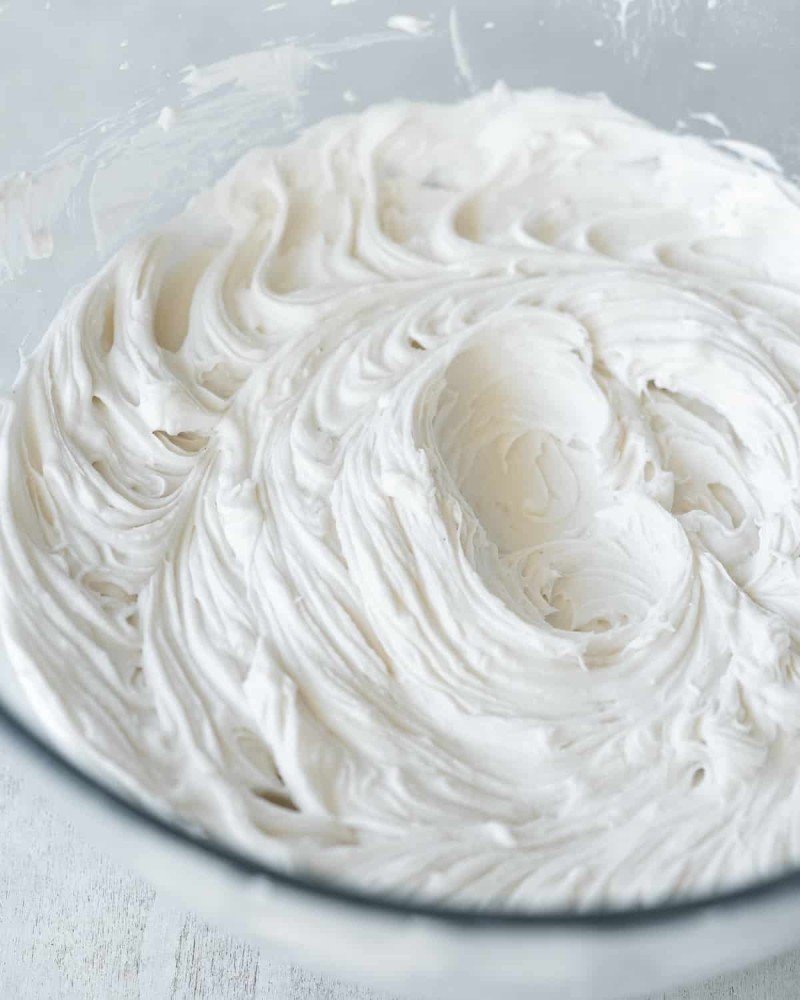
Cream is a popular food in England, whether it’s to dollop on puddings and cakes. But it’s very high in cholesterol and most dairy cream on sale is not from free-range cows.
Most dessert ‘cream’ is made with coconut cream (Addicted to Dates). Chilling a can of coconut milk overnight turns it sold – just pour off the water and then mix the coconut with sugar to make your own cream). Here’s a simple video to help.
Avoid nuts for allergies & young children. Despite images of cats lapping bowls of cream, they are lactose-intolerant and should not be fed dairy. Read more on food safety for people and pets.
Also look in stores for Nature’s Charm Oat Whipping Cream (in cans). Remove lids fully (or pop ring-pulls over holes before recycling, to avoid wildlife getting trapped.
Choose real vanilla (fake vanilla sometimes uses beaver extract) and organic powdered sugar (other versions may contain egg).
Cashew cream (Ela Vegan) is a good all-rounder that is good for savoury dishes like korma curries. Also see the post on enjoying a vegan afternoon tea (for how to make or buy vegan ‘clotted’ cream).
Why Are People Giving Up Dairy?

No-one denies that a small organic dairy farmer treats his cows well. But the big dairy industry (from where most dairy milk is produced – especially for all the by-products used in ready-meals etc) has huge welfare concerns.
In the UK, most male calves (of no financial use to the dairy industry – separate from beef industry) are shot dead, soon after birth.
Many cows spend their entire lives in factory farms, being inseminated and giving birth, then having their calves taken from them. Cows and calves form incredibly strong relationships, and will cry out loudly for weeks, if separated.
But What About Supporting Local Farmers?
Yes, of course we should. But in a land of 60 million people, there is not enough land for everyone to eat free-range dairy, meat etc. So if you do eat dairy products, find organic free-range versions.
Google AI (eek!, but it’s quite accurate normally) says that based on the amount of free-range organic land we have in England for dairy cows (around 144,000 hectares) this could only feed 60,000 to 120,000 people on a dairy-rich diet.
So that means the rest of the dairy is coming from factory farms, something nobody wants. So try some plant-based creams if you like (they are just as delicious). And cholesterol-free, your heart will love you all the more!
A Vegan Alternative to Double Cream
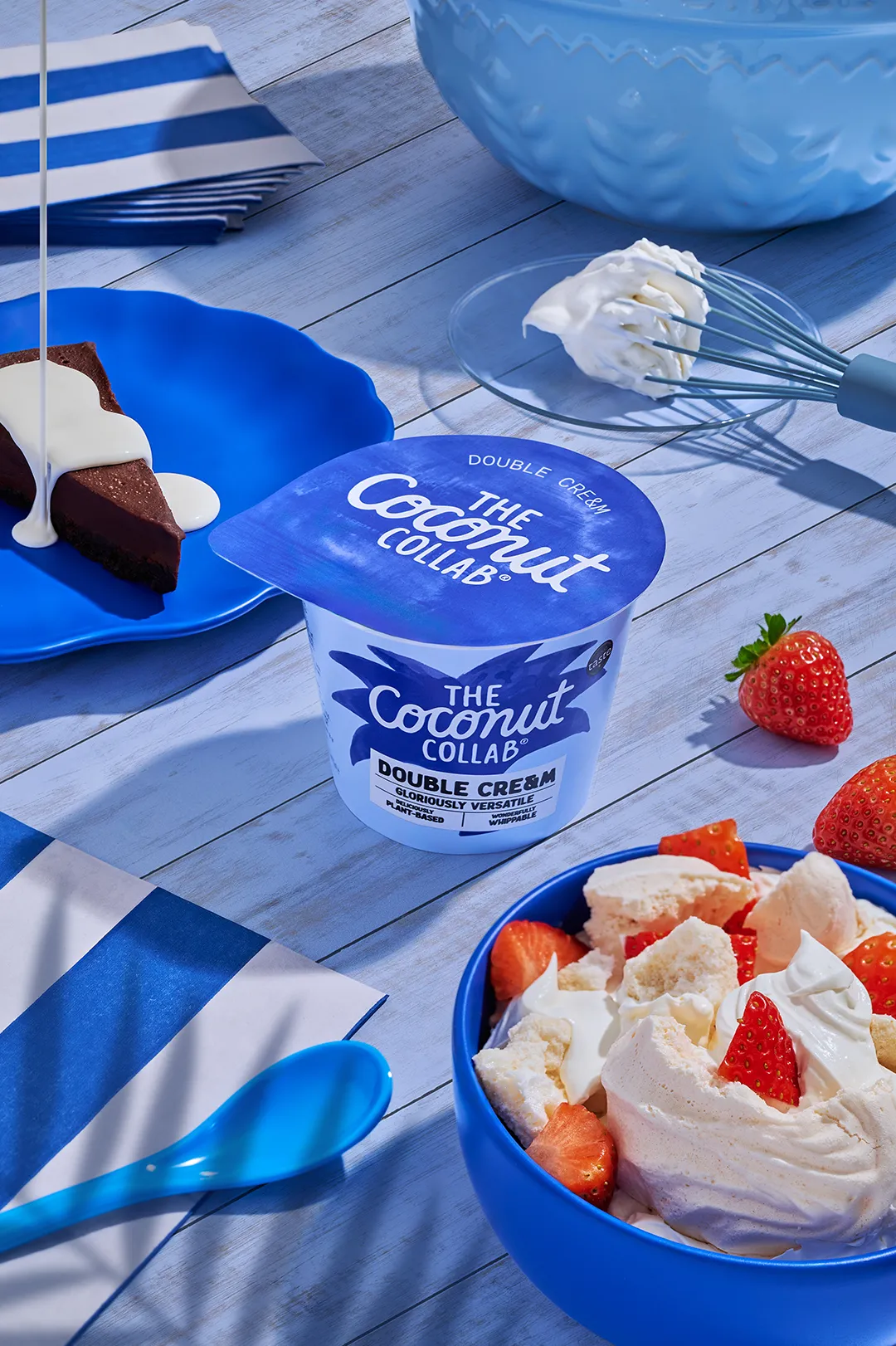
Yes, we know that coconuts are not local (but factory-farmed dairy milk that is in most creams is not ethical). The Coconut Collab’s double cre&m is made from coconuts guaranteed not to be harvested by monkey slaves (sent up trees to retrieve them) and tastes just like double dairy cream. Really!
So don’t worry if you’re not a huge fan of coconut taste, as this isn’t any! Dollop this on your organic strawberries at Wimbledon fortnight, or use it on your cakes and bakes. Find it in stores everywhere.
It’s even good in coffee!
Most councils now take plastic packaging (if not, recycle at supermarket bag recycling bins).
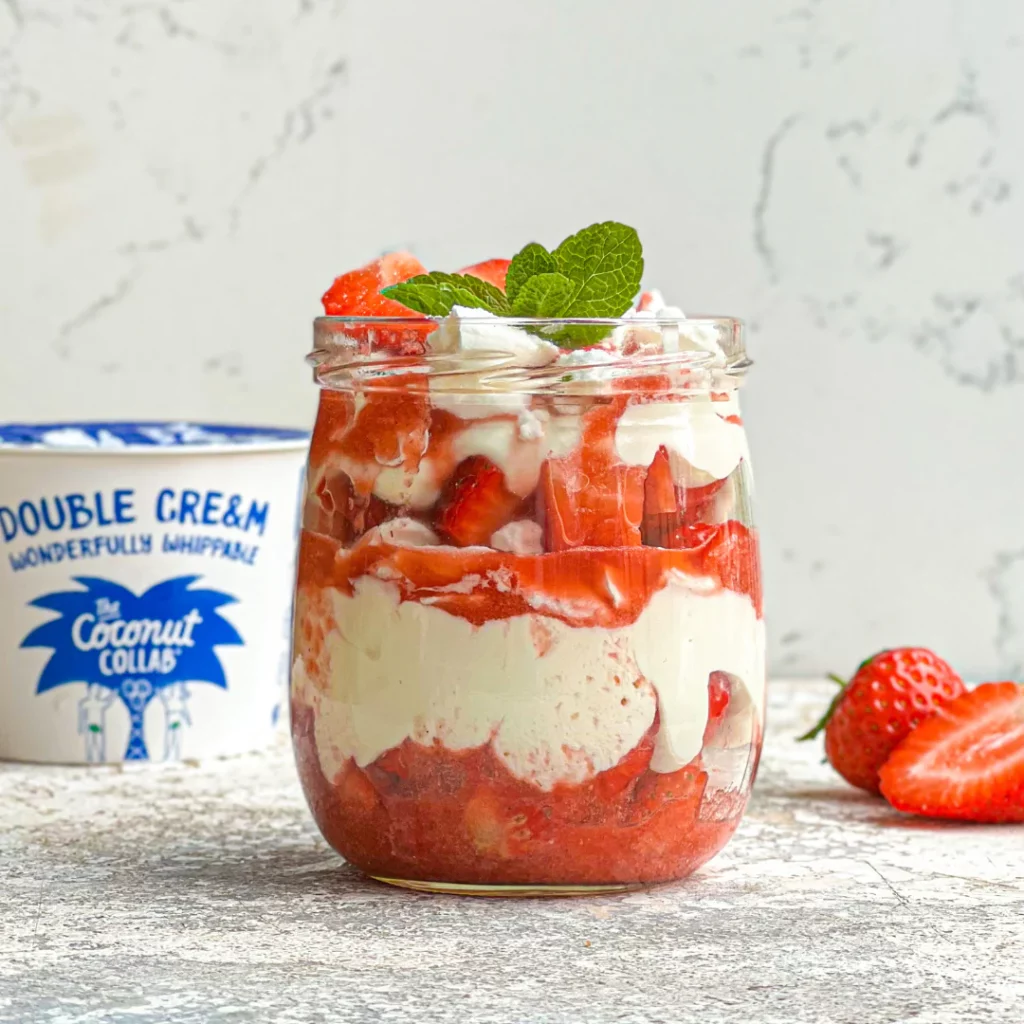
Try it in simple recipes for Eton mess or vegan scones (keep fresh dough away from children and pets). Ideal for an afternoon tea!
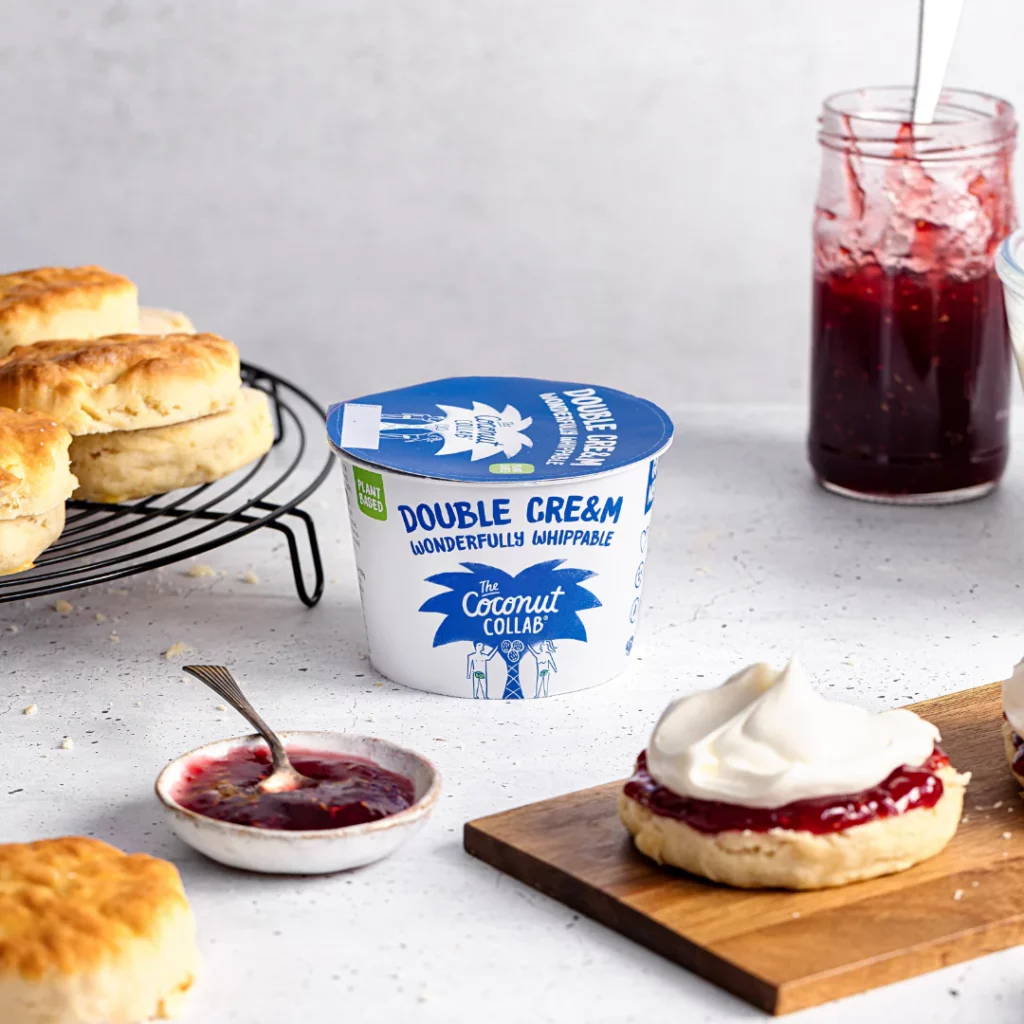
The absolutely best non-dairy cream. Every bit as nice, and a perfect substitute for dairy cream. Stunning in coffee, or whipped for desserts.
Sweet but not too sweet, pure heaven on strawberries.
Other Good Brands of Vegan Cream
- Coconut Whipping Cream is great to dollop on desserts. Made with organic Sri Lankan coconuts, chill this overnight then pour into a bowl and whip into a cream. This company also makes light coconut milk, cream coconut and coconut milk powder (use in smoothies, soups, curry, porridge and ice-cream).
- Look in stores for Elmlea Double Cream (the plant-based version is free from palm oil and can be whipped up for desserts, poured over puddings or stirred into sauces or pasta). There’s even a brandy version.
- For professional use, Flora has now ditched palm oil in all its products (including margarine) and offers a good double cream for kitchens, cafes, restaurants and hotels. Made with coconut and rapeseed oil, this has 65% less climate impact than dairy double cream.
A Simple Recipe for Vegan Cottage Cheese

Cottage cheese is a popular low-fat alternative to sour cream for baked potatoes, and nice with salad. But as more people go dairy-free, it’s good to know how to make your own plant-based version. As few store-bought versions are on sale.
This dairy-free cottage cheese (Easy and Cozy Recipes) is by a professional chef. All you need is firm tofu, lemon juice, salt and nutritional yeast (or white miso paste – not for pregnancy/nursing due to being unpasteurised).
Keep plant-based cottage cheese away from pets, due to salt, chives, nuts etc. Don’t compost leftover chives, as acids could harm compost creatures (just bin to naturally break down).
What is Cottage Cheese?
Cottage cheese was first ‘invented’ as a meat substitute during the First World War, made by European immigrants in the USA, to reduce food waste from leftover milk curds. It became a protein-rich wartime staple.
Apparently just before he had to resign due to the Watergate Scandal, former president Richard Nixon (who usually enjoyed eating cottage cheese with ketchup) had a ‘last presidential lunch’ of cottage cheese with pineapple.
Of course, today many people eat it, as it’s lower in fat than conventional cheese. But for those of us who lived a plant-based lifestyle (whether that’s for animal welfare, the planet or health), it’s something that most brands and stores have not yet managed to replicate.
Mostly served either on celery sticks or jacket potatoes, it’s rather tasty. So the good news is that now you can learn to make it yourself – or in a pinch, buy it!
Cottage cheese is made by adding an acid to pasteurised milk, to form curds that are then drained. It’s thought the name simply comes from the fact, that the immigrants lived in small cottages, who first created it. The resulting ‘lumpy cheese is low in carbs, so often popular with people on diets.