Hemel Hempstead (one of England’s first ‘new towns’
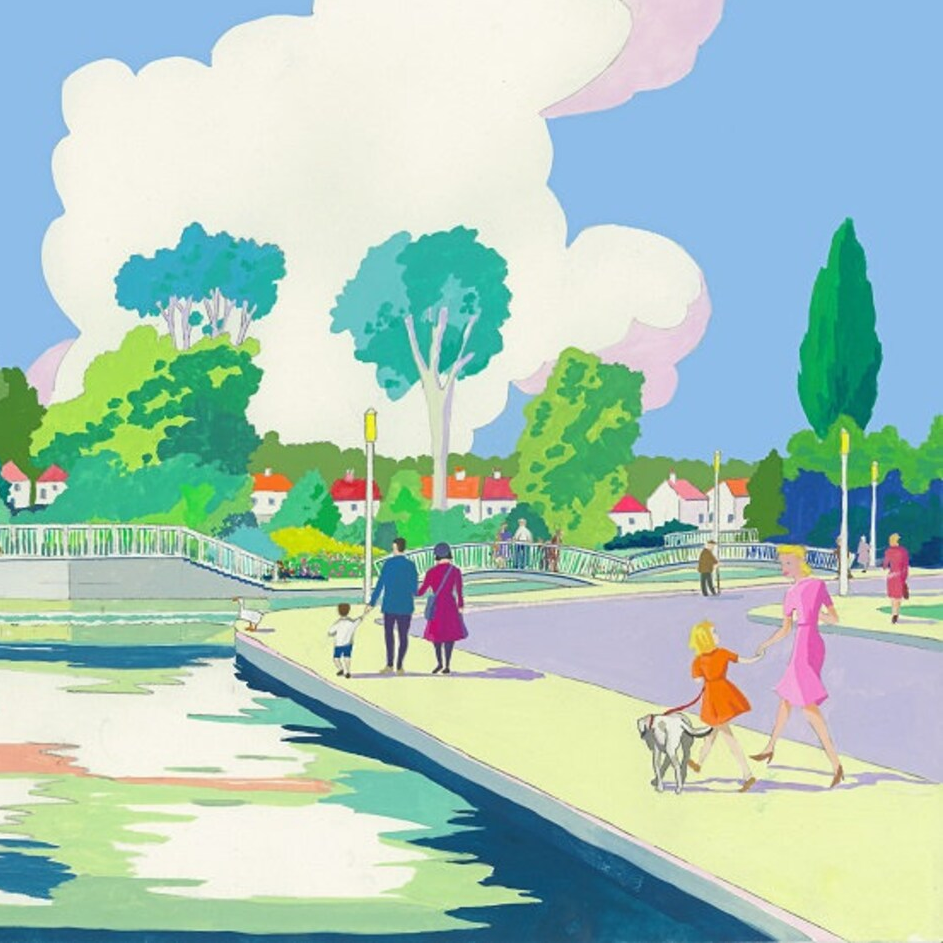
Hemel Hempstead is one of England’s first-ever ‘new towns’, built in the 1960s to accommodation a growing population in London. Once named ‘England’s ugliest town’, things are looking up, as it’s fallen off the list in a recent Telegraph survey (the ugliest town is now Slough in Berkshire, with Lewes in Sussex the prettiest).
It also has the dubious title of being the first town to build a multi-storey car park. Thankfully today peer-to-peer parking spaces are taking over, to end these horrible monstrosities.
Hemel Hempstead is also home to the Plough Roundabout, opened in 1973. It did not prove popular, bringing traffic to a stop, due to letting motorists turn left or right. Thankfully a new Dutch-style roundabout is soon to be built here instead, giving priority to walkers and cyclists.
Out walking? Follow the Countryside Code to keep all creatures safe. Keep dogs away from steep banks, mushrooms (and other toxic plants/trees) and on leads during nesting season (and near barnyard friends and wild ponies).
What changed after 1947?
Before its New Town label, Hemel Hempstead was a small Hertfordshire market town with a traditional high street, older housing, and a slower pace. It sat on old routes between towns, and was a fairly rural place to live.
Under the New Towns Act 1946, the government could designate places for planned expansion. Hemel Hempstead was chosen to take pressure off London and to add homes quickly.
Many families lived in overcrowded conditions, and war damage made it worse. London, in particular had more people than housing, and long commutes were the norm. New Towns promised a shorter commute and affordable housing near to the city.
What worked well (and what aged badly)
The affordable housing was made up of family housing estates, smaller terraced houses and blocks of flats, to suit all incomes and household sizes. There were also parks and playing fields, to provide green spaces, nicer walks and escape from traffic noise.
The town was also once known as the ‘heavenly home of hemp’, due to Dutch settlers growing this eco-friendly material to make rope (Hemel is the Dutch word for heaven’). Hemp is only slightly related to cannabis, and won’t get you high. It grows organically, and can replace wood for paper and wool for fabric.
The Buncefield oil explosion
In 2005, a local oil factory exploded, with a blast so powerful it was heard in France, Belgium and The Netherlands. Considered the largest fire in Europe since World War II, it was a miracle no-one was killed. And proves just how dangerous the oil industry is. The explosion even registered as a mini earthquake.
The giant black smoke cloud could be seen over all of southern England, and the fire injured 40 people and damaged 2000 homes. All caused by a single failed safety switch, which caused a tank to overflow with 300 tonnes of petrol.
It was only due to the explosion happening on Sunday morning, that it was not worse. The damages exceeded £1 billion, and the firefighting foam (which contains ‘forever chemicals’) were used so much, it has caused long-term contamination of local groundwater.