Citric Acid (a natural cleaner and descaler)

Citric acid is naturally found in citrus fruits, and in smaller amounts in some berries and vegetables. It’s sometimes added to canned fruits and vegetables to protect against botulism (a rare but serious illness, the reason why babies are never given honey).
It’s sold commercially as a natural disinfectant, although some people are allergic. Wear gloves when using and store securely out of reach of children. It’s also advised for pregnant/nursing women to not use it, in case of accidental inhalation of skin exposure.
Citrus oils are toxic to pets, and ASPCA advise to keep citric acid also away from pets. If you use it to clean surfaces, thoroughly rinse the area and dry, before letting pets walk on them (pets also remember may lick their paws after walking on surfaces). Same with any cleaners using essential oils (best to stick to non-scented versions).
Having said that, for pet-free homes (or council buildings, offices and hotels etc), citric acid is a wonderful nontoxic and cheaper alternative to toxic cleaning products.
You can recycle empty toxic cleaner bottles at kerbside. Take half-empty bottles to hazardous waste at the local tip. Don’t pour them down sinks, drains or toilets.
How to use citric acid
This is a multi-use product that can be used to clean and de-scale several items:
Do not apply citric acid to marble, granite or limestone as it will ruin it! Always rinse surfaces afterwards, as this is an acid that can cause corrosion. Label containers (to ensure nobody mistakes it for water or something else).
Decale your kettle
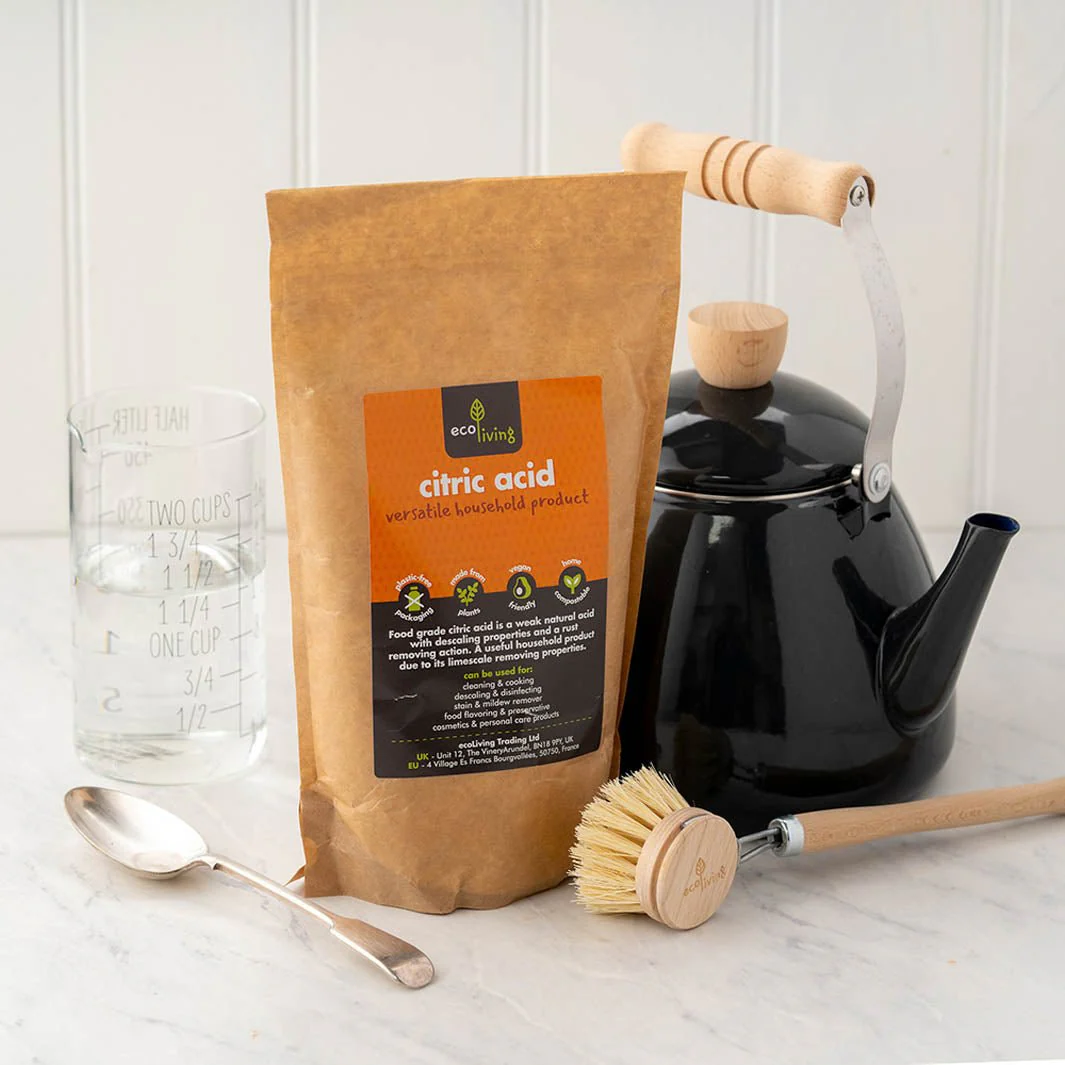
Cover the bottom of the kettle with citric acid, then add an inch of water to cover the heating element. Turn the kettle on to activate the acid (it will fizz to dissolve the limescale). Repeat until all limescale has gone. Rinse the kettle several times before use.
Clean a showerhead
Immerse the shower head in a bucket or bowl of hot water (dismantle parts if needed). Add 250g of citric acid and leave for 15 minutes, before removing from the solution and running water through parts, to clear debris.
The solution can then be safely poured down the sink or drain.
Clean washing machines and dishwashers
Add 1/2 cup to an empty drum or detergent dispenser, then run a hot water cycle to remove limescale and detergent build-up.
Clean your toilet bowl
Add 500g of citric acid to your toilet bowl, and leave to work without flushing overnight. Use a plastic-free sponge (wear gloves)to scrub and loosen tough limescale, before flushing.
To remove toilet bowl stains, sprinkle 2 to 3 tablespoons directly into the bowl, leave it to sit for 20 to 30 minutes, then scrub with a plastic-free sponge and flush.