How to Make Your Own Tasty Salads (with dressing)
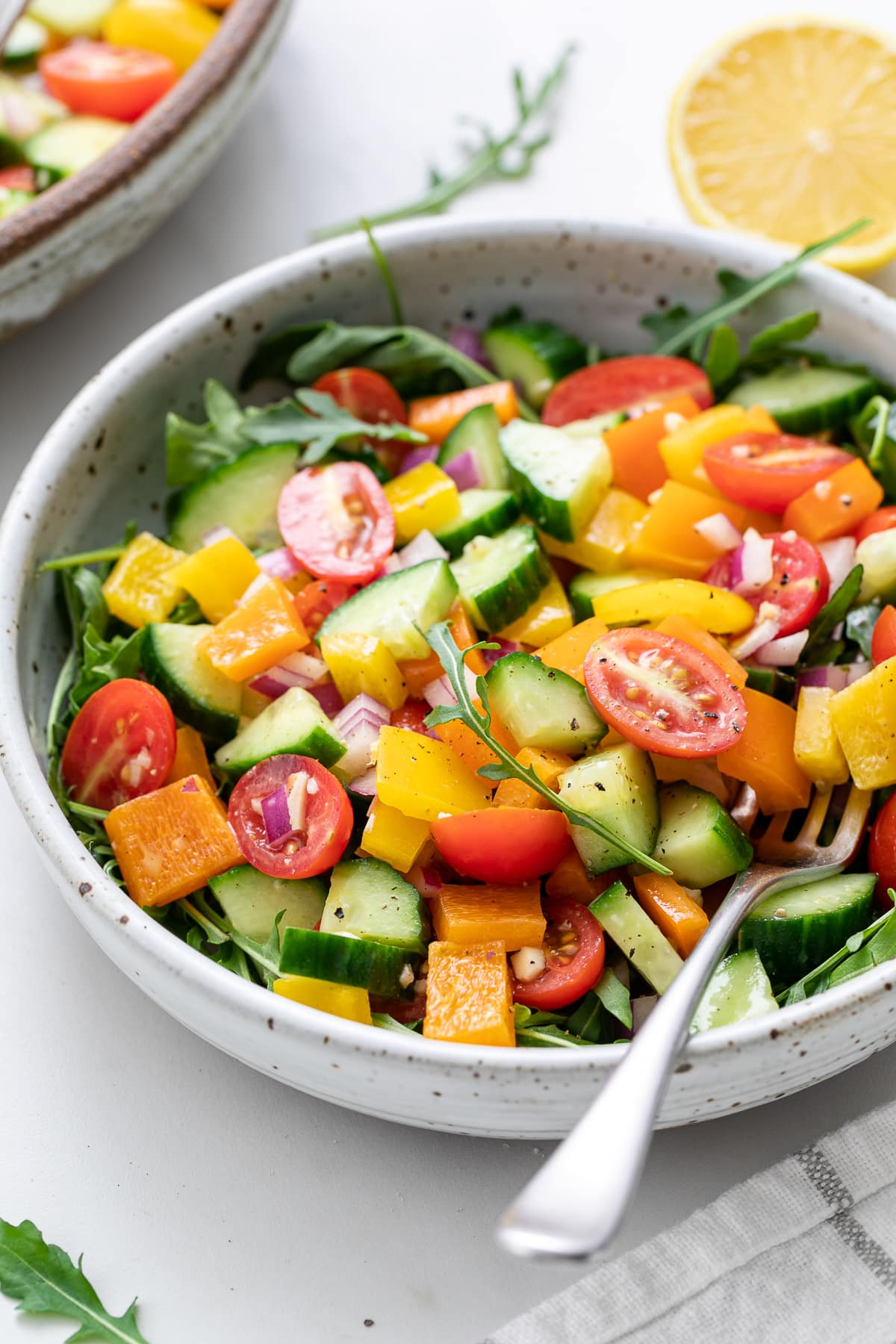
This homemade vegetable salad with garlic (The Simple Veganista) combines cucumber, peppers, tomatoes, onion and garlic, in a homemade lemon Dijon mustard oil dressing.
To make your own salad is pretty empowering. You no longer have to rely on restaurant offerings of a slice of tomato and cucumber with limp lettuce. But also are free from the (very expensive) bagged salads in supermarkets, and dressings often made with dairy ingredients.
Read up on food safety for people and pets. Bin allium scraps (onion, leeks, garlic, shallots, chives) and tomato/citrus/rhubarb scraps (acids may harm compost creatures).
Fully remove tinned lids (or pop ring-pulls back over holes) before recycling, to avoid wildlife getting trapped.
Tomato & Artichoke Salad (with chickpeas)
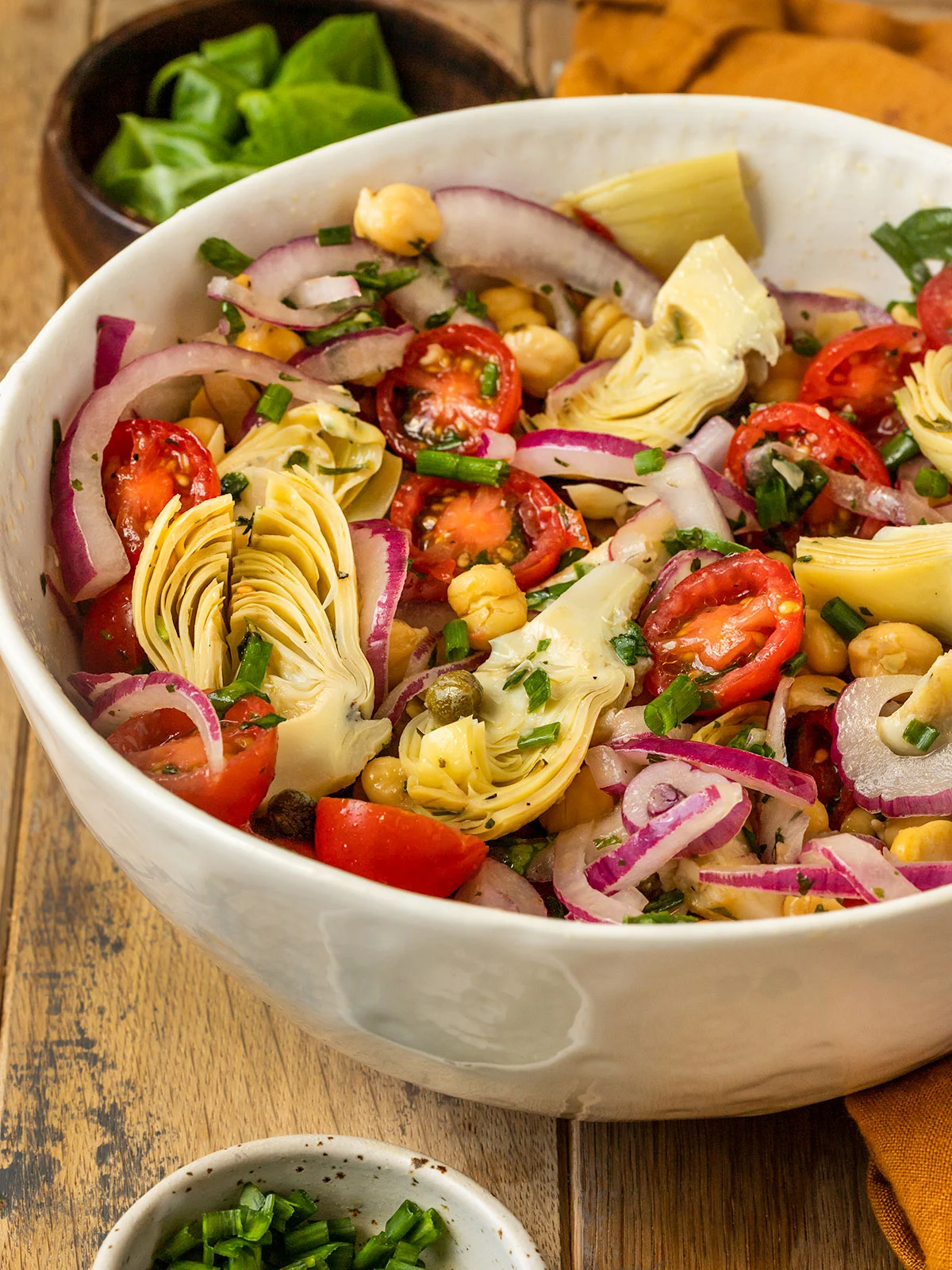
This Tomato & Artichoke Salad with Chickpeas (Short Girl, Tall Order) is a refreshing summer lunch recipe, making use of fresh tomatoes and canned artichoke hearts, along with tinned chickpeas for protein and calcium.
A Vegan Update on Old-Fashioned Potato Salad
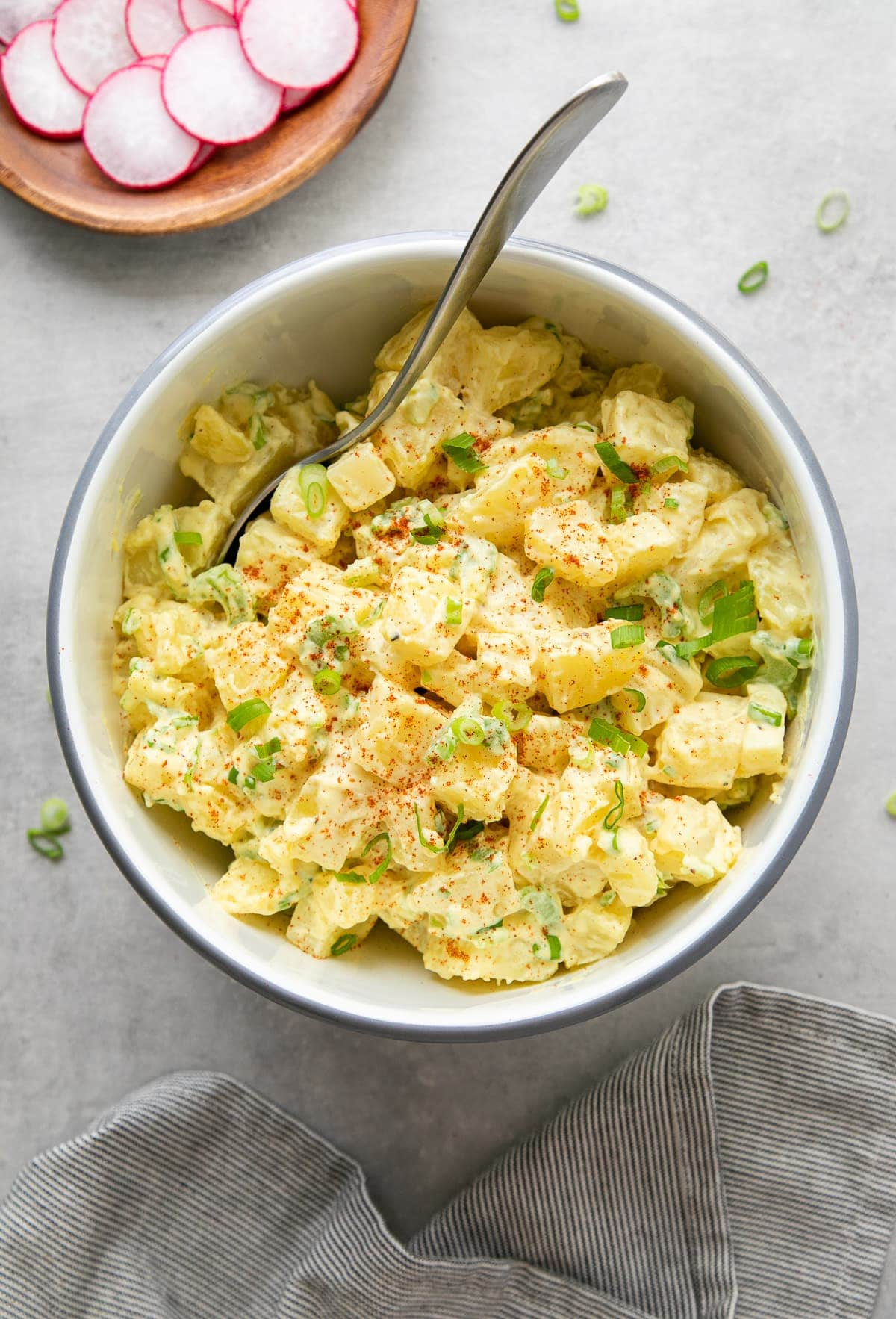
This southern-style potato salad (The Simple Veganista) combines cooked baby potatoes and chopped celery, in a vegan mayo and mustard dressing.
Celery has been eaten for thousands of years. In Egyptian times, it was used for rheumatism and athletes. Most shops sell it in plastic wrap, so look in farm shops instead. Or if it comes in plastic wrap, just leave the plastic packaging at supermarket bag bins, and take home in your own produce bags.
A Tasty Pasta Salad (with courgettes)

This vegan pasta salad (Rainbow Plant Life) is a good way to use up courgettes (conventional pesto is not even vegetarian, it contains calf rennet). This pesto is made by caramelising chunked courgettes with garlic, salt and red pepper flakes. Top with sliced cherry tomatoes and chickpeas.
Avoid courgettes that are wrinkled or have yellow skin or black spots. Store in the fridge. Choose organic to avoid cross-pollinated seed batches that carry a toxin (Tim Dowling writes how he poisoned himself with homegrown courgettes).
It’s not just cheap and filling, but high in natural protein thanks to the chickpeas, so all the ingredients are easy to find.
Courgettes (called ‘zucchini’ in North America) are quite popular in England, especially for Mediterranean recipes like ratatouille. Related to squash, the smallest courgettes tend to be most tasty (if not harvested, they grow into marrows).
Look in stores for Yorkshire Pasta Company or The Northern Pasta Co (both are made with British wheat, and sold in plastic-free packaging).
Conventional Parmesan is not vegetarian (it contains a cheese that by law, contains calf rennet). Instead, just grate good vegan cheese over the top.
Homemade Fruity Salad Dressing Recipes
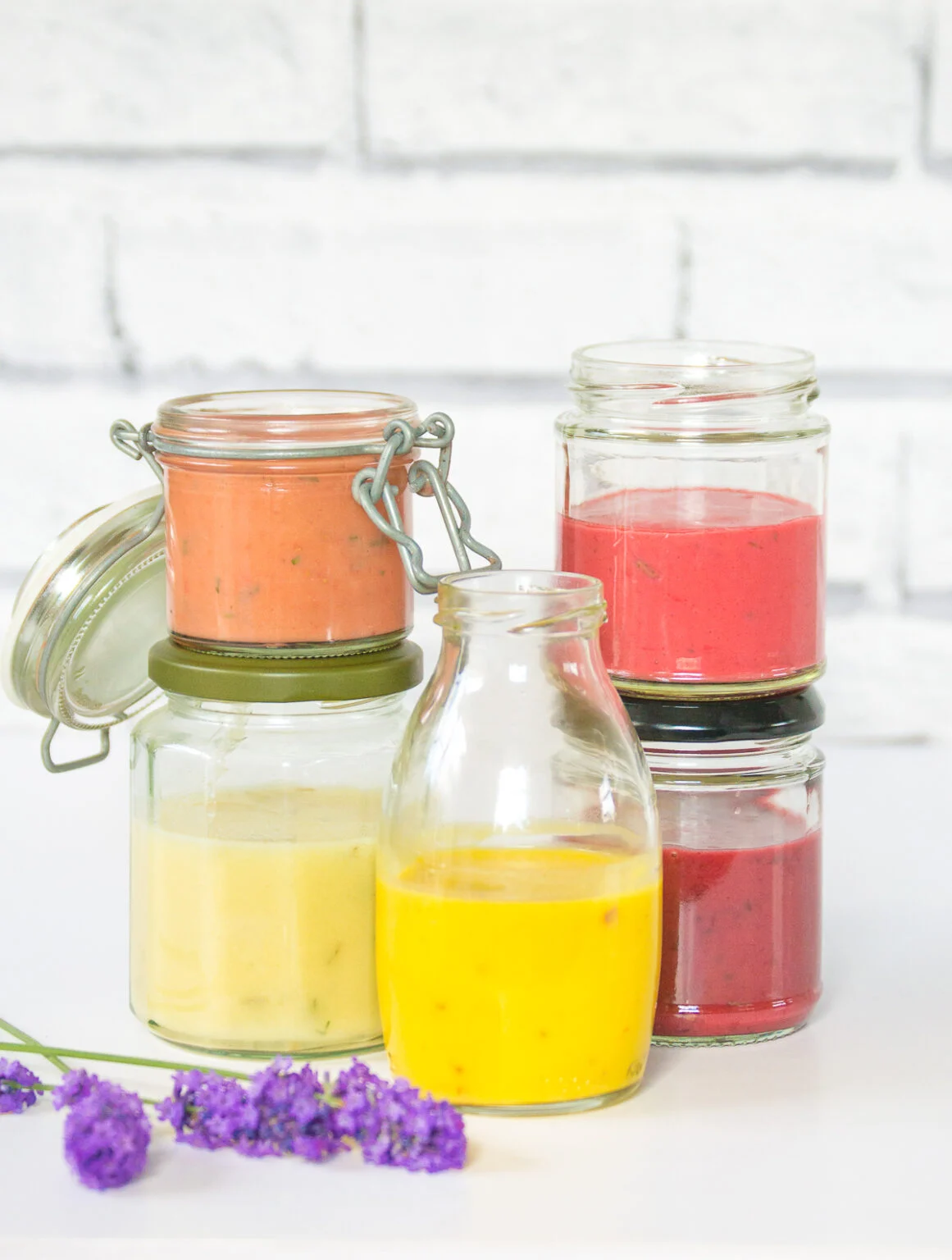
Virgin Olive oil is better for salad dressings health-wise than for cooking (rapeseed oil is better). Some people say we should not eat oil at all (and get all fat from real foods – i.e olives over olive oil). There are debates.
Try these fruity salad dressings (The Veg Space) including raspberry vinaigrette.
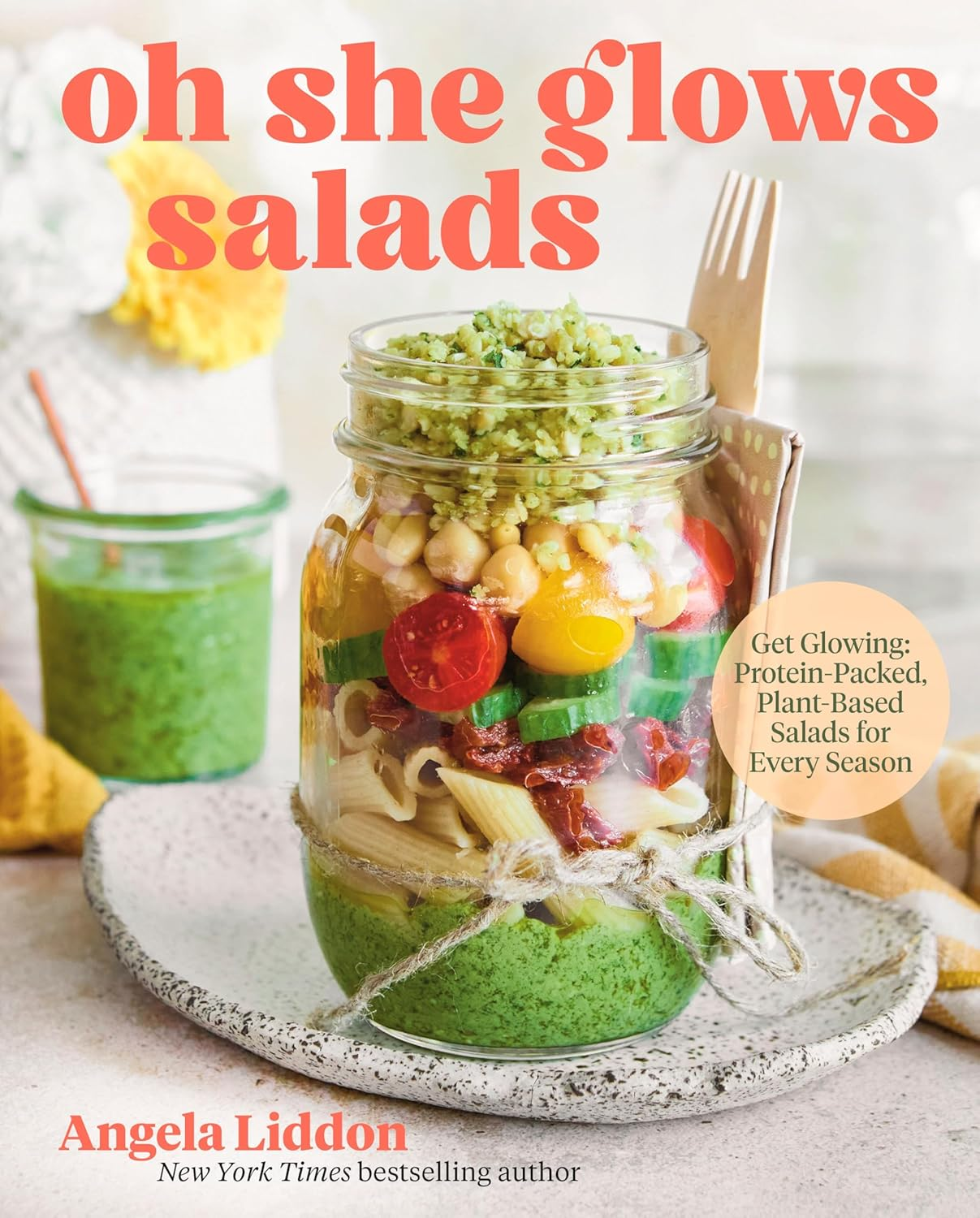
Oh She Glows Salads (protein meals for every season)
To make your own salad is pretty empowering. You no longer have to rely on restaurant offerings of a slice of tomato and cucumber with limp lettuce. But also are free from the (very expensive) bagged salads in supermarkets, and dressings often made with dairy ingredients.
Oh She Glows Salads is a wonderful guide to create your own protein-backed salad recipes, for each season. No more tasteless plastic bags of salad from the supermarket, with this book you can make your own with healthy ingredients, to store in the fridge.
From refreshing spring and summer bowls to cosy hearty salads for autumn and winter, you’ll soon discover favourites to enjoy again and again.
Recipes include:
- Glow Up Pesto Dream Bowl
- Roasted Chickpea and Parm Romaine Crunch Salad
- The Ultimate Ranch Barbecue Tofu Cobb Salad
- Roasted Mediterranean Lentil Salad
- Autumn Crunch Farro Kale Salad
Plus the book has plant-based protein toppers, creamy dressings, vibrant vinaigrettes and savoury cheeses to create restaurant-worthy salads at home.
Angela is one of the world’s best-selling vegan cookbook authors, and author of many recipe books. She lives with her family in Canada.
Tips for a Super Tasty Salad
A good salad is like a good sandwich, every bite should have contrast. If it’s all soft, it feels flat. If it’s all raw crunch, it can taste harsh. Aim for a mix of textures and flavours, and you’ll stop thinking of salad as “diet food”.
Vegetarian and vegan swaps are easy. Use chickpeas, lentils, beans, tofu, or a thick dairy-free yoghurt for creaminess. If you rely on leaves alone, the salad won’t keep you full.
Boost flavour fast with smart extras
Small steps make the biggest difference. First, dry your leaves well. A salad spinner helps, but clean tea towels work too. Next, lightly salt tomatoes and cucumber, then leave them for five minutes. Tip away the pooled liquid, so the salad stays crisp.
Add depth with one cooked element. Roast sweet potato cubes, char corn, or griddle courgette slices. Warm, caramelised veg makes raw greens taste more exciting.
Fresh herbs also lift everything. Parsley, mint, basil, and dill add colour and fragrance with almost no effort. Pickles help too, because acidity wakes up bland ingredients. A few quick wins are pickled red onion, gherkins, or capers. Finally, add a salty note (olives, anchovies, or a pinch of flaky salt) so flavours pop.
The easy dressing formula
A reliable starter ratio is 3 parts oil to 1 part acid. That could be 3 tablespoons olive oil and 1 tablespoon lemon juice. From there, tweak it to suit the salad.
Choose an oil you like. Extra-virgin olive oil tastes fruity and bold, while rapeseed oil is lighter. Then pick an acid: lemon or lime for freshness, cider vinegar for a gentle tang, balsamic for sweetness, or red wine vinegar for bite.
Seasoning matters more than people think. Salt and black pepper are non-negotiable. Add a teaspoon of Dijon mustard for flavour and better texture, because it helps the dressing hold together instead of splitting. If it tastes too sharp, add a little sweetness (maple syrup, or a pinch of sugar).
To mix, whisk in a bowl or shake it in a jar with a tight lid. Shaking is faster and easier to store. Taste it with a leaf, not a spoon, because dressing changes once it hits greens.
1) Classic lemon and olive oil vinaigrette
Mix olive oil, lemon juice, Dijon mustard, salt, and pepper. Add a crushed garlic clove if you want it punchier. It pairs well with rocket, cucumber, tomatoes, grilled chicken, and chickpeas.
Swap: use cider vinegar instead of lemon, or add a pinch of dried oregano.
2) Creamy yoghurt and herb dressing
Stir thick natural plant yoghurt with lemon juice, chopped herbs (dill, mint, or parsley), salt, pepper, and a little grated garlic. This works with roasted veg, spinach, chicken, and crunchy salads with cabbage.
3) Maple mustard dressing
Shake olive oil (or rapeseed oil) with Dijon mustard, maple syrup cider vinegar (or lemon), salt, and pepper. It’s great with roasted carrots, and crunchy veg.
Storage and safety: keep dressings in a sealed jar in the fridge. Most vinaigrettes last 3 to 5 days. Creamy dressings are best within 3 days. If it smells off, don’t risk it.