More Than Just a Movie: Supporting Indie Cinemas
Most towns and cities in England are home to ‘big cinema’, owned by just two big corporate companies. One almost went bust a few years ago, saved by huge sales of the latest James Bond release film.
But these cinemas still remain very expensive, with over-priced drinks and snacks, and often only showing the latest blockbuster releases, rather than showcasing home-grown talent or interesting world cinema releases.
If you’re going to visit the cinema, try an indie one that will more likely show better films!
Another idea is to use the license of a local pub, and have your own indie cinema for the community. Many transition towns do this, so that you get all the benefits of a local cinema, yet still support communities over big multi-nationals. Independent Cinema Office has information, if you wish to set up your own local independent cinema.
You can rent films from any genre (including classic black-and-white movies) from British Film Institute. Even if you only have a small space, you can use a simple Smartphone Projector to give all of the allure of a real cinema. You could nominate someone as ‘half-time ‘usher’ to offer drinks and snacks!
Brief Encounter (the history of England’s favourite film)

Today most cinemas seem obsessed with American blockbusters. But of course England has had its own successful film industry for over 100 years.
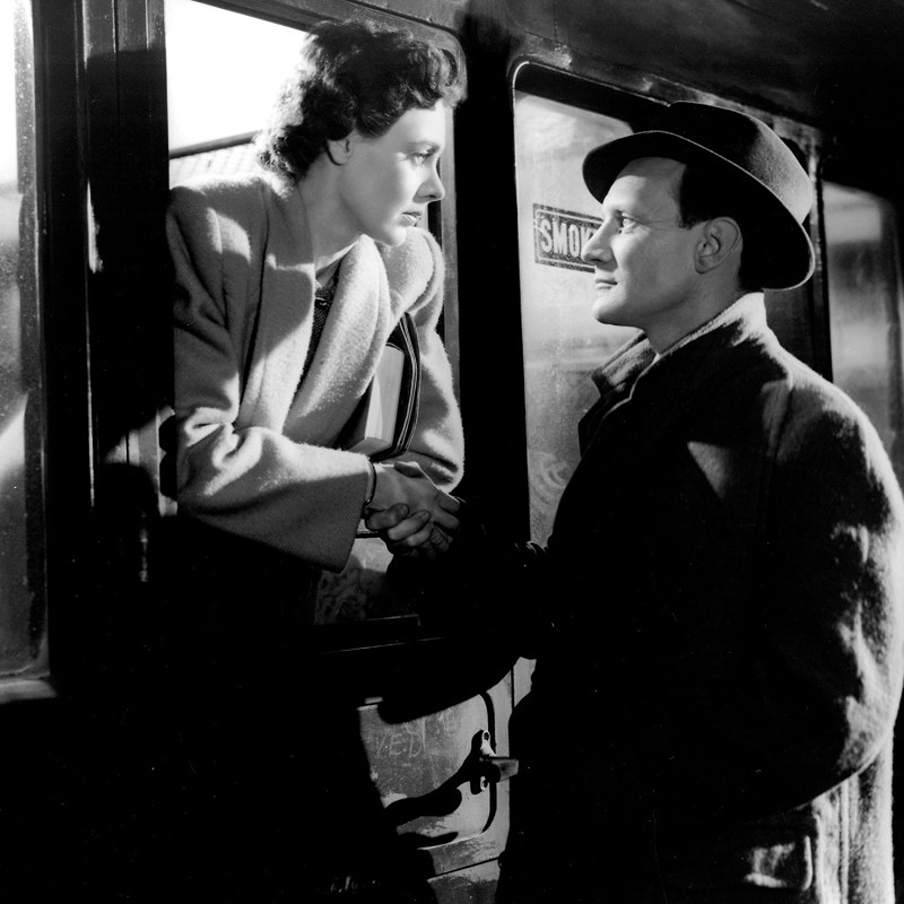
Many top films like The 39 Steps are iconic. But most people agree that likely the best film ever made in England was Brief Encounter, a story of surprising love in middle-age (that never amounts to anything, due to both people being married to other people).
Penned by Noel Coward originally as a play (it’s him making the train station announcements), the film was mostly filmed at Carnforth Station in Cumbria (the tea room still exists).
Famously Celia Johnson runs out to throw herself in front of the express train, not being able to bear it that Trevor Johnson’s character is going to South Africa, so they won’t be tempted into an affair, due to their deep love for each other.
The reason why Carnforth was chosen, was because it was far enough away from London, to be warned if there was an air raid (the film was shot during the Second World War, released in 1946). The bridge that the couple cross is in the nearby village of Langdale.
Celia Johnson was one of England’s top actresses, and later married the brother of Ian Fleming (who wrote the James Bond novels).
This writer pens a loving tribute to the ‘lady who made more Englishmen go weak at the knees than any other lady of the 1940s’. Primarily a stage actress, he says her accent was so charming that she would make Y noises before certain vowels:
‘I went eybsolutely myad and bought a new hyat’.
Famed for being quiet and intelligent and witty, she is the opposite of today’s vacuous celebrities, once telling her daughter that she would not write an autobiography, as she had never had an affair with Frank Sinatra. And if she had, she would not have told anyone!
Celia is buried next to her husband (near her son-in-law and granddaughter, who sadly died in a boating accident on the Thames).
Trevor Howard was a very successful actor, who is one of a small handful of well-known people who have declined an honour from the government (in his case, a CBE).
Others were Rudyard Kipling and painter Lowry (who after the death of his beloved mum, said there was no point in accepting one, as ‘There seemed little point, once mother was dead’).
Also support your local independent theatres

It’s just as important to support independent theatres. You support local jobs from stage directors to actors. Many indie theatres are run by volunteers, and some provide a good reason to top them being turned into Costa Coffee chain stores.
Cornwall’s Minack Theatre (above) sits on the cliffs above Porthcurno Beach in Cornwall. Built almost entirely by hand, the theatre’s stone seats carve into the hillside, and the ocean forms a natural backdrop.
England’s independent theatres dates back to the late 19th century, and were originally converted halls or old cinemas. Like today, they never had much money, and even today some rely on donations or council grants.
Some historic indie venues that still thrive today include:
- The Old Red Lion Theatre (Islington, London): Open since 1979, above a classic pub, it’s helped launch many popular playwrights.
- King’s Head Theatre (London): Famous for being the first pub theatre since Shakespeare’s time, it opened in 1970.
- Liverpool Everyman Theatre: Built with community funds after World War II and now home to some of Britain’s best-known talent.
Small fringe theatres also thrive across England, helping to give jobs to new playwrights.
Unlike big theatres, independent theatres let you chat to the actors afterwards, and there’s rarely a ‘bad seat’ in the room. Tickets are more affordable and some even offer loyalty cards, so you can visit for less.