Celebrating the Amazing Spectacles of Nature
If you live or visit England, there is not much more mesmerising than looking up in the sky and viewing a starling murmuration. This is when thousands of starlings perform an aerial sky dance, one of nature’s most amazing spectacles.
These happen in autumn to early winter. AS although we have year-round starling birds, many more migrate from northern Europe, so you are more likely to see them.
The best time to look out for a starling murmuration is dawn (around half an hour before sunrise) as the flock will then roost for the rest of the day. The dances also give ‘safety in numbers’ to confuse predators like sparrowhawks and peregrine falcons.
What happens during starling murmurations?
Before a murmuration starts, small flocks gather from up to 30km away, often resting on trees nearby. They chatter while waiting for more birds to arrive, then take flight together at dawn or twiglight. Sometimes there are just a few thousand birds, other times a murmuration can be over 100,000 birds.
This causes ‘liquid-like waves’ in the sky, as birds twist and ripple (its said that each bird tracks its seven closest neighbours). Then the entire flock funnels downards to dive into nearby reedbeds, woods or near seaside piers. And once the sky has cleared, the flock usually say goodbye with a loud chattering roar!
Where and where do starling murmurations happen?
Usually from December to January, though you may find some in November or even Febuary/early March. You can see them throughout England, but there are a few ‘hotspots’ where they tend to gather:
- Shapwick Heath (part of the Avalon Marshes near Glastonbury) is one of England’s largest starling roosts.
- Brighton Pier as the birds use the iron frameworks of the seaside piers to roost.
- RSPB Reserves (Minsmere, Fen Drayton and Strumpshaw Fen) in East Anglia (coastal reedbeds are ideal sheltered winter roosting sites for flocks).
- Nene Wetlands are also popular with starlings.
- RSPB Leighton Moss (Carnforth in Cumbria) and RSPB Fairburn Ings (Yorkshire) also draw thousands of winter starlings each year.
How to help England’s starling birds
Although starlings look quite like blackbirds, they are easily distinguished due to their metallic shimmering feathers with notes of purple, green and blue. They mostly eat insects and are good at mimicking calls of other birds (they can even mimic human speech, barking dogs and the sounds of clicking horse hooves!)
Starling populations have plummeted by over 50% since 1995, so it’s important to preserve natural habitats (including wetlands) for safe roosting spaces and natural food (leatherjackets and earthworms).
Nature-friendly farmers can help by growing organically, maintaining clover and dandelion borders (to boost insect food populations) and planting native shrubs with berries. Restoring England’s wetlands is also of prime importance.
Starlings often visit gardens. Read how to create safe havens for birds and prevent birds flying into windows.. These posts contain info on why to turn off unwanted lights, why to avoid facing indoor plants to gardens, plus tips on how and where to site and maintain nest boxes and feeders, if you use them.
More of nature’s fascinating spectacles
It’s not just starlings that perform mesmerising spectacles in nature. Other creatures that get involved include:
Cranes perform an amazing dance as a form of courtship. They lean towards each other with their wings outspread, then launch into the air with flapping wings, often flinging sticks or feathers into the air! They then spring around each other in sweeping curves, and throw their heads back, to emit trumpeting calls!
Cranes are the world’s tallest birds. Found worldwide, i nEngland they mostly live on the Norfolk Broads, Cambridgeshire Fens and Somerset Levels.
Dragonflies are such good fliers, that can even fly backwards and upside-down! They perform romantic aerial dances to attract a mate (and ward off rivals), hovering over ponds and riverbanks. After fluttering his wings at the female, she will join in the dance, they even breed in mid-air!
Dragonflies (and damselflies) have lost most of their natural habitats in the last 400 years, so it’s important to restore wetlands to give them back their natural habitats.
Aurora Borealis (or Northern Lights) are seen in Nordic countries, transforming skies into streaks of moving greens, pinks and purple – caused by charged particles from the sun hitting the earth’s atmosphere. Best seen from Norway, Iceland or even the most northern areas of the Scottish Highlands.
Monarch butterflies migrate up to 3000 miles each year, from North America to Mexico. This gathering of orange and black wings, fills the air with ‘floating confetti’.
Coral spawns occur in reefs worldwide, when the waters fill with colourful specks, due to a mass release of tiny coral eggs and sperm. Spawning is timed to the moon and water temperature. It’s important to protect natural habitats, as coral reefs are under threat from warming seas (due to climate change) and polllution.
Bioluminescent Bays occur when microscopic organisms glow in the dark, looking like the sea is lit blue from within. However, this only occurs when the creatures are disturbed, so it’s not a good thing. It mostly occurs in Puerto Rico and Australia.
Bats are super-cute (and not scary at all). These endangered creatures (it’s illegal to disturb them) hang upside-down, due to it being the easiest position to quickly fly away, if there are predators nearby.
Cats are natural predators of bats, so don’t attract them to your garden, if you live with feline friends.
Flight has always fascinated humans. But while we have to create machines to fly, other creatures sometimes use their own wings! Many other creatures (like frogs, geckos, squirrels and lemurs) can also ‘glide’ across water and through trees, giving the appearance of flying!
Bird wings are marvels of engineering. They sit on bones to create a shape like an aeroplane wing, with the muscles in the centre of the body providing balance.
Read our post on how to stop birds flying into windows.
Feathers allow the bird to lift up into the air, and glide or flap as needed. Hollow bones means flying is more efficient. Birds also use their tails as steering wheels! They can also close or spread their feathers, to act as propellors.
Birds with exceptional flying abilities are:
- Swifts ‘sleep on the wing’ while migrating to and from Africa.
- Big albatross birds can lock their wings, to glide over the ocean for hours, sometimes for 600 miles a day, without landing!
- Hummingbirds can flap their tiny wings 50 times a second, to stay still while feeding on flower nectar. They can even fly backwards!
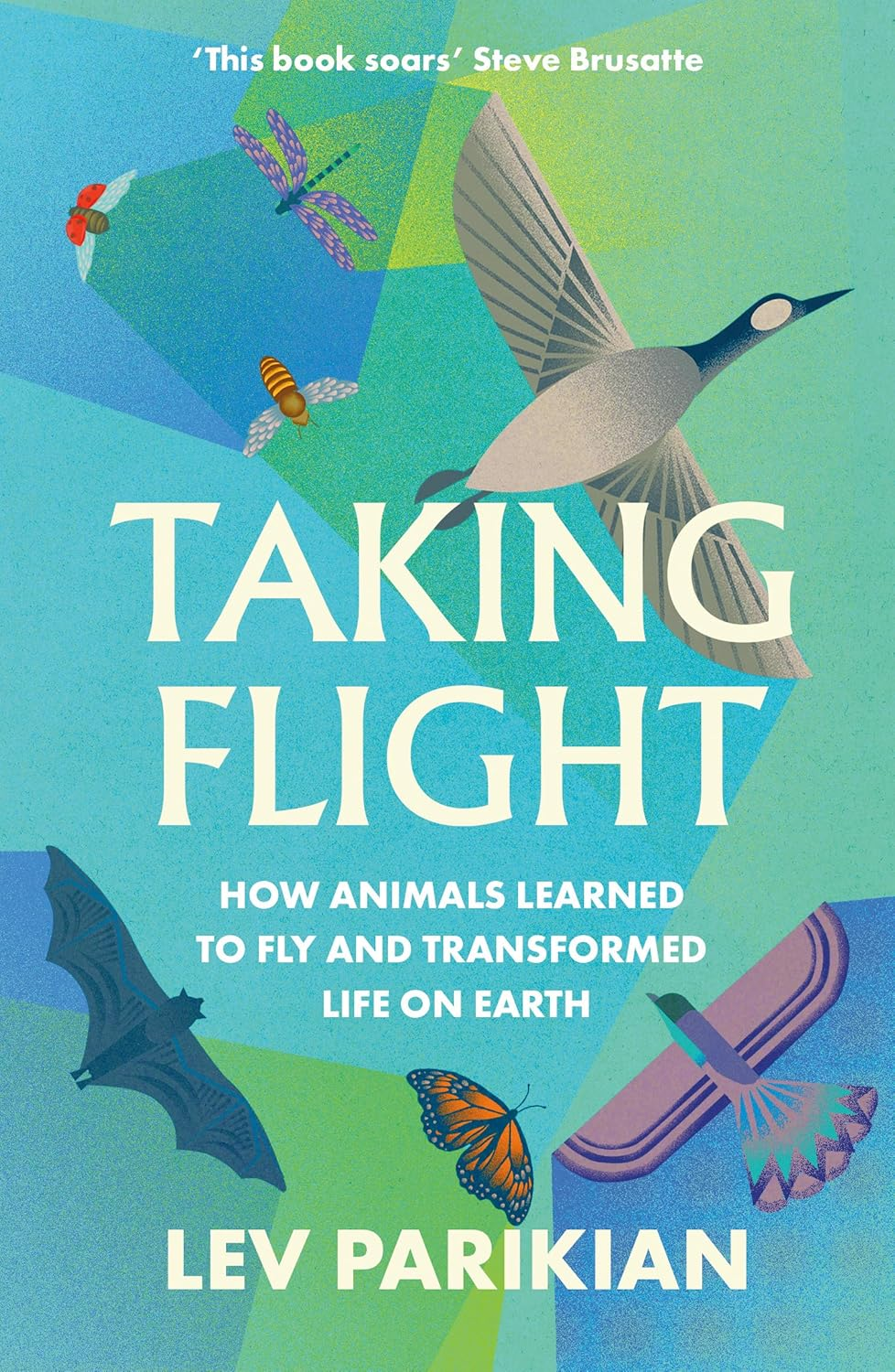
Taking Flight is a book to look at which creatures live life on the wing. Flying is a miracle, yet one that occurs each day, above our heads.
Birds fly of course, but so do many other creatures including butterflies and bats. unique book that looks at which of our native creatures live life on the wing. Flying is a miracle and yet one that occurs each day above our heads.
Rapid Wing Beats of Butterflies
Butterflies are one of many species of insects that use a similar process to fly well. Their vein patterns in the wings, offer strength and flexibility, with muscles that can contract at astonishing speeds, allowing for rapid wing beats, to keep them in the air.