Easy Ways to Avoid Plastic at the Grocery Store
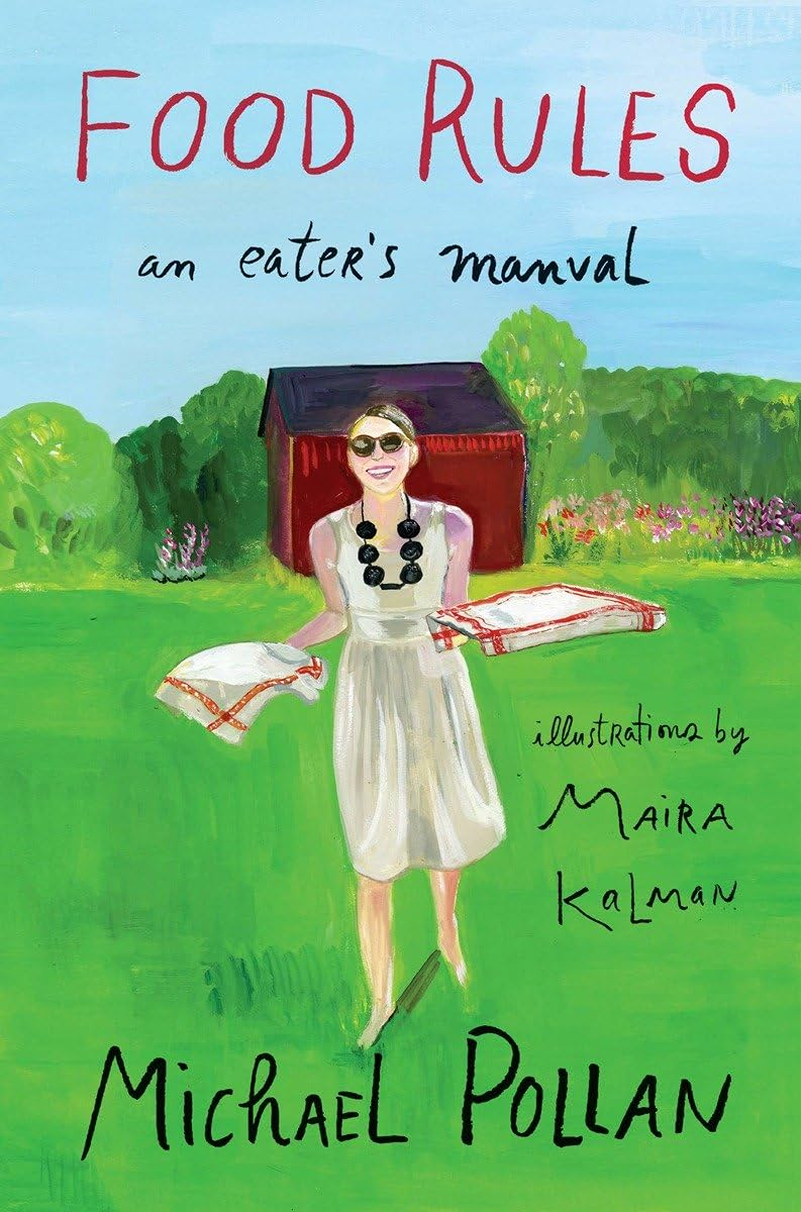
Food Rules is a great little book (it costs a fiver) that is ideal to take with you to the grocery store, or just read and enjoy, to learn what to eat. In a nutshell, Michael has condensed all the wisdom of good nutrition, into a book of rules that you can use, to empower your eating and health.
Whatever your diet, this book has your back. If you follow these rules, combined with some exercise (and an optional sustainable vegan supplement to cover any bases), you should enjoy pretty good health.
Before cooking, read up on food safety for people and pets (many foods are unsafe near animal friends). Bin allium scraps (onion, leeks, garlic, shallots, chives) and citrus/tomato/rhubarb scraps, as acids could harm compost creatures. It’s okay to put them in food waste bins (made into biogas).
Before recycling cans, rinse then remove lids (pop ring-pulls over holes). Then use your fingers/thumb to ‘pinch’ inner rims together, to avoid wildlife getting trapped.
If growing food, read our posts on pet-friendly gardens and wildlife-friendly gardens. Avoid facing indoor plants to outdoor gardens, to help stop birds flying into windows.
Michael’s 64 food rules (in summary)
For more information, buy Michael’s book. But here are some of them in summary, as a great guide to know what to eat, and what to choose when in the supermarket. Could you imagine if everyone in England followed these? Whatever your diet (vegan, vegetarian or omnivore), it would completely transform what supermarkets offered us to eat (and like it or not, they are probably here to stay).
Even farm shops and health shops would change what they served people (not expensive cuts of meat at a farm shop with a few veggies, or aisles of supplements and dried goods at health stores). They would all have to serve proper affordable organic food for the masses, and the NHS would save a fortune as a result:
- Don’t eat anything your great grand-ma wouldn’t recognise as food. Or anything a child can’t pronounce.
- Avoid foods with sugar (or sweeteners) as one of the top three ingredients. Salt and sweeten food yourself.
- Avoid products with more than five ingredients. And anything with high-fructose corn syrup or with ‘low-fat’ or other health claims.
- Avoid foods you see advertised on TV.
- If it came from a plant, eat it. If it was made in a plant, don’t.
- It’s not food, if it arrived through the window of a car.
- It’s not food if it’s called the same in every language.
- Eat well-grown food from healthy soil.
- Don’t eat breakfast cereals that change the colour of the milk.
- The whiter the bread, the sooner you’ll be dead!
- Occasional junk food is fine, if you cook it yourself. Break the rules, once in a while!
- Pay more, less less. And enjoy a glass of wine with dinner!
- Serve a proper portion, and don’t go back for seconds.
- Don’t get your fuel from the same place your car does!
Good nutrition is not just about avoiding sweets at the checkout. Michael gives you the knowledge you need that you likely already knew – supermarkets don’t really care about your health, they care about profit. He gives a few indicators that you can try looking for yourself:
When we watch TV, our brains go into ‘alpha mode’ (a bit like meditation). Surveys have asked people in supermarkets why they have certain brands in their trolleys, and many have no idea! They have been under hypnosis the night before! Think about which foods the big supermarkets advertised last time you saw an ad. Were they advertising special offers on organic broccoli? Not likely.
Bit supermarkets have no clocks or supermarkets, so you lose track of time. They are also designed to make you stressed, so you buy more to eat more. Think of Co-op supermarkets, that blast loud music (which could cause pain for older customers with hearing loss). Same reason why McDonald’s is bright red and yellow.
And here’s the biggie. If a big supermarket cared about your health, it would have aisles and aisles of fresh produce, chilled cabinets of healthy fridge goods, and a few processed items. But every one follows the same design: A couple of aisles of fruits and veggies (mostly not organic). Then perhaps a ‘free-from aisle’ and a small fridge and some part-baked bread in what the Real Bread Campaign calls ‘tanning salons for bread!’
The rest is all processed food and alcohol. Aisles and aisles of beer, wine and cider – then more aisles of processed foods – plastic-wrapped breads and rolls, processed cereals, canned foods and aisles of sweets, chocolate and non-food items.
And as Michael so correctly points out; the special offers are always on the high-profit processed foods at eye-level (Frosties in your face with offers, lowly porridge oats with no offers on the bottom shelf). And daily staples (like bread and milk) are never near the door. They are always at the far end of the supermarket, to ensure that you pass lots of other foods you don’t want or need, before you get to the checkout. Take a look next time – he’s right.
How to buy organic bananas (with no plastic)
We’ve all been there, buying bananas at the grocery. The Fair Trade ones are loose, but not organic. And the organic bananas are good for the earth, but in plastic. Organic produce has to be wrapped, if sat next to non-organic produce.
The simple solution is (if you have one) to seek out a local organic farm shop, that will likely also sea-freight the bananas too. Because everything else is organic, these bananas can be both Fair Trade and organic!
Zero waste produce bags
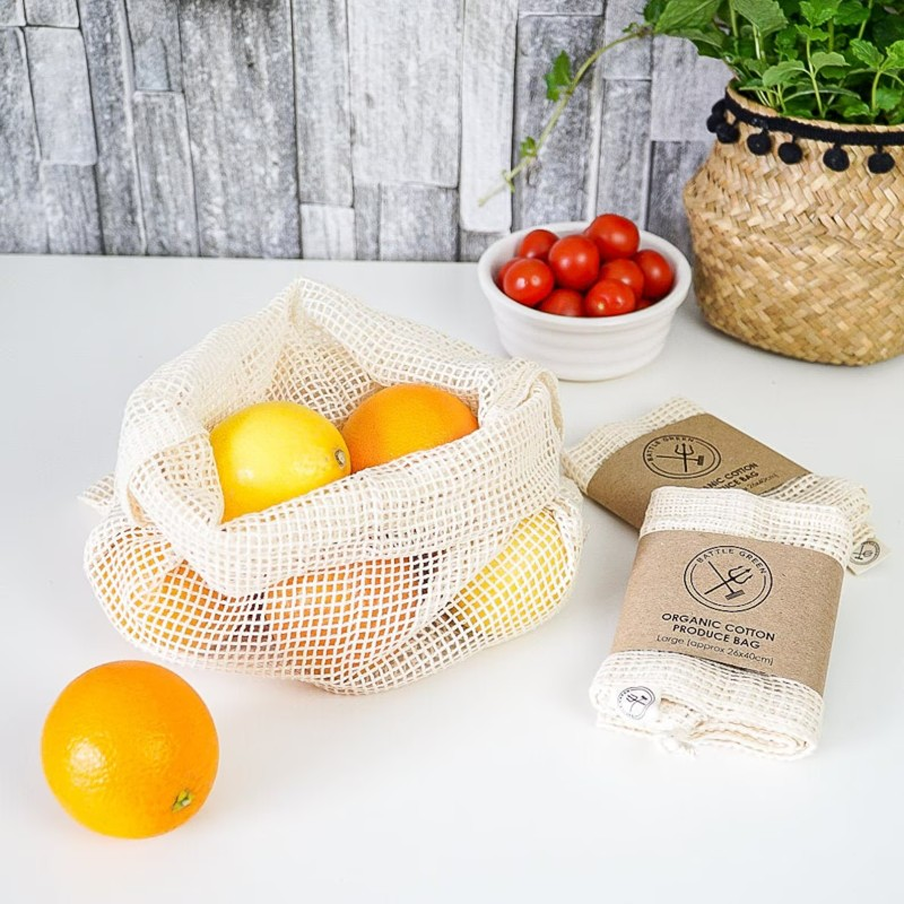
These organic cotton produce bags (Wales) weigh hardly anything. Organic cotton also helps fresh produce breathe, so it’s likely to last longer in the kitchen, once you get home. You can even use them as ‘mini-colanders’ to wash fresh produce, before serving or cooking.
Zero waste shops use a tare system, where you weigh your packaging first, then weigh the products, and it automatically deducts the packaging so you don’t pay for it.
But even if you shop in supermarkets, it won’t cost you much to take your own produce bags. These replace plastic and paper bags at the fresh produce aisle.
It also sends a message to supermarkets that you don’t want the packaging. Some people rebelliously leave it at the checkout! Or at least just recycle it at supermarket bag bins, so you don’t take it home with you.
Most ‘nets’ for citrus fruits and onions are made from plastic (so never compost). Buy loose produce (or take zero waste produce bags to the store). To dispose of existing fruit netting, cut open the holes and place inside a larger sealed bag for disposal (you could also tie a knot in the middle) at supermarket bag bins (remove/recycle metal clips).