Sustainable Gin: Choosing Better Brands
Gin can look green on a shelf. A leaf on the label, a few warm words about nature, maybe “hand-picked” botanicals. Yet sustainable gin isn’t a separate flavour, it’s a set of choices a brand makes about land, water, energy, people, and packaging.
The good news is you don’t need a science degree to shop smarter. With a few quick checks, you can tell the difference between real progress and a pretty story.
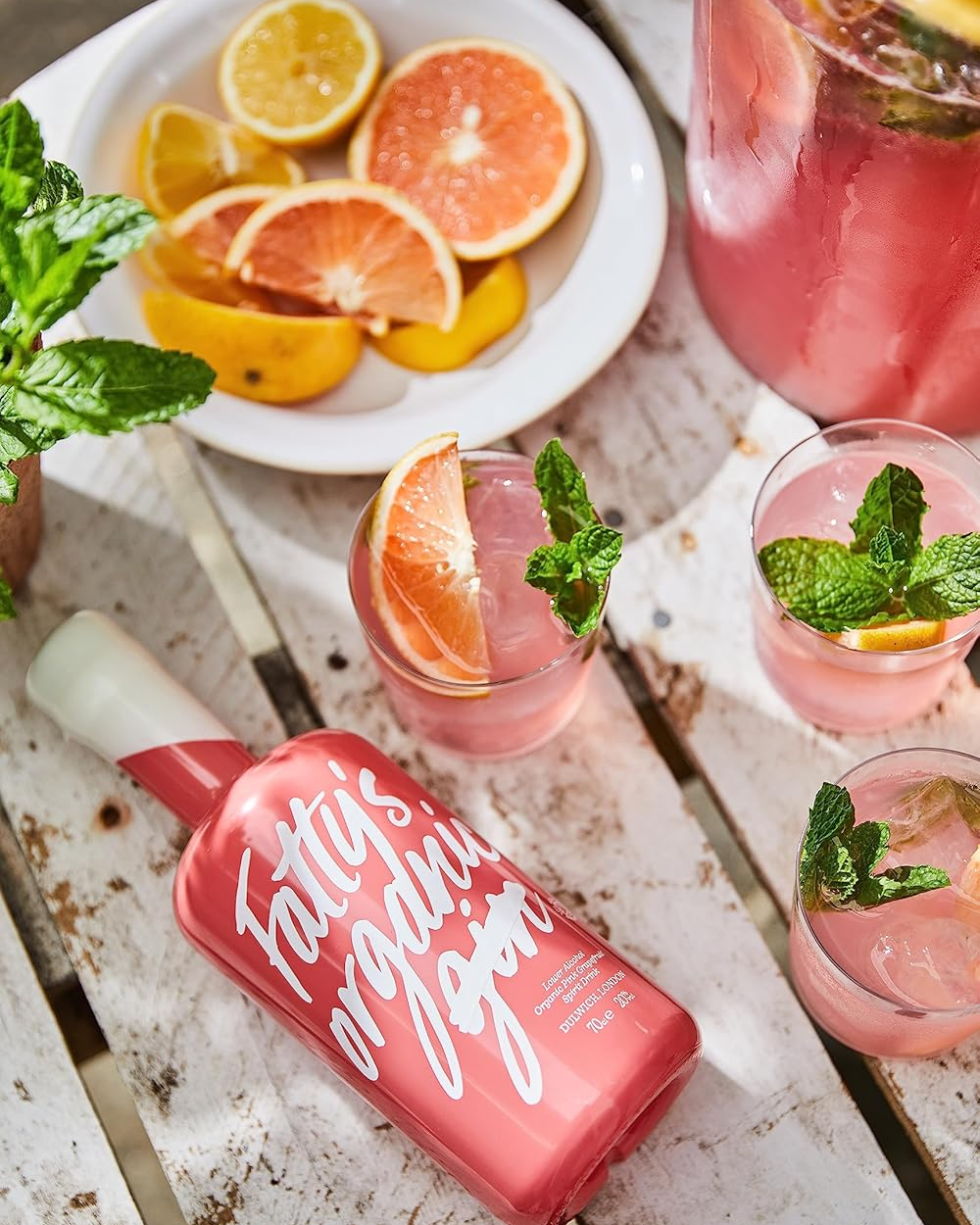
Fatty’s Organic Gin uses dill as the key botanical. Dulwich (an affluent borough of southeast London) literally means ‘the meadow where dill grows’. There’s also a winter spiced gin with cinnamon and nutmeg.
The low-alcohol version is based on pink grapefruit; serve with lime and pink grapefruit juice with crushed ice, garnished with a wedge of pink grapefruit.
Muddle 50ml of Fatty’s organic gin with four lime wedges, two springs of fresh dill and one teaspoon of sugar. Add to a glass half-filled with ice and 2 slices of diced cucumber. Stir and top with soda water.
Corks are too dense to recycle and are choking hazards, so send off in bulk to Recorked, if your local off license does not collect.
Check medication before drinking tonic water (contains quinine). Also avoid tonic water for pregnancy/nursing (but hopefully you won’t be drinking gin anyway).
What makes a gin sustainable?
“Sustainable” only means something if it includes the whole journey. Botanicals matter, but so do the still, the cleaning water, and the glass you carry home. No bottle is perfect, so the goal is better choices backed by clear proof.
Botanicals and farming: the real impact
Gin begins with plants, most importantly juniper. Then come the supporting notes, such as citrus peel, coriander seed, angelica root, orris, and more. Each botanical has a footprint, because growing (or gathering) plants uses land, water, and sometimes chemicals.
Organic farming can help protect soil life and nearby waterways. Organic certification can be a useful sign here, because it sets rules and checks. Regenerative farming is another term you may see, which often focuses on healthier soils and biodiversity. Still, it’s not a single standard, so look for detail rather than slogans.
Local sourcing can be great, but it’s not always best. If a plant struggles in your climate, forcing it to grow nearby can mean extra inputs. Sometimes a well-suited growing region, with fewer sprays and less irrigation, makes more sense even with transport.
Wild harvesting needs special care. Done well, it can support rural incomes and keep traditional skills alive. Done badly, it strips habitats and weakens future crops. Responsible brands should talk about limits, seasonal picking, and fair pay for growers and pickers.
One word to treat carefully is “natural”. It can mean botanicals come from plants, but it doesn’t automatically mean organic, local, low-impact, or fairly traded. In other words, natural is not a guarantee.
If a brand can’t explain where botanicals come from, and how people are paid, it’s hard to call it sustainable.
Distilling with less energy and water
Distilling needs heat, and heat usually means energy. The still must warm the spirit, run the distillation, then clean up ready for the next batch. This “behind the scenes” part can carry a big share of a gin’s impact.
A more sustainable distillery often does a few unglamorous things well. It may run on renewable electricity, recover heat from the process, insulate pipework, and maintain efficient stills. Some sites also schedule production to reduce repeated warm-ups and cool-downs.
Water matters too. Distilleries use water for cooling and for cleaning. Traditional cooling can run a lot of water through condensers. Closed-loop systems recirculate cooling water, which can cut use sharply. Cleaning choices also count, because harsh chemicals and heavy rinsing add to wastewater load.
When you’re checking a brand, look for measurement and openness. Do they publish energy sources? Do they track water use? Do they measure emissions and set reduction targets? A short statement is easy to write, but numbers and regular updates take work.
How to spot sustainable gin you can trust
Start with what you can verify. Certifications and public reporting aren’t perfect, but they create accountability.
Glass is familiar and easy to recycle, but it’s heavy. Heavier bottles usually mean higher transport emissions. That doesn’t make glass “bad”, it just means details matter.
Lighter-weight bottles can reduce shipping impact. Higher recycled content can also help, because it generally needs less energy than making new glass. Paper labels and simple closures can improve recyclability too, especially if they avoid mixed materials.
Refills are worth looking for. Some brands offer refill pouches, and some areas now have refill stations or returnable bottle schemes. These options aren’t everywhere yet, but they can cut packaging per serve.
If you buy online, try to bundle orders and choose slower delivery when you can. Fewer trips, fuller vans, and less urgent shipping usually reduce emissions.
Simple ways to enjoy gin more sustainably
Garnish looks lovely, but it can be a bin-filler. A seasonal slice, a sprig from a windowsill pot, or no garnish at all can still feel intentional. If you do use citrus, use it properly. Peel wide strips for aroma, then squeeze the rest for juice.
Leftover wedges often die slowly in the fridge. Instead, freeze them for future G and Ts, or blitz them into a quick cordial with sugar and hot water. Keep it small-batch so it gets used.
Single-use plastic is an easy win. Skip plastic straws and stirrers, and use a spoon you already own. For mixers, larger bottles can reduce packaging, although it depends on what your household will finish while it’s fizzy. Locally made tonic or soda can be a sensible choice too, as long as the brand shares real information.
The Best Brands of Artisan Tonic Waters

Tonic water is mostly served as a mixer for gin and vodka, or sometimes alone as a refreshing drink. But it was originally used to help prevent malaria, as it contains quinine (from the bark of the cinchona tree).
It was so bitter that medics added gin, to make it more palatable. Modern tonic waters don’t have as much quinine, and are generally sweeter.
- Fentimans (Northumberland) makes a wide range of botanically brewed tonic waters, made with herbal infusions from lemongrass to Sicilian lemon oil.
- Luscombe (Devon) blends Dartmoor spring water with wild or organic fruits, and Indian quinine. Also in flavoured versions (elderflower and grapefruit) and a Light version (sweetened with fruit sugar, with Japanese yuzu).
- Daylesford makes organic tonic water with dandelion, instead of quinine. Containing far less sugar, it’s bottled on a family farm in Devon. Choose from Light, cucumber, wild elderflower or Damescena rose.