Together Health Pregnancy Supplement (in eco packs)
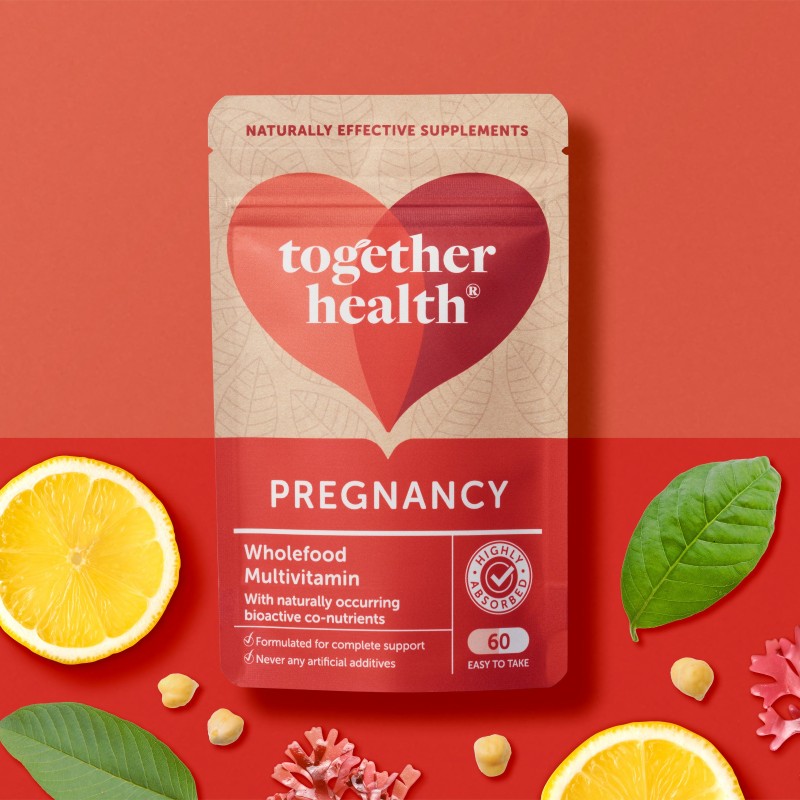
Together Health Pregnancy Multi includes the recommended 400mcg of folic acid in folate form, alongside vitamin A in the safe natural form of beta carotene. And complete nutrients with powerful natural food compounds.
This supplement has been formulated by an expert nutritionist, working in line with government and European Food Standards Agency recommendations to meet all your nutritional needs in a safe bioavailable form.
Check with GP before taking supplements if on medication (or pregnant/nursing). Recycle unused supplements/medicines at pharmacies (never flush them down the loo).
Also read about Together Health’s supplement for breastfeeding.
The capsules are made from plant cellulose from the Pinus Elliottii tree, and can be separated and the contents mixed with food or drink if preferred.
The supplements are sold in easy to recycle pouches that are plastic-free and contain a protective film made from wood pulp. All layers are home compostible.
Subscribe online for big savings, and get double rewards cash on orders, you can pause or cancel anytime.
It includes:
- Folate to contribute to tissue growth
- Iron in the ideal form for pregnancy
- Vitamin D3 to help cell division
- Zinc for fertility and reproduction
It’s suggested by Together Health to pair this with omega 3 for complete support through breastfeeding and pregnancy.
Together Health folate supplement
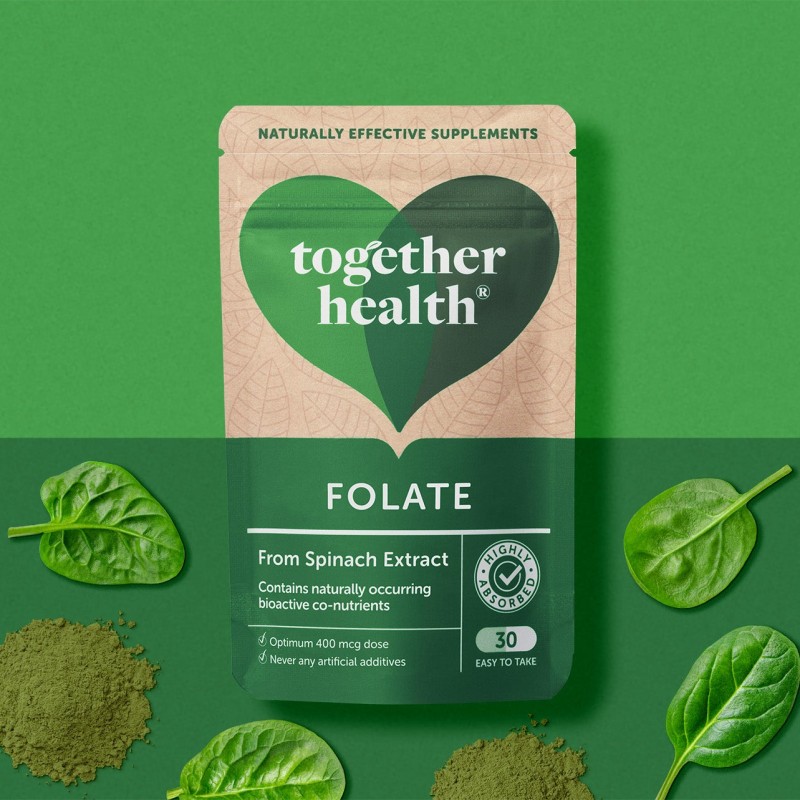
Together Health Folate is grown from spinach (no artificial pesticides or herbsides) in the recommended 400mcg dose for pregnancy, to help prevent spina bifida in babies. This highly absorbed supplement contains active folates including 5-MTHF and other beneficial compounds from spinach.
The pregnancy supplement above includes folate, this is more for anyone who is already on a multi or who just wants to take the NHS recommended dose of folate.
Folate (or vitamin B9) refers to a group of vitamins that naturally exist in foods, while folic acids is a specific synthetic form that does not exist in nature. Folate is processed in the digestive tract, while folic acid requires a two-step process in the liver and other tissues to convert.
Unmetabolished folic acid is not natural and is not recommended. Folate is better absorbed and this version has excellent bioavailability, using a natural digestive enzyme to convert it in the same way as the body.
When to Consult Your Doctor
- You have thyroid conditions, anaemia, diabetes or gastrointestinal disorders.
- You are carrying twins or more.
- You take anticoagulants, thyroid medication or high-dose supplements.
- You experience persistent nausea, vomiting or constipation from supplements.
- You are unsure about combining a separate DHA, choline or iron product.
- Do not increase the dose unless advised by your clinician. If you take separate iron or iodine, check combined totals with your midwife or GP.
Empowered Birthing: Navigating Natural Pregnancy

Pregnancy and childbirth are of course natural, but in this day and age, getting a little help from modern medicine is often advised, for complications like gestational diabetes or pre-eclampsia. This makes both safer, with highly trained midwives and follow-up support.
The Positive Birth Company offers apps and courses for an easier birth.
Founded by a woman trained in hypnobirthing (after her own difficult birth that involved a lengthy induction and forceps delivery), this company offers courses accredited by the Royal College of Midwives, for pregnancy, hypnobirthing and post-partum.
NHS site has an overview of different types of childbirth. It does not recommend water births for high-risk pregnancies.
Though statistically as safe, in rare cases there has been cases of drowning, waterborne infections, breathing problems and rupture of the umbilical cord. Also read why breastfeeding is (nearly) always best.
National Childbirth Trust has good information on labour and birth, with pain relief options. To reduce risk of stillbirth and miscarriage, expert advice includes:
- Eat well, and avoid smoking and alcohol. Avoid caffeine or reduce to no more than 1 cup of mild coffee or 2 cups of tea daily (avoid cola). Most coffee house drinks are higher in caffeine, so reduce accordingly.
- Obviously eat well and avoid smoking or alcohol. Also limit caffeine (no more than 1 cup of coffee or 2 cups of mild tea per day – ideally none). Know that ‘coffee shop’ drinks are higher in caffeine.
- Protect against infections like flu (wear a mask).
- A baby’s movements should increase up to around 32 weeks, then stay static until the due date. If something is not normal, contact your GP immediately. Attend all ante-natal appointments.
- Try not to sleep on your back, as this can compress your inferior vena cava (large vein) which reduces blood flow to a baby. The Lullaby Trust has info on the safest ways for babies to sleep, to reduce risk of crib death (they do not recommend cot bumpers). Read more on natural nurseries.
- Preemie Care is a guide by experts on navigating the first year, if you have given birth to a premature baby.
A Plastic-Free Pregnancy Test Kit
Hoopsy Pregnancy Test is unique in that it’s a medically approved pregnancy test (99% accurate). but this one is made from 99% paper, and easy to use.
It can be used up to 5 days before your period is due, and is easy to write on, if you want to record the day you took the test. Contains 5 tests (also in a 10 pack and 3 pack).
The test gives results in 5 to 10 minutes (depending on how diluted urine is). And takes up less space in landfill than plastic tests, if it’s throw in the bin. So it doesn’t take decades to break down, like plastic pregnancy tests.
This test has been approved for sale in the UK and EU by the medical authorities (MHRA and CE). The test is easy to read (positive, negative or invalid – which may mean you didn’t follow the instructions).
To use, just open the test pouch and hold the end with the Hoopsy logo. Put the other end in your urine stream for 3 to 5 seconds, being careful not to pee over the MAX line! Put the test on a flat surface, with the printed side up.
Then wait 5 to 10 minutes, to read the result. Do not read the result after 10 minutes.
Foods to Avoid When Pregnant/Nursing
Pregnant (and breastfeeding) women must avoid certain foods to keep them and babies safe. Also wash soil off salads and vegetables and avoid caffeine. Ensure food is well-cooked. Read more on food safety for people & pets.
Foods to avoid include:
- Alcohol and caffeine
- Some herb teas (check labels)
- Raw meat, liver and cold-cut meats (salami, prosciutto, pepperoni, chorizo)
- Game meats (goose, partridge, pheasant)
- All pâté (including vegetarian pâté)
- Raw or partially cooked eggs
- Liquorice and liquorice root
- Too much ginger (contracts uterus to cause early labour)
- If you eat fish: avoid raw fish, and no more than 2 weekly portions of oily fish or tuna steaks (no more than 4 cans of tuna)
Support for Bereaved New Parents
The charities SANDS and CRUSE offer free bereavement services (use the Baby Mailing Preference service to remove junk mail related to baby items, to avoid further upset).
The charity Dresses for Angels creates beautiful ‘Angel burial gowns’ from people donating wedding and bridesmaid dresses, so contact them if you have a lost a baby.