From Canteen to Classroom: Zero-Waste Education
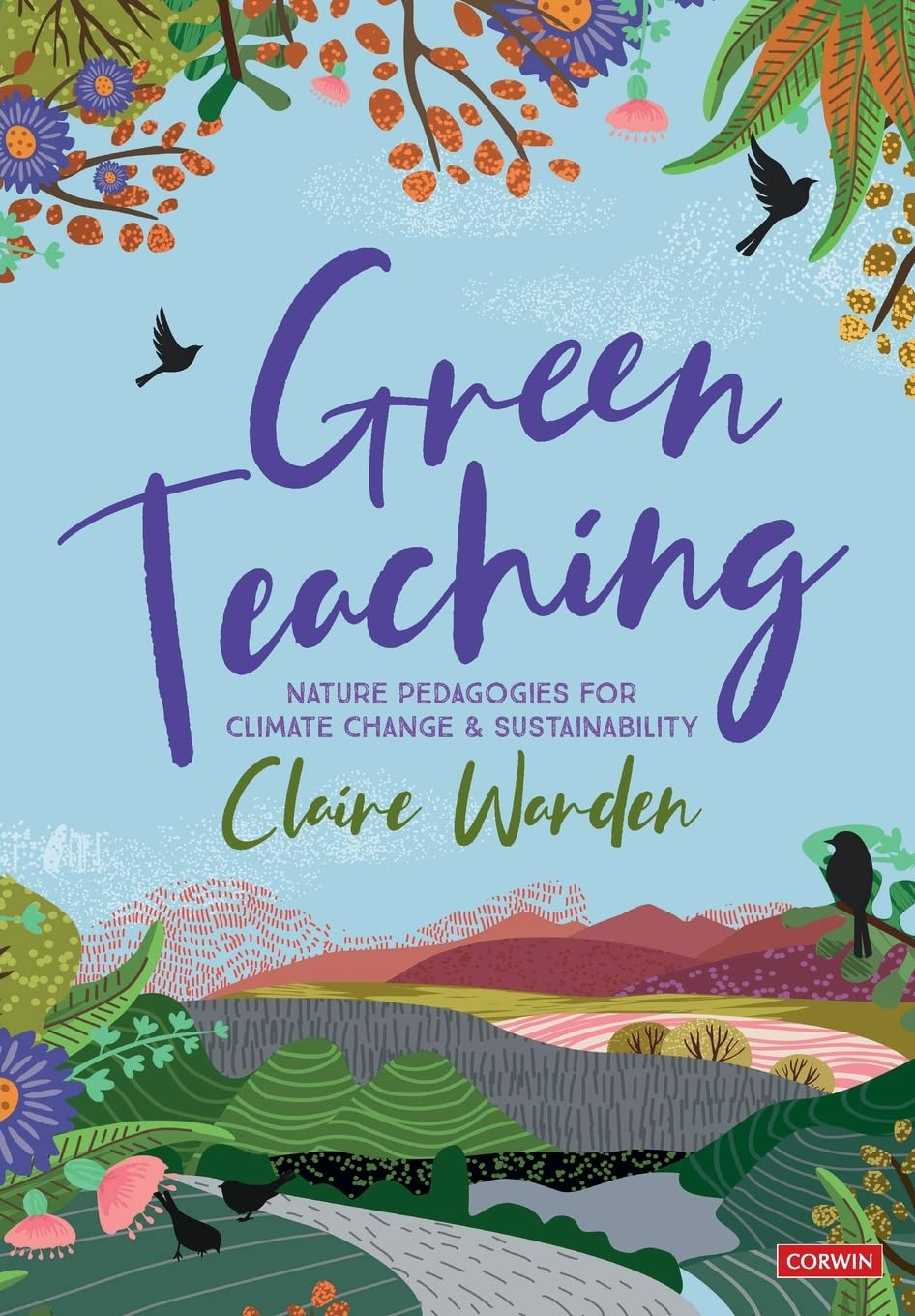
green teaching

Schools are usually large buildings, so just one inspired headteacher can make a huge difference. For example, most people can’t afford to put a solar panel on their roof (and if they did, it would take years to break even).

But a big school can not only get grants, but end up powering their school for nothing, and even funding projects, by selling excess energy back to the grid. Use natural house paint on walls and ceilings.

Green Teaching is a book on helping teaches to embrace ecological choices and to use nature as the location for learning, to help transform how children are taught. The author draws on international research and case studies to offer ways to transform how children are taught about environment and nature.

Paper is still one of the biggest sources of waste in schools, mainly because it’s so easy to press print. Choose post-consumer waste reams of paper from office supply stores, to save trees.

Whiteboards are a common culprit. Refillable whiteboard markers cost more upfront, but they cut plastic waste and stop the last-minute panic when pens dry out. The same applies to refillable pens for staff, especially in the office and at reception where pens vanish daily.

Choose water-based glues (still keep away from children and pets).

Plant-based catering and packed lunches

forest green kitchen

Forest Green Kitchen offers plant-based catering options in compostable packaging (with no palm oil) that is both delicious and nutritious. Also read our post on the best zero waste reusable lunch boxes.

Many zero waste feminine care brands now offer machines for public toilets, so you can offer plastic-free options to female students.

Choose biodegradable cleaning brands for housekeeping staff, and public areas like toilets, for better health and to reduce plastic waste (most sold in bulk are in refillable containers which also save money long-term). Choose unscented ideally to avoid issues with allergies.

Join the Eco Schools Program

Eco Schools is a worldwide community, who are going through ten topics to qualify. From From zero waste to litter clean-ups to growing food.

The program is funded by the £200 charged to qualifying schools to display a Green Flag, which also links you to other eco schools worldwide. The fee could be from pooled donations, school budgets or even councils (who will pay less for clean-up, so it balances out, you may even save money).

The Ten Topics to Graduate!

  1. Biodiversity – helping local plants, insects and animals thrive
  2. Energy – reducing energy and switching to clean providers
  3. Global citizenship – taking an active role in communities
  4. Healthy living – plant-based, organic and seasonal food
  5. Reducing litter – to help the planet and local wildlife
  6. Marine – protecting local water systems and creatures
  7. School grounds – improving for children, staff and wildlife
  8. Transport – encouraging walking and school buses
  9. Waste – refuse, reduce, reduce, repair and recycle
  10. Water – value and preserve our most precious resource

Asphalt to Ecosystems (schoolyard transformations)

Asphalt to Ecosystems (only now as an e-book) is a wonderful resource for schools that wish to transform ugly unused spaces into green outdoor spaces for schools, including green parks and playgrounds, to spaces for growing organic food. It includes case studies and 500 photos.

Read more on no-dig gardening and humane slug/snail deterrentsIf you live with animal friends, read up on pet-friendly gardens (some recommended flowers and fruit trees are not safe). Also avoid netting to protect food (just leave some for wildlife!)

Sharon Gamson Danks is on the board of Green Schoolyards America (which she founded), where you can find lots more ideas, case studies and resources. She is an environmental city planner who has helped to shape the green schoolyard field for over 20 years.

She holds master’s degrees in landscape architecture and city planning, and a Professional Certificate in Natural Resource Management. She is the mother of two expert playground testers, who are now off on adventures of their own.

Our Lady of Sion Schools (eco-friendly learning)

Hannah Dunnett

Hannah Dunnett

Our Lady of Sion School in Worthing (West Sussex) is one of a worldwide network of schools (they are private, but not as expensive as many and offer concessions) that could inspire state schools, in the way they are run and how they teach.

Founded by two extremely wealthy Jewish brothers who later were baptised into a Jesuit Catholic order, the schools accept people of all faiths, and their religious education promotes respect for all beliefs.

The school’s motto is ‘Consideration always’.

The brothers’ history is interesting. One became a Catholic priest and was rejected by his family, including his brother. But as the second brother was visiting Rome just before marriage, he had a vision of the Virgin Mary, and fell on his knees:

In the presence of the Blessed Virgin Mary, although she did not utter a word, I understood the horror of the state of my soul, the hideousness of sin, the beauty of the Catholic religion. In a word, I understood everything. 

On his return home, his fiancée rejected his newfound faith, and he also became ordained as a priest. Together they used their wealth to found an education movement based on love and respect for God and each other.

They helped to found a  ‘Convent of the Sisters of Sion’, and it was these sisters who arrived in Worthing, which led to the founding of the school. Back in the day, there was also an adjacent free school for local orphans and children in poverty.

What makes these schools special is that all focus on serving up nutritious organic food (often from their own gardens). Worthing’s school (the only one presently in England, most of the others are in the USA, Costa Rica, France, Turkey or Australia) is completely plant-based (everything is also free from palm oil and the 14 major allergens).

As well as becoming the first school in the UK to serve fully vegan food (a decision made in consultation with students and parents), it has consistent excellent ratings for education and happiness. Typical meals served include:

  • Fillet Fisch Burger with tartare sauce and chips
  • Butternut squash and sweet potato tikka masala with rice
  • Tofu tacos with Asian slaw

Previous alumni include:

  • Nuala Quinn-Barton (the Irish film producer of Goodbye Christopher Robin, the biopic of A A Milne, who wrote the Winnie the Pooh books).
  • Actor Noah Huntley (who grew up on a nearby Sussex farm). He embraced the veggie lifestyle as an adult, saying he loves whizzing up a smoothie for breakfast,  snacking on hummus and salad, and wished the world had more vegan shoes!

Is Downe House England’s Greenest School?

Cornish chapel Gill Wild

Gill Wild

Downe House (Berkshire) is working to become one of the most environmentally-friendly schools in England. It has won the top eco school award and has its own eco student committee.

It has no plastic bottles, a crisp packet recycling scheme and only uses free-range eggs (and holds Meat Free Mondays for everyone).

Food waste is collected to make into biogas, all lighting is LED, cups are made from bamboo and they plant trees and flowers for bees. Even old uniforms are gifted to help others.

Originally founded in Charles Darwin’s former home in Kent, 3o-year old ‘Miss Olive Willis’ had strong ideas on how girls should be educated. Today the school focuses on compassion and even helps out at local allotments.

Well-known graduates are comedienne Miranda Hart, TV presenter Clare Balding and actress Geraldine  James.

Organic cotton school uniforms

ecooutfitters

Children spend several hours each week in school uniforms, but most brands are with Teflon coatings to make them stainproof and easy-iron.

EcoOutfitters offers natural cotton alternatives that allow skin to breathe, are comfortable in hot weather and good for children with eczema.

ecooutfitters

As they are free from polyester, they also are not supporting the fossil fuel industry. The range includes shirts, skirts, trousers and dresses (both winter pinafore and summer gingham).

For any items containing a little elastane, launder in a microfiber filter to stop fibres breaking off in machines, and reaching the sea).

With this company, you can even send your child off to school with an organic cotton backpack!

Eczema Clothing (which also makes non-itchy clothing for adults) offers children’s clothing in pure cotton, including clothing and socks for school uniforms.

Where to Buy Vegan School Shoes

Kiddykind vegan school shoes

  • KiddyKind offers breathable vegan school shoes, for fresh feet. These water-and-scuff resistant shoes are made in Europe.
  • Will’s Vegan School Shoes offer quality brogues, lace-ups and ballerina pumps, all made from Microfiber, sent in zero waste packaging and sold with long guarantees.
  • Startrite sells vegan school shoes, though they are likely not as eco-friendly as those offered by Will (but more affordable for the everyday parent). You can also buy vegan school shoes from Toe zone.

Why Estonia has Europe’s best education

Cornish village Gill Wild

Gill Wild

If it were not for making you so sad and/or angry, it would be almost comical that the way for a government to try to solve a problem is to just quote numbers and try to do better. It never occurs to any MPs or government ministers, that to solve something bad, you simply look to whichever country is getting things right, and do what they do? It’s a no-brainer.

Estonia has Europe’s best education system by far. So let’s look at what they do that England doesn’t. And by implementing a few changes, we could rank up there with the best education system too.

Estonia has a much lower population (less than 2 million people). But it has around 12 students per teacher (that’s half the average state school number in the UK). With many of the teachers being over 50, so perhaps dispensing a bit of life wisdom too!

In primary schools, the number is even lower, with around 11 students per class. Obviously it’s not possible to wave a magic wand to get down to that number. But by employing more teaching assistants, it would help to reduce the problems found in large schools.

One small school in England says that one advantage of small class numbers is that ‘bullying doesn’t even have a chance to get started’. If you were bullied at school (or likely knew someone who was), it’s a given that it was in a large classroom. A class of 10 or so pupils with a teacher supervising means it just won’t happen.

Read more on how to prevent bullying in schools (and offices).

Peer pressure and commercialism is also less likely. In a small classroom, you won’t have 29 children all wearing the same designer sneakers, and the child with parents on a low income being the ‘odd one out’.

This may not seem ‘educational’, but a child who feels ‘not in with the crowd’ is more likely to suffer educationally too, as he or she will be more stressed and isolated.

Outdoor forest education

Ironically (considering it’s one of the most forested and ‘outdoor’ countries’ in Europe where children often spend most time in nature), it also has one of the best broadband systems. It’s easy to take exams online for a student who lives somewhere rural, there is no issue.

Children age 3 to 7 attend pre-school, but they focus on social skills and holistic development, rather than times tables or making things with playdough. Think of things like forest schools and outdoor learning.

Free hot nutritious meals for everyone

All Estonian children receive healthy free hot school lunches for all incomes, to avoid stigma for children on low incomes.

Better nutrition means better learning. They don’t need ‘free breakfast clubs’ in Estonia, because all the children will get good snacks, meals and drinks when they turn up to school.

No educational snobbery

When they get older, children are not put into ‘higher and lower bands’. They get to choose whether to go down the academic route, or choose a vocational job. So if someone believes being a builder, plumber or gardener is preferable to studying history, it’s taken as just as important (which it is!) And given the same importance and funding by government.

Most first-time degree students also enjoy free tuition. So when they qualify, they don’t have to pay back the government. They can use their salary to buy a property and raise a family.

Plant-based catering

forest green kitchen

Forest Green Kitchen offers plant-based foods for schools, caterers (including hospitals) and football clubs (the company was founded by the owner of England’s first vegan football club!)

Made in Gloucestershire, the food is free from all major food allergens (and soy) and sold in compostable and recyclable packs. And contains no air-freighted ingredients. Offerings are all high in protein and include:

  • Shiitake mushroom burgers
  • Jamaican jerk burgers
  • Spicy vegan balls

It’s far simpler to just offer good tasty plant-based food for everyone, as it covers all the bases, without having to cook different food for different people:

  • It’s suitable for vegans and vegetarians
  • It’s good to avoid egg/milk allergies
  • Respects religious beliefs (Jews and Muslims can eat most vegan food)
  • It’s cholesterol-free and animal-kind
  • It’s good for the planet
  • It’s often cheaper than free-range meats and dairy

Read info by dietitians on food allergens (they say the top 8 allergens of milk, eggs, soy, shellfish, fish, peanuts, tree nuts and wheat account for around 90% of all allergens, the others being mustard or sesame seeds).

Before cooking, read up on food safety for people and pets (many foods are unsafe near animal friends). Bin allium scraps (onion, leeks, garlic, shallots, chives) and citrus/tomato/rhubarb scraps, as acids could harm compost creatures. It’s okay to put them in food waste bins (made into biogas).

Before recycling cans, rinse then remove lids (pop ring-pulls over holes). Then use your fingers/thumb to ‘pinch’ inner rims together, to avoid wildlife getting trapped. 

Choking hazards to avoid 

Choking hazards should be avoided for children and people with swallowing difficulties (and allergies). Also keep small toys off the kitchen floor where toddlers and pets could find them.

Learn how to help someone who is choking. Foods to avoid include:

  • Nuts, Seeds & Nut/Seed Butters (avoid for under 5)
  • Chia seeds (soak in liquid first, if used)
  • Dry Bread, Crackers & Croutons
  • Crumbly Foods (pies & biscuits)
  • Peas, Grapes, Cherry Tomatoes, Cherries (even sliced)
  • Carrot Sticks
  • Sausages (slice lengthwise & again, for older children)
  • Foods with Seeds (raspberries etc)
  • Boiled Sweets
  • Sticky Foods (some cheese, marshmallow, mochi)
  • Tough Foods (steak, bacon, skin/bone/gristle)
  • Stringy Foods ((beans, rhubarb)
  • Floppy Foods (lettuce, cucumber, spinach)
  • Chia seeds (mix with water first, if using for others)

Are school dinners any better these days?

The average UK school dinner costs around £2 to £3, and must adhere to strict nutritional standards, ensuring fresh fruits and vegetables, and all the major nutrients.

If you are on a low income, you can apply for free school meals.

Water and/or milk must be available at every meal. Some parents vegan children (and those with allergies or religious beliefs) want NHS Healthy Start Vouchers (for low incomes) to offer dairy-free milk and vegan vitamin D supplements (as well as fresh produce), as many African-American children  are lactose-intolerant.

Free breakfasts for children on low incomes

Schools can apply to Magic Breakfast Club, which has been serving free school breakfasts for over 20 years. These are pretty healthy and tend to be made with easy-to-store and freeze ingredients like cereals, porridge, bagels and baked beans, along with fresh juice. All menus comply with school nutrition standards.

Eco Cleaning materials

Delphis Eco

Delphis Eco (also sold online at Natural Collection) is the main brand of commercial eco-friendly cleaning products for offices, hotels, restaurants, schools, doctor/dental surgeries, hospitals etc. The entire range is biodegradable, sold in recycled plastic bottles and has super reviews!

Conventional cleaners have all kinds of issues from not biodegrading to being made with artificial fragrance to being tested on animals. Try these more natural alternatives instead.

Use eco-cleaners with plastic-free cleaning cloths and sponges (SEEP also sells fair trade rubber gloves in cardboard packs). Keep all cleaners away from electrical components. 

Choose unscented brands for pregnancy/nursing and near babies and pets (citrus oils in particular are toxic, even if dried and licked from laws on countertops or floors).  Never mix vinegar or lemon juice with any bleach (causes toxic gas). Read how to clean floors naturally (without harming spiders).

Use floor cleaners with a plastic-free mop or use a bucket filter if using a microfiber mop, to stop leaching microplastics (collect and securely bin them, to avoid them washing away at landfill).

Delphis Eco degreaser

The range includes:

  • Foaming & Combi Oven Cleaners
  • Heavy Duty Toilet & Limescale Remover
  • Washroom Cleaner & Urinal Blocks
  • Metal Polish
  • Chewing Gum Remover
  • Natural Salad Wash
  • Commercial Hand Soap
  • Floor Maintainer (for mops or floor machines)
  • Heavy Duty Degreaser
  • Scented Air Freshener
  • Cabinet Glass Wash
  • Masonry & Stone Cleaner
  • Waterless Hand Rub
  • Low Foam Degreaser
  • X-Factor Stain Remover Spray (for sticky marks, spills & pen marks).

Delphis Eco metal polish

This brand was founded by a city banker, who also created the ‘recycled plastic rating’ code on bottles. Despite being the main brand used by most supermarkets for their warehouses, they rarely sell them to consumers – why not?

Where to recycle toxic cleaning products

If you have some toxic products that you no longer wish to use, don’t pour them down the sink, as this can harm waterways. You can recycle empty containers with household waste. With bottles still containing product, your council should be able to collect via the hazardous waste department. The fact that this is where they should be taken, is good reason to switch to a more natural brand!

Humane Education teaching

Institute for Humane Education is a worldwide organisation, that runs courses to teach educators on how to teach children how to be compassionate to the world -to other humans, other creatures and to the planet. Founded by teacher Zoe Weil, although most courses are in North America, the site has many online courses that teachers and other educators can take like:

  • Environmental Ethics
  • Animal Protection
  • Human Rights
  • Art and Artists for Social Change
  • Writing for Social Change
  • Racial Justice

Others take these courses for different reasons. For instance, one woman who runs a large animal rescue non-profit in the USA, took a course so she can better educate givers, and increase donations.

Others who work with troubled youth take the course (say for people having issues with the law, or those suffering after-affects of abuse).

Graduates also take these courses, as part of their curriculum for doing a particular thesis.

And of course the courses would be good for councillors and politicians (who businesses) who wanted better to understand and communicate their good ethics to voters or customers.

The Graduate Program includes an introductory program along with three major themes:

  • Environmental Ethics: This covers climate change, endangered species, pollution, habitat destruction and environmental racism.
  • Animal Protection: This covers animal agriculture, vivisection, hunting/trapping, companion animals and animals used in entertainment.
  • Human Rights: This covers modern slavery, child labour, human trafficking, racism, gender inequity, poverty, power and privilege.

There are also optional courses:

  • Culture and Change: This covers consumerism, media, economics and politics.
  • Creative Activism: This covers literature and art to advocate for human right, animal protection and environmental stewardship.
  • Just Good Food: This covers contemporary food systems and individual food choices related to human, animal, environmental and social justice issues. Alongside issues of hunger, poverty, animal protection, climate change, health care, sustainability and corporate interests.

Global Certificate of Humane Education (UK)

Back in the UK, the Global Certificate of Humane Education includes teachings on conservation and animal welfare, non-violent communication and conflict resolution and trauma-informed care. The course (offered by London School of International Business) takes 2 months, and costs around £90.

It covers:

  • Animal welfare
  • Conflict resolution
  • Emotional intelligence
  • Humane education
  • Non-violent communication
  • Trauma-informed care and support

Dissection Alternatives

Although dissection is no longer much carried out in UK schools, it still happens at some a-level biology classes, universities and medical/vet schools. Whereas modern theory is that it’s not just unkind, but can bring diseases from zoonotic  species, plus modern methods are better.

For instance, digital frog is not just kinder and more accurate, but it’s also cheaper as it can be used again and again, unlike a real frog.

Animal Welfare Institute has more information on the alternatives available, to stop the use of frogs, rats, cats, foetal pigs, fish and invertebrates being used in experiments. Which often are preserved in formaldehyde, a chemical linked to cancer.

In the USA, frogs have been taken from natural wetland habitats, and some cats are believed to be from residential communities or shelters, sold to biological companies.

Non-animal alternatives include digital apps that reproduce 3D models of breathing frogs (which have hearts simile to ours), where students and ‘peel back layers’ to view various systems of the body, using a finger or Apple pencil.

Similar Posts