How to Help England’s Marine Creatures

England’s coasts have many stories of mysterious mermaids, women who are half-fish and half-woman, some are friendly, others lure love-struck sailors to a watery grave. Like ghosts, many have claimed to see mermaids, but do they really exist, or is this just tall stories?
The word mermaid comes from ‘mere’, which is Olde English for the word ‘sea’.
Some people believe that mermaid spottings may often be seals, by people with bad eyesight! Rough waves, poor light and tired eyes may mean a ‘mirage’ that is not really true. Other say that sailors (who often liked rum and had gone without seeing women for months’) may have imagined them!
But many swear different. Liverpool has many ships named after mermaids, with stories from old sailors (even the shield on the cities coat of arms, features ‘merfolk’.
One story is of a mermaid in the 19th century, who would ring a sunken church bell at dawn on Sundays, to tell people to take better care of their souls!
Mermaid Sightings in Cornwall

One of England’s best-known mermaid legends belongs to the Cornish village of Zennor. According to the tale, a strange woman started attending church. Her beauty stunned the locals, and she never aged. She captured the heart of a young man named Matthew Trewhella.
One day, both vanished. People later claimed she was a mermaid and Matthew had followed her into the sea. Zennor Church still has a 15th-century carving of a woman with a fish-tail on ‘The Mermaid Bench’.
Mawgan Porth reported sightings back in 1827. A boy intending to fish at night reported seeing a creature that looked like a long-haired human, with fish-like fins on their lower half (blue in colour). Although sceptics said it was a seal, local fishermen said they saw seals each day, and knew the difference. What do you think?
A Mermaid Washed Ashore in England?
Another tale is of a mermaid who crossed over from Wexford in Ireland, and was washed ashore in England. She was captured alive as the town wanted to keep her. But she mourned for the sea.
Moved by her sadness, the people let her go. She slipped beneath the waves, never to return.

Sea horses are so strange, that someone once said ‘when God made seahorses, He may have had one too many!’ They are fish, but poor swimmers, so cling to the first thing they find (the infamous photo of one holding a plastic cotton bud, led to worldwide bans on sale).
Seahorses swim upright. They have no stomachs (they do have intestines) and no teeth. They perform dances of up to 9 hours when meeting life partners, then females transfer eggs to the male, who carries them to term! Males can give birth to up to 200 baby seahorses, but not many survive.
England is home to two species: the spiny seahorse (that hides in seagrass beds and kelp) and short-snouted seahorse (sticks to shallow waters). Both can use their tails to curl tightly around seaweed for safety.
So you can imagine why seaweed should only be sustainably-hand-harvested by experts (who just ‘give seaweed a haircut’ without removing the roots) and seagrass beds (often destroyed by boat anchors) need protecting.
Keep dogs away from seaweed, as fronds can expand in the stomach.
Studland Bay is the main habitat for England’s seahorses, due to the thick seagrass beds. A surprising hotspot is also the Thames Estuary (there is rich feeding of plankton and weedy margins for hiding and nesting).
Turbulence from boats or people wading nearby can harm seahorses, so always leave them alone.
How We Can All Help Seahorses
- Volunteer beach cleans help, by removing plastic waste. Choose zero waste cotton buds in plastic-free packaging.
- If you eat fish, avoid brands that use by-catch methods (70 million seahorses are caught by the fishing trade each year).
- Don’t visit tourist aquariums (many die of shock when caught or from flash photography).
- Don’t buy seahorse souvenirs (they are killed, also for ‘medicine’).
- Divers should avoid touching, hovering or photographing them.
- Advanced mooring systems has developed an alternative to boat anchors, that is safer for seagrass beds and marine wildlife.
- The Seahorse Trust has more info on how to help, including a page for divers. It restores seagrass habitats, and pushes for better laws.
A Book about Mysterious Seahorses
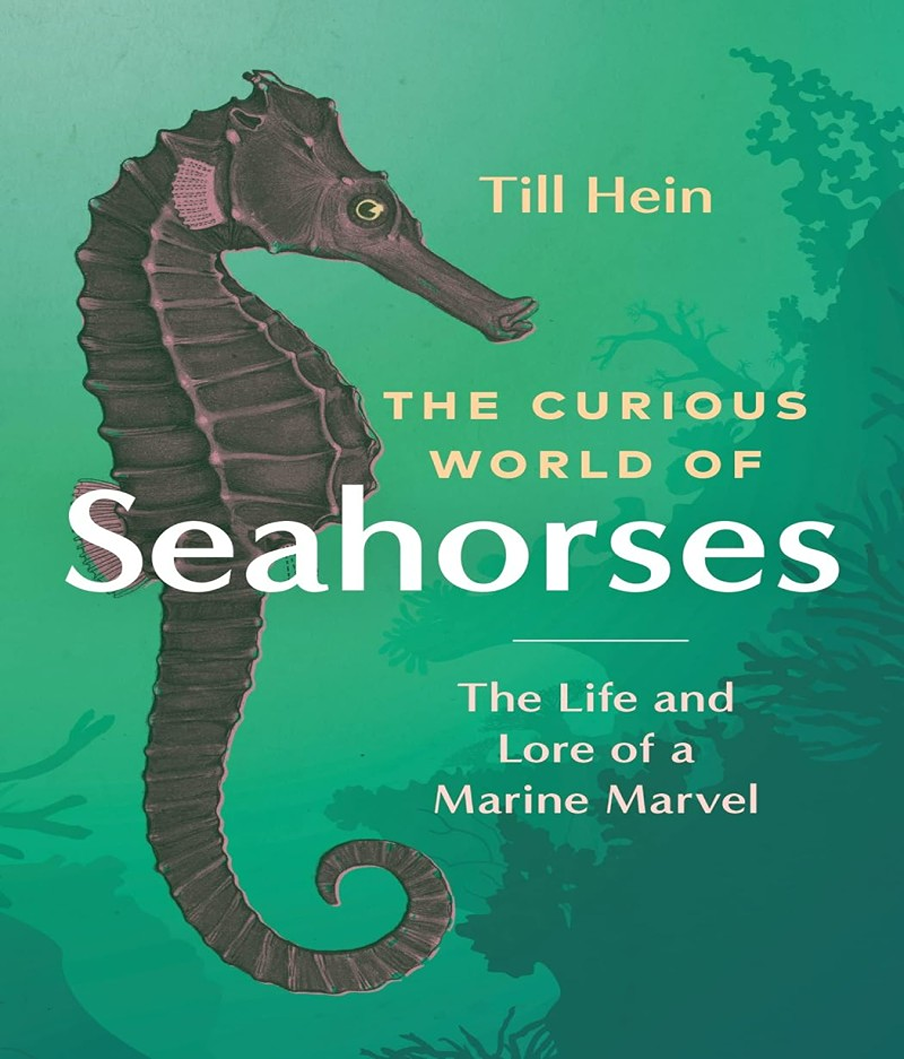
The Curious World of Seahorses is a book that looks at one of the ocean’s most charismatic and mysterious inhabitants. These creatures have pouches (like kangaroos) and snouts (like anteaters).
Till Hein shares the world of seahorses, revealing their secrets and biological features, along with the medieval belief that they are descended from dragons!
The slowest swimming, yet most effective hunters in the ocean? Eyes that can move separately from each other, fin colour that changes on demand, and a digestive system with no stomach? This is a treasure trove of everything about these remarkable creatures. Wendy Wasserman

Jellyfish are beautiful mysterious creatures found worldwide (in England, most are in northwest England or Wales). The main jellyfish found in England are:
- Moon jellyfish are the most common, translucent with four purple rings under the surface, and frilly tentacles.
- Compass jellyfish have star-patterns on the bell that look like the points of a compass.
- Lion’s mane jellyfish are large with lots of tentacles.
- Barrel jellyfish are England’s largest, which look like ‘bobbing cauliflowers’.
- Other species are blue and mauve stinger jellyfish
Report large or rare jellyfish to local wildlife organisations. This helps to track numbers, and learn about changing sea life.
How to Stay Safe Near Jellyfish
Although most fatal jellyfish stings are abroad, some species in England can harm (especially children and dogs, and jellyfish can still sting, even when dead).
- When at the beach, wear natural rubber flops, and scuff/stamp your feet in the sea, to let creatures know you’re approaching.
- Keep dogs on leads near washed-up jellyfish (more common after storms or high tides). Read more on keeping dogs safe by the seaside.
If stung by a jellyfish:
Leave the water and rinse with sea water, removing tentacles with the edge of a credit card or tweezers. Do not apply fresh water, as this can release more venom. Seek medical attention.
For severe pain (or if stung on the face/genitals or from a stingray), visit minor injuries. For breathing difficulty, chest pain, vomiting, loss of consciousness, seizures or severe swelling/bleeding, call 999. Report jellyfish stings.
If dogs are stung by jellyfish
The same advice as above. Call your vet immediately (do not treat with human creams or medicines) and seek immediate help in case of vomiting, breathing troubles, swelling of the face or paws, lethargy or collapse.
Never Release Balloons (look like jellyfish to turtles)

Read our post on reasons to avoid balloon releases (and find eco alternatives).
When balloons are released (even ‘biodegradable ones’), they burst into thousands of pieces and mostly land in the sea, where they are eaten by sea turtles. This is because they look like jellyfish, which is a sea turtle’s favourite food.
Many coastal birds also peck at jellyfish washed ashore, and many fish eat jellyfish too.
Recently, some people in the USA released 50 balloons over the ocean, for a ‘gender reveal’ party for a baby. This would have undoubtedly killed or harmed marine creatures and/or seabirds. What has the world come to?
Should You Rescue Beached Jellyfish?
It’s quite upsetting for us sensitive souls to see dying jellyfish on the beach. But as they are over 90% water, experts say that once washed ashore, they are already dying. So returning them to sea will just prolong the inevitable, or they will beach again.
The sad (but likely kindest) thing to do, is to just leave them. They likely won’t be in pain (we have to be careful at suggesting they can’t ‘feel anything’ due to no brain). But they won’t be suffering the way most marine mammals would be, if beached.
Unlike some other creatures (that wash ashore due to climate change), jellyfish usually wash up due to windy weather, that simply blows them off-course. This is because they have no fins or tails, so can’t propel themselves back to sea.
Reason to Avoid Jellyfish Aquariums
Sadly, there are now companies that sell jellyfish aquariums, so people can watch live creatures with LED lights, the makers saying (due to jellyfish having no brains) that it’s the same as ‘watching a plant in a pot’.
For a start, this is bad science (see below). Also why then take living creatures from their natural habitats?They still form an important food source for endangered creatures, like sea turtles?
Neurobiologist Anders Garm (University of Copenhagen) says it’s wrong to say jellyfish have no self-awareness. Box jellyfish in mangrove swamps can use precise timing with their 24 eyes, to hunt for tiny prey. They also calculate correct time and distance to pounce.
This is because jellyfish have ‘nerve nets’ that help detect shifts in temperature, gravity, water salinity, oxygen and vibrations. So shoving poor jellyfish into tanks with lights and noise, is not kind or intelligent.
Are jellyfish self-aware? 10 years ago I would have said no. But cloud computing has made me rethink my assumption. Do you need a central hub to process information? What if their whole body works as a kind of brain?
We may never know. Personally, I assume that jellies are aware and treat them accordingly, even if I’ll never be able to prove it. We can still respect them. And afford them the reverence such alien and wondrous animals are due. Jellyfish Biologist
How to Protect England’s Grey and Harbour Seals
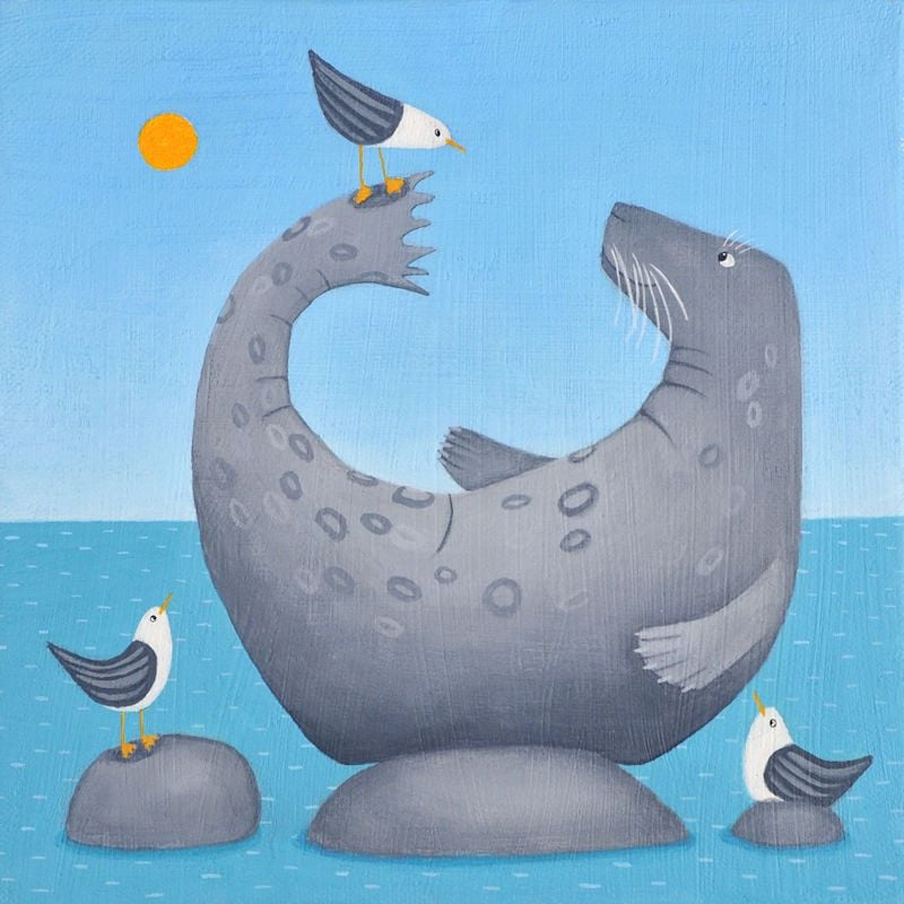
England’s coasts (mostly in southwest and East of England) are home to grey and harbour seals, which are charming and playful, but must be left alone (so always observe the signs put up by volunteers).
Seals are wild creatures (who can give nasty bites) and pups can drown, if spooked into the sea before they are able to swim properly.
Seal mums often hide pups in sand dunes, so keep dogs on leads (and away from breeding areas) and teach children not to approach wild seals. Join the campaign to also ban flying rings, which get trapped around necks of seals, if found on beaches or in the sea.
- Grey seals are larger and have mottled grey coats, giving birth to fluffy white pups in autumn.
- Harbour (common) seals are smaller with rounder noses, and prefer sheltered bays, estuaries and tidal rivers. Mothers raise their pups in early summer, teaching to swim within hours of birth.
Both species are skilled hunters, chasing fish and squid at sea, but need land to rest, moult and and raise their young. Disturbing them can disrupt feeding and breeding.
Legal Protection and Responsible Viewing

Seals in England are protected by law. So as well as avoiding plastic and oil pollution, you can report harm (sometimes people complain they are ‘eating the stocks of fishermen’) but it’s illegal to harm them, and that’s their natural food. For concerns, call the RSPCA or Crimestoppers wildlife crime unit (anonymous).
If at the beach, keep at least 150 feet (the length of a football pitch) away from seals (if they lift their heads, shuffle, look at you or move towards the water, you are too close). Never cross ropes or barriers put in place, and keep dogs away (read our post on keeping dogs safe by the seaside).
If you sail, read our post for sustainable sailors. Never use jet skis, as these not only can injure and kill seals, but can also drive a wedge between parents and their young, causing them to get lost, or spooked from underwater engine noise.
Learn about photography best-practice around seals. Use binoculars or a camera with zoom lens (avoid drones and stay downwind, seals have an excellent sense of smell) and avoid wearing high-contrast colours (white, yellow or red).
Still in place is a worldwide boycott of Canadian seafood, to ask the government to stop subsiding the annual baby seal cull (for the fur industry).
How to Help Stranded or Injured Seals
For any marine creature in distress, call British Divers Marine Life Rescue (RSPCA and the Coastaguard can put you through). While you wait for help, stand between the pup and sea (to stop pups drowning or freezing).
Seals often rest on land (especially after storms) so use binoculars or a zoom lens, to avoid disturbing seals that may be okay (some have scars, due to encounters with fishing gear). Mothers are often nearby.
But if the pup has baggy skin, or is coughing/sneezing with mucous or rapid breathing, it could be kill. Some seals shiver (it could be cold or fear, but could be netting). Find more info at:
- Seal Research Trust (share sightings around the SW (sightings@sealresearchtrust.com).
- Friends of Horsey Seals (Norfolk)
- Seal Alliance
Where to Learn More About Seals
- Seal Secrets is by the founder of Seal Research Trust, condensing knowledge from years of observing seals in the wild. Profits fund the charity’s work.
- Seal Alliance Protection Action Group helps seals and their habitats worldwide.
- Pacific Marine Mammal Center (US) offers distance learning programs to help seals.
Organic T-shirts & Hoodies (to help seals)

These organic cotton t-shirts and hoodies (for men, women and children) are printed with green energy and eco inks, sent in zero-waste packaging. A portion of sales helps Seal Research Trust, which rescues injured seals, and releases them back in the wild.
You can donate anonymously (add Gift Aid if you’re a UK taxpayer). Another way to help this wonderful charity is to set up an account at easyfundraising. Then whenever you buy something from a participating company or service, a portion goes to them, at no cost to you (loyalty points are not affected). You can also use this service to help Friends of Horsey Seals (Norfolk).
Join the Campaign to Ban Flying Rings
This is a national campaign that is gathering momentum, to help all marine mammals. Also read our post on how to help England’s wild seals.
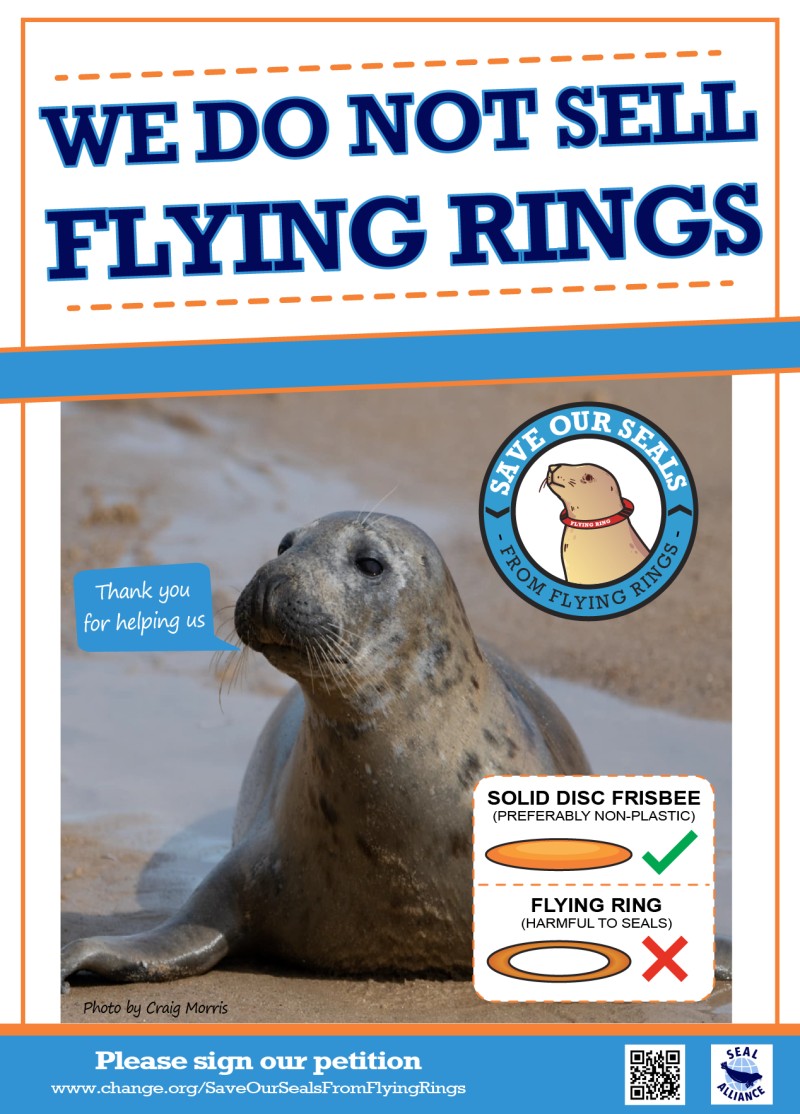
Playing frisbee at the beach may seem like harmless fun, but Seal Alliance and British Divers Marine Life Rescue have now got together to launch a petition at Change to ban flying rings. Add your signatures (over 45,000 so far!) If passed, the UK would become the first nation to do so. It’s also good to avoid flying kites, for the same reasons.
Thousands of flying rings are bought and discarded/lost at sea or beaches each year. The aftermath is that curious seals get them stuck around their necks on land or at sea (they start playing with them). One seal was found almost decapitated, but thankfully was rescued and survived.
It’s best to avoid playing with beach toys near seals anyway. If you use them, avoid ones with hollow centre, as these easily trap around seal necks. And choose biodegradable solid ones, in case they get lost at sea.
Download this guide on seeking support for the campaign from local shops (with a downloadable window sticker). There is also a guide for councils (includes a document to send to councillors).
Seal Alliance website has more info on all you need to know, whether you simply wish to join the campaign or you are a shopkeeper (or councillor considering a local ban on flying rings). You will also find campaign QR codes.
A typical flying ring costs 33p to buy – but costs cash-strapped seal rescue charities up to 45,455 times more to carry out a rescue, if they find a seal trapped in one.
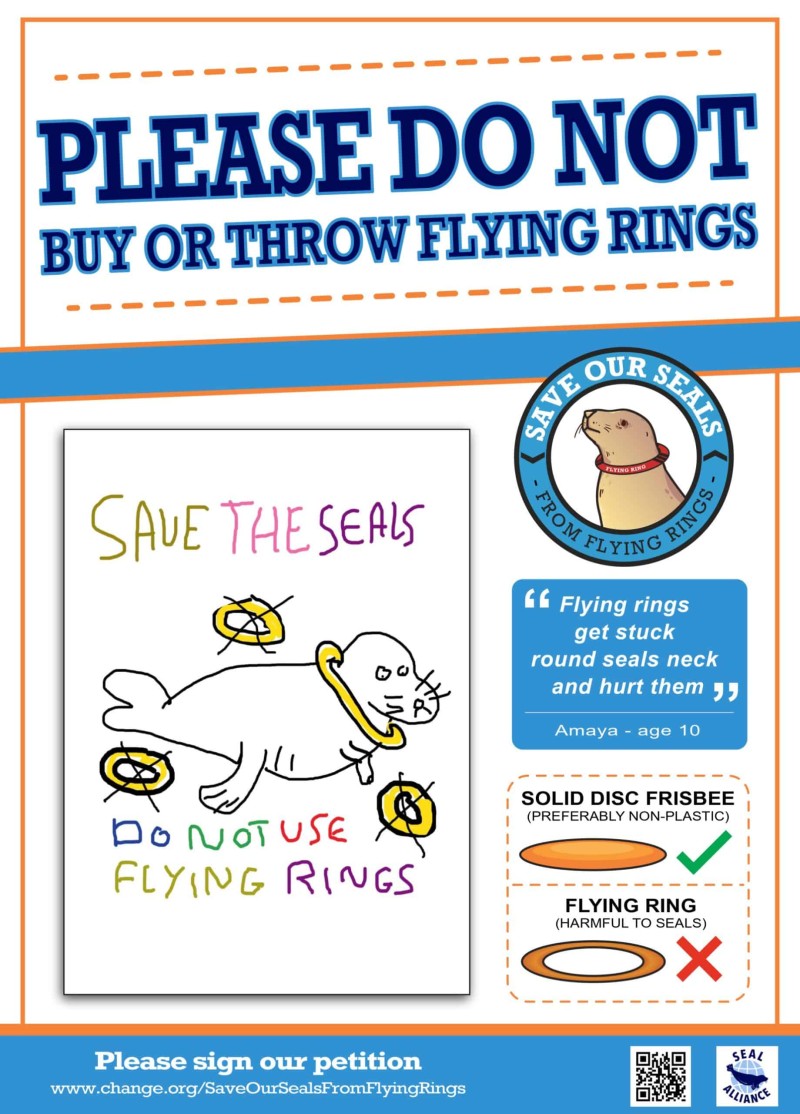
Neath Port (Wales) has become one of the first councils to ban the sale and use of flying rings near and on their beaches. More power to you! Let’s hope others follow.
You can read the story of the woman who helped to rescue a seal trapped in a plastic ring that started the campaign in her book, Sailing for Seals.
The public support we’ve received for our campaign, clearly indicates that these flying rings need to be removed from sale, at shops across the country.
Many shopkeepers are unaware of the pain and suffering they cause. They will not lose profits by selling solid disc frisbees and will certainly receive support from local communities. Gareth Richards (Seal Alliance)
Sea turtles have roamed the oceans for millions of years, playing a key part in keeping marine life in balance. Today, they face serious threats both in England and abroad, from pollution to habitat loss. Whether you live near the coast or miles inland, your choices impact their survival.
Support Seagrass Meadow Restoration
Seagrass meadows are critical to sea turtles, especially young green turtles, which feed on this underwater grass. In the UK, these habitats have shrunk due to pollution, anchor damage, and development.
Advanced Mooring Systems makes boat anchor alternatives to protect seagrass beds and turtles. Anglers can invest in monomaster (a small device to store fishing line that unlike conventional bins, does not encourage birds to nest and also get tangled).
Avoid Single-Use Plastics
Plastic pollution remains one of the greatest dangers to sea turtles. Turtles often mistake plastic bags and packaging for jellyfish or other prey, leading to fatal blockages.
Swap single-use plastics for reusable bags, bottles, and containers. Always recycle packaging when you can, and choose plastic-free options at the shops.
Avoid balloon releases (these fall to the sea and look like jellyfish to sea turtles, who then eat them, and often choke or die.
Take Part in Beach Cleans

Rubbish left on beaches washes into the sea and poses choking hazards for turtles and other marine life. Join local beach cleans throughout the year. Take a litter bag whenever you visit the beach. Even small clean-ups make a big difference for nesting sites and feeding grounds.
This photo by Jordi Chias highlights issues of ghost fishing waste, after he untangled a sea turtle trapped in fishing net.
Stop Light Pollution
Beachfront lighting disrupts nesting turtles and confuses hatchlings as they make their first trip to the sea. If you live near a coast, keep outside lights dim and shielded, especially during nesting season. Encourage businesses and councils to use wildlife-friendly lighting.
Never buy Tortoiseshell Souvenirs

Once used in jewellery and trinkets, tortoiseshell (from the hawksbill sea turtle) is now illegal worldwide. Don’t buy any items made from real turtle shell, whether at home or abroad. Look for certified wildlife-friendly souvenirs, and report any illegal wildlife products to authorities.
Help Tackle Oil Pollution
Oil spills and leaks poison sea turtle feeding grounds and nesting beaches. If you own a boat, always use proper refuelling techniques and dispose of oil and fuel responsibly. Read our post for sustainable sailors.
Books to Learn More about Sea Turtles
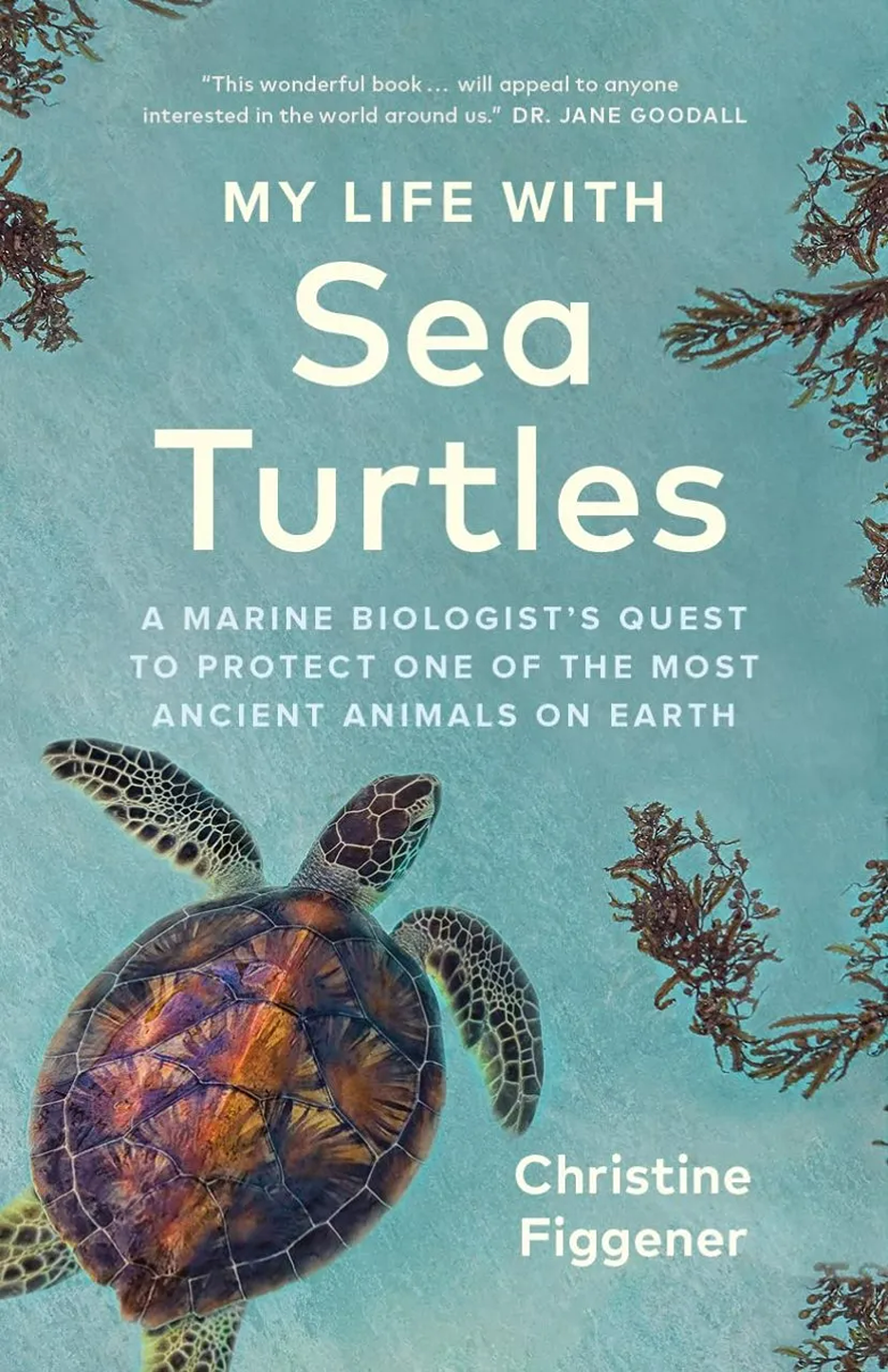
My Life with Sea Turtles is a book filled with wonder for the natural world, a captivating tale of one of the oldest living creatures on earth, alongside a female scientist’s fight to save their future.
In 2015, a team of researchers carefully removed a plastic straw from a sea turtle’s nostril, off the coast of Costa Rica.
This disturbing incident (captured on video) went viral and lead to corporate straw bans around the world. In this book, the marine biologist behind the camera recounts her own life spent studying and protecting sea turtles.
From the time she was a young girl, the author was determined to become a marine biologist and study the marine world.
The author shares how she went from a small grey town on the edge of industry, to the lush coastline of Costa Rica, where she fell in love with the local environment and its famous residents: sea turtles.
Figgener describes patrolling the beach at night, swimming with turtles in the open ocean, watching tiny turtles emerge from sandy nests and risking her life during tropical storms.
We learn of her experience as a woman in the male-dominated conservation space, where surprisingly at times she struggles to be taken seriously.
Through discovering the fascinating science of sea turtles (and the threats they face today), readers will be inspired to live their own lives differently, to ensure survival of these magnificent creatures.
Christine Figgener was born in Haltern am See and grew up in Germany’s industrial Ruhr valley. After studying biology, she earned a PhD in marine biology from Texas University and has lived and worked in Costa Rica since 2007, researching sea turtles and fighting for their protection.

Yoshi Sea Turtle is the true story of a loggerhead turtle who was born in Australia then swan across an ocean filled with sharks and seahorses to only land in a fishing net. Rescued by a passing fisherman, she was rehabbed (and tagged).
Then released to make a record-breaking swim across the Indian Ocean to the beach where she hatched to lay her eggs. Written by a record-breaking human swimmer, this is the tale of a sea turtle who swam the longest distance of any animal, in recorded history.

Of Time and Turtles is a book on how we can save the planet, by learning from one of the most ancient creatures. When naturalist Sy Montgomery and wildlife artist Matt Peterson arrive at Turtle Rescue League, they are greeted by hundreds of turtles, recovering from injury and illness.
Endangered by cars and highways, pollution and poaches (some wounds so severe they were dismissed by vets as fatal), all these creatures are given a second chance of life, by the founder’s motto: never give up on a turtle.
Why do turtles inspire such devotion? Ancient and unhurried, these long-lived majestic creatures that go back to the times of dinosaurs sometimes live to 200 years old. Others spend months buried under cold winter water.
In pursuit of answers, the authors immerse themselves in the world of protecting turtle nests, incubating eggs, rescuing sea turtles and releasing hatchlings back to their homes in the world.
You’ll meet the snapping turtle Fire Chief, on his astonishing journey, as he battles against injuries incurred by a truck. This is a hopeful book on how we can learn from turtles, as the antidote to our frenzied world. Slow down – and slip into turtle time!
Avoid Jet Skis (to protect birds and marine creatures)
A few years ago in England, nobody really used jet skis. But now like elsewhere in the world, many people zoom through the water on these ‘sea scooters’, causing havoc to marine wildlife (singer Kirsty MacColl was even killed by one, while on holiday with her children in Mexico).
They may seem fun, but many councils are now banning the use of jet skis. As well as often attracting ‘boy racer’ types (who often have no concern for wildlife), driving jet skis through water can harm and kill marine creatures, and also separate mothers from babies underwater.
It’s illegal to intentionally disturb wildlife (including gulls), so report such incidents to the police , Crimestoppers (anonymous) and British Divers Marine Life Rescue.
- In Looe (Cornwall), locals put up warning signs, to protect its Atlantic grey seal population.
- Hundreds of people have objected to the issue of personal water craft licenses in Deben Estuary (Suffolk), which could harm local wildlife.
- In Northern Ireland, there is an outright ban on jet skis in some areas (after reports of harm and anti-social behaviour).
How Jet Skis Affect Birds and Marine Wildlife
- Many marine creatures (like dolphins and whales) communicate by singing or echo-location, so a jet ski roaring along can be terrifying (like loud underwater fireworks) and can even cause ear problems and bleeding on the brain.
- Nesting sea birds (including puffins) can abandon their eggs, leaving chicks vulnerable to predators or storms.
- Shallow waters near shores often act as nurseries for young fish (and feeding grounds for birds). So the wake left from jet skis, can stir up sediment and uproot vegetation, destroying critical habitats.
- Many creatures (like seals) have to come up for air, which can result in collisions with jet skis. Same with birds that fly low over the water (the energy used to fly away from jet skis can leave them too exhausted to hunt for food).
- Sea turtles are slow-moving, so cannot escape in time (same with manatees abroad).
Welsh TV wildlife presenter Iolo Williams has been very vocal about people who use jet skis, calling some of them ‘idiots’ who plough through a raft of seabirds on a puffin sanctuary near a North Wales Nature Reserve. He wants such riders to have to be issued licenses, just like for car drivers.
Safer Alternatives to Jet Skis for Wildlife
Of course, you don’t ‘need any alternative’. But if you like ‘playing on the water’, instead consider:
- Kayaking: Quiet paddling lets you glide, without scaring wildlife.
- Paddleboarding: Like kayaking, paddleboarding keeps noise levels low.
- Snorkelling and swimming: These activities let you enjoy the ocean, without engine noise disrupting the environment.
Florida’s Actions to Save Manatees (sea cows)

Jet skis are very popular in Florida, a place where manatees (sea cows) often swim (as well as in the Caribbean). These gentle creatures move slowly and have to come up for air, so often are at the danger end.
Save the Manatee Club does wonderful work, educating the public on why to avoid using jet skis. It even offers free warning signs for Florida shoreline home owners, so boaters can be reminded what to do, when passing by.
How to Help England’s Delightful Dolphins

England’s coast is home to many pods of playful smart dolphins (and similar-looking porpoises, although these are smaller, less social and have triangular rather than wave-like fins).
As with all marine creatures, they are suffering from oil and plastic pollution, over-fishing, by-catch (when caught in nets) and ship strikes.
Don’t Drop Litter Anywhere
Nearly all rubbish eventually ends up in our seas. So live a simple sustainable life, and never drop litter off boats or by the coast (or anywhere). If you smoke, use a personal ashtray (that extinguishes butts until you find a bin). Get involved with local beach clean.
At home, stop oil pollution by wrapping small amounts of oil in kitchen paper and bin (same with cream liqueurs). For larger amounts, use an oil recycling container and take to the tip.
Also choose waterless car washes (driveway and supermarket car washes send untreated oily water down drains, and out to sea).
Be a Wildlife-Friendly Sailor
WiSE offers a five-hour course (refreshed every 3 years) be a wildlife-friendly sailor. Once passed, you can use their logo on literature, and put a notice on your boat. Always reduce your speed and make minimal noise (underwater sound drowns out dolphin communication). Read our post for sustainable sailors!
Never use jet skis, these cause noise pollution and injuries, and can separate marine creatures from their young.
Advocate for Ocean Sanctuaries
Donate to campaigns that fund ocean sanctuaries. These are where nobody owns them, and nobody is allowed to fish or pollute.
Of course seas have no borders, so it’s important not to pollute anywhere else too. So far Scotland has sa tiny ocean sanctuary, but England has none (though there are many worldwide.
Tackle Overfishing and Ghost Fishing Waste
Eat more plants and less fish (many dolphins get caught or drown in giant nets set for fish). If you eat it, buy seafood guaranteed not to use by-catch methods. And support schemes that retrieve ghost gear from the sea (this post includes info on fishing line recycling).
Avoid Tourist Aquariums
Avoid tourist aquariums, as they have nowhere near the space needed for one of the most social and intelligent creatures on earth. People often assume dolphins are happy, as they are always ‘smiling’. But dolphins can’t move their facial muscles, so always look this way, even if they are miserable, bored and depressed.
Also don’t let children ‘swim with dolphins’. These creatures hunt sharks in pods. You would not let your child swim with a shark, so why a dolphin? They can be just as lethal, if spooked.
Stop Cruel Dolphin Hunts
Join the campaign at Whale & Dolphin Conservation to stop cruel dolphin hunts in Japan, Faroe Islands, Peru, Sri Lanka and Ghana. Over 100,000 dolphins and small whales are killed each year, either for eating or to use as bait for the shark fin industry.
Your support helps the charity conduct undercover investigations, educate the public (many people in Japan have no idea what goes on) and ask businesses to stop using airlines that carry live dolphins captured during hunts, to send to zoos and aquariums worldwide.
How to Help Injured or Stranded Dolphins
Call British Marine Life Diver’s Rescue (or call the coastguard or RSPB who can put you through). Its volunteers can help, and run run training courses for marine mammal medic volunteers and the veterinary industry.
Don’t put injured dolphins back in the sea. Instead follow the five P’s while you wait for help:
- Protection (use a face mask and gloves, steer clear of the blowhole and trashing tails)
- Position (roll the creature onto its underbelly, dig trenches under pectoral fins for comfort)
- Pour water (to keep skin moist – soaked seaweed is a good option). Never pour pour water or cover seaweed over the blowhole, this is how marine creatures breathe).
- People (keep people and noise away, keep an eye out for tides and rough seas.
- Photos (send photos and videos to the BDMLR call handler)
- Also report dead dolphins (location, date, species, condition).
An Amazing True Story about Dolphins

We’ve all heard about dolphins circling divers, to protect them from sharks. Here’s a true story to amaze:
In California, a marine biologist who regularly watched a pod of dolphins, saw one ‘shoot off’ into the middle of the ocean, followed quickly by others. This was not normal, she she followed them 3 miles off-shore by boat, to see them circling a young woman in the water.
When she arrived at ER, a translator said the German girl had swam out, to commit suicide. The dolphins had known from 3 miles away, and swam from the shore to save her!
How to Help Save Endangered Whales

England has a few whales along our coast, but most are found elsewhere, migrating thousands of miles to give birth each year. These gentle giants mostly live on krill (there are campaigns to ask Holland & Barrett to stop selling it – there is no ‘sustainable version’, as whales need it to survive).
Whales are endangered, and face many threats like oil and plastic pollution, hunting (still practiced in Japan, Norway and Faroe Islands) and being used for meat (often served as ‘steak’ to unsuspecting tourists abroad) and being used in the perfume industry (ambergris).
It’s believed there are only around 70 reproductive female North Atlantic right whales left (same as the vaquita – a porpoise often mistaken for a whale).
The best way as always is to live a simple sustainable life, taking home your litter, and taking part in local beach cleans.
WiSE is a wildlife-friendly boating course (it only takes five hours), you can then use the logo on your literature. This covers reducing speed and noise (whales communicate over miles in the ocean, so noise greatly affects breeding). Read our post for sustainable sailors!
Never use jet skis, these cause noise pollution and injuries, and can separate mothers from their calves.
To help prevent oil pollution, wrap small amounts of oil in kitchen paper and bin (same with cream liqueurs). For larger amounts, use an oil recycling container and take to the tip.
Also choose waterless car washes (driveway and supermarket car washes send untreated oily water down drains, and out to sea).
Advocate for Ocean Sanctuaries

England presently has no ocean sanctuaries (Scotland has just one), though there are many worldwide. These are ‘owned by nobody’, so marine creatures are left alone, free from human interference.
If you eat fish, look for brands certified to not use by-catch methods, this helps to protect all marine creatures. And helps to reduce ghost fishing waste (this post includes info on fishing line recycling).
If slavery statues have been removed in Bristol, why are statues celebrating its whaling history, still standing in Whitby, Yorkshire?
Support Whale Conservation Charities

Whale and Dolphin Conservation is England’s main charity to save our marine friends. Choose this charity at easyfundraising, and when you buy something from a participating store or serve, a portion goes to them, it doesn’t cost you anything.
It also runs a whale lottery (it costs less than the National Lottery, and you have more chance of winning the top prize of £10K0.
It also campaigns to stop Michelin Food Guide recommending restaurants that serve whale meat. It would not recommend restaurants that serve tiger or rhino meat, so why whales?
How to Help Stranded and Injured Whales
For any marine creature concerns, call British Divers Marine Life Rescue (the coastguard or RSPCA can also put you through).
- Keep yourself safe by steering clear of thrashing tails and high tides, and put on gloves.
- Keep the area quiet, and upright the whale (if on its side) by gently rolling onto its underbelly (ask for help). Dig trenches under the pectoral fins, so the whale can ‘hang’ comfortably.
- If the whale is stranded on land, pour water over it, to keep skin moisture. Never pour water into the blowhole (this is the whale’s nostril). Instead drape soaked seaweed on its body (again, not over the blowhole).
- Volunteers can take a Marine Mammal Medic Course (you must have a smartphone, for alerts). You receive a lifejacket and insurance, for the first year.
You will learn how to rescue whales, dolphins and seals. The dummy whales used on beaches are so lifelike, that often local rush over to help!
Books to Learn More About Whales

Life After Whale is the story of how after a whale dies in the ocean, it creates ‘whale fall’. The body floats the surface, the sinks to a clean-picked skeleton, providing food and shelter for other creatures, for many years.
The Little Book of Whales is a little keepsake book by experts, packed with facts, and illustrated with art and photograph. From anatomy and reproduction, to habitat and conservation.
Harmless Basking Sharks (England’s Gentle Giants)

Basking sharks are the only ones native to our waters (mostly in Scotland), there are many other sharks around the world. Read more on why sharks matter (even if you’re scared of them!)
One shark you don’t have to be scared of is our harmless basking shark. The only fatality was when one accidentally upturned a small boat with sailors inside.
The second largest fish in the world, these are truly gentle giants, who will swim right past you (their mouths are wide open but they are looking for plankton and krill, not you).
A good reason to boycott krill supplements. Campaigners want health stores (including Holland and Barratt) to stop selling them. There is no ‘sustainable krill farming’, as endangered species like whales need them left in the sea, as vital food.
Basking sharks can grow up to 30 feet long. They are only in our seas for some of the year, you sometimes spot them in Cornwall and Devon or western Scotland, due to plankton blooms. But they live abroad the rest of the year.
However, as with all marine creatures, stay well away from them, and give them a wide berth, for their safety. Also keep boats away (read our post for sustainable sailors).
Whale sharks (not the same as basking sharks!)

Whale sharks are the largest fish in the world. The size of a bus, they have unique starry patterns. But they are only found in warmer waters, not in England. They are named after their habit of swimming slowly near the water surface, as if they are basking in the sun!
However, as with all marine creatures, stay well away from them, and give them a wide berth, for their safety. Also keep boats away (read our post for sustainable wildlife-friendly sailors).
If you do spot one, stay well away (at least 100 feet away if you’re in a boat – advice for North Atlantic and killer whales, is to stay even further away. If the shark should approach your boat, switch your engine to neutral and slow your speed to 4 knots
Never use jet skis, and if you dive or snorkel, enter the water gently to avoid splashing (if you see one, position alongside, so not to restrict its movement). Never use flash photography.
Threats To Basking Sharks
Like all marine creatures, oil and plastic pollution and over-fishing (and by-catch methods) all pose hazards. So live a simple sustainable life (and if you eat fish, look for companies that don’t use methods that catch other marine creatures).
Basking sharks are now endangered status, and it’s illegal to harm them.
Help Stranded and Injured Basking Sharks
If you do see any marine creature that you are concerned about, call British Divers Marine Life Rescue (RSPCA and Coastguard can also put you through). Keep the area quiet, to reduce stress.
If you wish, you can take a Marine Mammal Medic Course, to be of the organisation’s emergency rescue volunteers (you must have a smartphone to be alerted). You receive a lifejacket and insurance, for the first year.
You will learn how to rescue whales, dolphins and seals. The dummy whales used on beaches are so lifelike, that often locals rush over to help!
Other Sharks Found on England’s Coast
- Shortfin mako sharks can swim up to 50 miles per hour. They eat swordfish and tuna and (like dolphins) dive out of the water. They are occasionally seen around English waters.
- Blue sharks (like most sharks) only visit England in summer, and sometimes travel up to 5000 miles to reach us! Swimming in large groups, they are fortunate to arrive here, as tiger and great white sharks often eat them on the journey.
- Common thresher sharks have a tail that’s often longer than them, which they whip around to stun or disorientate fish on sea-beds. They are again summer visitors.
- Greenland sharks are smaller than great white sharks, and they swim so deep, you are unlikely to see them. They live from 250 to 400 years! The longest-living vertebrates, they only give birth after 150, and it takes 8 to 18 years to gestate a baby!
Despite urban legends and sensational headlines, no great white sharks have been officially recorded in England’s coastal waters (since possibly the 1960s). Porbeagle and blue sharks stay mostly offshore and avoid people. Hammerheads are even rarer, with only the occasional report and no ongoing sightings.
If you do see a massive fin slicing through calm water by the coast, it almost always belongs to a basking shark (or sometimes a large playful dolphins).
Why Sharks Matter (even if you’re scared of them)

All sharks around the world are endangered (our own harmless basking sharks are actually large fish and also endangered). Even the ones that seem scary have important roles to play in wild ecosystems, and it’s not ethical to shove them in cages, for TV reality series.
The nine species of hammerhead shark have binocular vision, and can use their heads to ram their prey. They can swim sideways, and females can fertilise their own eggs, without a male shark!
The Shark Trust sells organic cotton clothing in zero waste packaging, with profits helping their work to protect sharks and and rays worldwide.
What About Terrifying Great White Sharks?

They may look terrifying with their huge sets of teeth, but actually toasters kill more people each year. Most shark attacks are when they mistake glistening surfboards for fish, and end up taking a bite of a human (who can bleed to death), but usually never eats a person, as we are not their natural diet.
Many sharks are used to make shark fin soup (no taste, it’s just used for food decoration). The fins are cut off, and then the sharks are thrown back to sea, to die. Shark fins are illegal to import into the UK.
Some chip shops are now selling shark (labelling it dogfish), as cod is now so endangered, there are not enough stocks.
Also never buy shark teeth when abroad, as souvenirs.
Visit Bite-Back for ways to help all sharks across the world. This includes (if you eat fish) knowing which brands of tuna to avoid (some also are harming sharks and other marine creatures). You can also contact the charity to alert them of anyone selling shark.
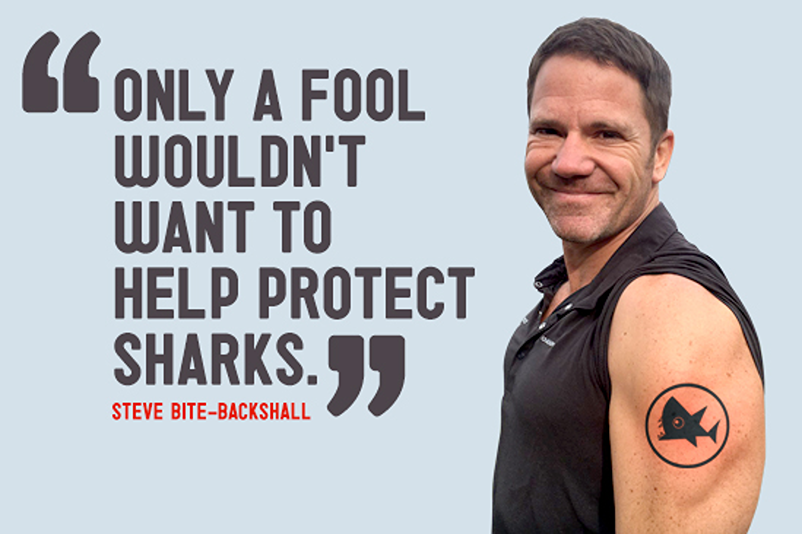
The number of sharks being slaughtered every day – primarily for shark fin soup – is shocking, and it’s got to stop. It’s time the public learned to regard sharks as the lions and leopards of the oceans, and get right behind shark conservation campaigns, before it’s too late. Steve Backshall (Bite-Back patron)
Tips for Sustainable Sailors
If you sail a boat, read our post for wildlife-friendly sailors).
If you do spot a shark (or any marine wildlife), keep at least 100 feet away – advice for North Atlantic and killer whales, is to stay even further away. If the shark should approach your boat, switch your engine to neutral and slow your speed to 4 knots
Never use jet skis, and if you dive or snorkel, enter the water gently to avoid splashing. Never use flash photography.
Avoid Beauty Brands Using Shark Ingredients
Although some companies make plant-based versions, most squalene or squalane oil in cosmetics is from sharks. Commonly found in wrinkle creams, deodorants, lip balms, sunscreens and lipsticks, check for vegan logos before purchase.
It takes 3000 sharks to make just one ton of squalene, meaning almost 3 million sharks are killed each year. Just to take oil from their livers, to use in the beauty and pharmaceutical industries.
The reason shark liver oil is used is because their swim bladders keep them buoyant in the ocean (so it’s believed the same can be done for skin). But you can get the same effects from plant-based squalene from olives, sugarcane, rice brand, wheat germ or amaranth seed.
Ambergris is a product from sperm whales, often used in perfumes. Choose vegan sustainable perfumes instead.
A Fun Book to Learn About Sharks
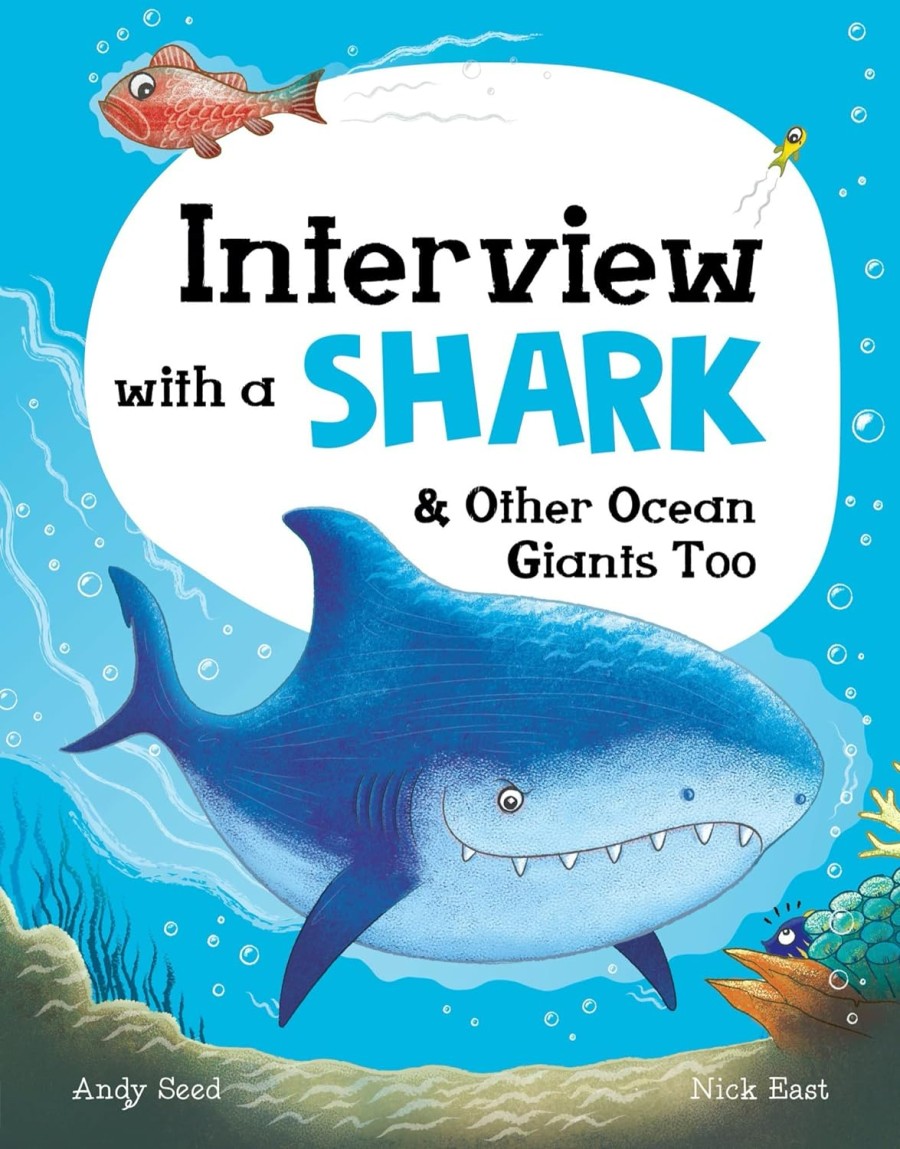
Interview with a Shark is a fun illustrated book, offering interviews with sharks and other ocean giants. Each creature steps up to the mic, and shares their habits, behaviour, likes and dislikes. And favourite foods!