Leicestershire (birthplace of the English language)

Leicester Pastel Pine

Pastel Pine

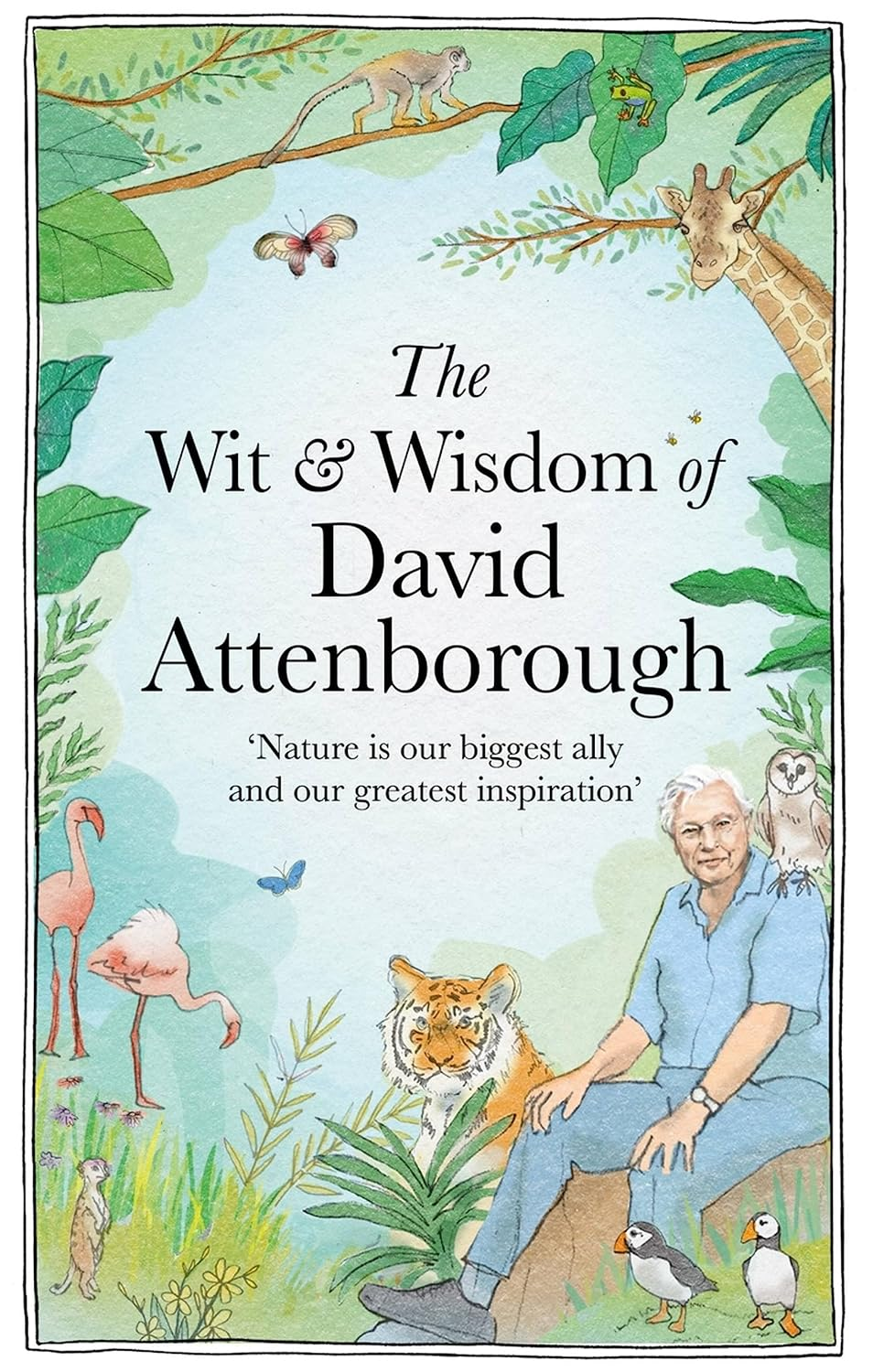
Leicestershire is a landlocked county in the East Midlands, you could almost call this ‘the county of firsts’. It’s the birthplace of the English language, the birthplace of Sir David Attenborough, the birthplace of the vegan movement, and even the birthplace of the motor car.

Although today Leicester city residents often have roots outside England, 2000 years ago this was the beginning of the English language (the town of Ashby-de-la-Zouche may sound French, but it’s Saxon English).

Scholars say the name is kind of half Old English and old Viking (due to Danish settlers) for ‘ash tree settlement’.

Fun Facts About the English Language

English has one of the largest vocabularies of any language (the letter ‘e’ makes up 11% of all words). You likely know the phrase ‘the quick brown jumpers over the lazy dog’ is a pangram (uses every letter of the alphabet – often used for typing students, back in the day!)

The longest English word at present is pneumonoultramicroscopicsilicovolcanoconiosis (45 letters). This means ‘a lung disease caused by inhalation of very fine silica dust, usually found in volcanos’.

This is nowhere near as long as one of the longest words on earth (Finnish):

Lentokonesuihkuturbiinimoottoriapumekaanikkoaliupseerioppilas

This means ‘‘airplane jet turbine engine auxiliary mechanic non-commissioned officer student’.

Just like French and Italian, English used to use grammatical gender (so different words whether you were referring to a male or female) but that was later dropped. English is the official language for international air travel, which is why all pilots have to know the language before qualifying.

There used to be 27 letters in the alphabet. The one that was dropped was the ampersand (& sign).

the lost words

The Lost Words is a beautifully illustrated guide for children by a writer and artist, dedicating to preserving words that are being lost in modern dictionaries, replaced by words of slang or referring to computers.

To ensure words like ‘dandelion’ and ‘otter’ always remain. And children learn that blackberries are fruits, not phones!

Where Sir David Attenborough Grew Up

Sir David Attenborough the happy news

The Happy News

Every single company now has a ‘sustainability page’ on its website. Unfortunately many are greenwash, but many are also genuine. And all show that the business world now knows that thanks to Sir David Attenborough raising awareness of everything from plastic waste to the plight of endangered species, the public cares – a lot.

Raised on campus at Leicester University where his father was Principal, Sir David is not just a media icon, he is highly qualified. He has a degree in natural sciences, and also  studied geology and zoology (wild animals, not zoos) at Cambridge University).

This humble man (who sends letters over emails, has never learned to drive and has 18 plants and animals named after him) says it would be ‘rude to count’ how many degrees he has.

When asked what thing would improve his quality of life, he replied ‘good, workable knees!’

Happily married for 50 years until his wife died, David writes that with his ‘anchor gone’, returned to working on nature programs, to cope with grief. Their two children both work to help the natural world.

As people increasingly question how items are made and packaged. Sir David Attenborough has done more to help our planet, than any politician.

Attenborough joined the BBC in the early 1950s. Since then of course, he has presented incredible programs on wildlife, from the watershed Life on Earth in 1970, which classrooms used as living textbooks to other programs that have been viewed globally by over 500 million people. His programs even affect government policy.

Birthplace of the founder of the vegan movement

Donald Watson

Donald Watson became a vegetarian at 14, after witnessing a pig being slaughtered on a relative’s farm. His sister and brother soon followed suit, his mother remarking she felt ‘like a hen who had hatched a clutch of duck eggs!’ He later went on to found the Vegan movement in England.

Born in Yorkshire (the son of a headmaster in a mining community), he moved to Leicester and became a teacher. Also a pacifist, he was a conscientious objector during World War II, and he and his wife founded the society (with others) after being told that they would not be able to survive on plants! He also practiced no-dig gardening (to avoid killing earthworms) when everyone else was still using spades and forks, to grow vegetables.

The couple had one daughter (she also became a teacher). There are now plaques in both Leicestershire and Yorkshire to commemorate him. Although he chose to live very simply, and had a simple funeral, and is buried in a small church cemetery on the outskirts of Keswick in Cumbria.

Donald’s son-in law continued the tradition, turning his home into a veggie bed-and-breakfast. He said that his relative’s nickname was ‘poppy’ (after Popeye, as everyone thought he ate a lot of spinach!) He said that back in the day, people thought Donald and his wife were ‘cranky oddballs’. But today millions of people know different.

Donald and his wife were passionate about nature, and lived the later years of their lives in Cumbria, where they enjoyed fell walking (he lived to the ripe old age of 95). He climbed Latrigg, just two days before he died.

Today The Vegan Society that he founded is very different, moving from its humble quarters in Hastings to now a bigger society based in Birmingham  There is controversy as it certifies foods with palm oil as vegan (indirect use is harming orangutans). You can’t campaign to save cows, but kill apes? What would Donald have thought?

I was surrounded by interesting animals. They all ‘gave’ something; the farm horse pulled the plough, the lighter horse pulled the trap, the cows ‘gave’ milk, the hens ‘gave eggs’ and the cockerel was a useful ‘alarm clock’.

I didn’t realise at that time, that he had another function too. The sheep ‘gave’ wool. I could never understand what the the pigs ‘gave’. But they seemed such friendly creatures – always glad to see me. Donald Watson

Showaddywaddy: The Rock n Roll Band from Leicester!

Showaddywaddy

If you’re a sucker for nostalgia, you’ll remember and love the 70s pop band Showaddywaddy, their catchy rock-n-roll tunes fronted by handsome singer Dave Bartram (unusually, this band had ‘two of everything’ – singers, bassists, drummers and guitarists).

What you may not know is that they were from the very un rock-n-roll county of Leicestershire! First finding fame on the TV show New Faces, they were know for their hits including ‘You Got What It Takes‘.

They still perform at clubs around England (under a mostly different line-up, as Dave left the band after 38 years). Though they likely don’t dance as fast! Dave remains the band manager.

Dave (who with his wife has now recovered from a serious bout of COVID that completely knocked him off his feet for weeks) even wrote a book The Boys of Summer, an entertaining history of the band’s days on the road, touring England’s various bucket-and-spade resorts to entertain the masses.

And recently, Romeo Challenger (the Antiguan drummer you may remember would sing ‘Come on little  darling, take my hand’ from his drumkit in the hit song Under the Moon of Love, recently donated money to a Salvation Army shop, after it found and returned stolen merchandise from the band.

He said later the shop staff’s honesty meant that ‘it was only right for us to give the proceeds back’. The charity shop owner thanked him for using the find, to help local homeless people.

Another Famous Singer from Leicestershire

Engelbert Humperdinck was also from these parts. His exotic looks may suggest Indian heritage, but his name was made up, created by his manager to make him sound more exotic. His real name is Arnold!
Similar Posts