Lessons from Milan (green city inspiration)
Just as other countries can learn from England (cottage gardens, animal welfare, London transport), there are many areas of life that we can learn from other countries. This series of posts looks at what’s best about fellow countries (and cities) to see what we can be inspired by, in our own country.
It doesn’t do ‘fast fashion’
As Italy’s wealthiest city, people here buy clothes to last. They don’t wait outside Next at 6am on the first day of the sales, then throw all kinds of rubbish clothing in the air, in order to find a bargain. There is no wasteful ‘fast fashion’ in Milan, just quality clothing (although it would be good to ban the sale of real fur).
People appreciate their religious buildings
You don’t have to be religious, to appreciate religious buildings. But unlike in England (where many churches and cathedrals are simply empty buildings that are shut most of the week), here churches are celebrated (obviously more in a heavily Roman Catholic country).
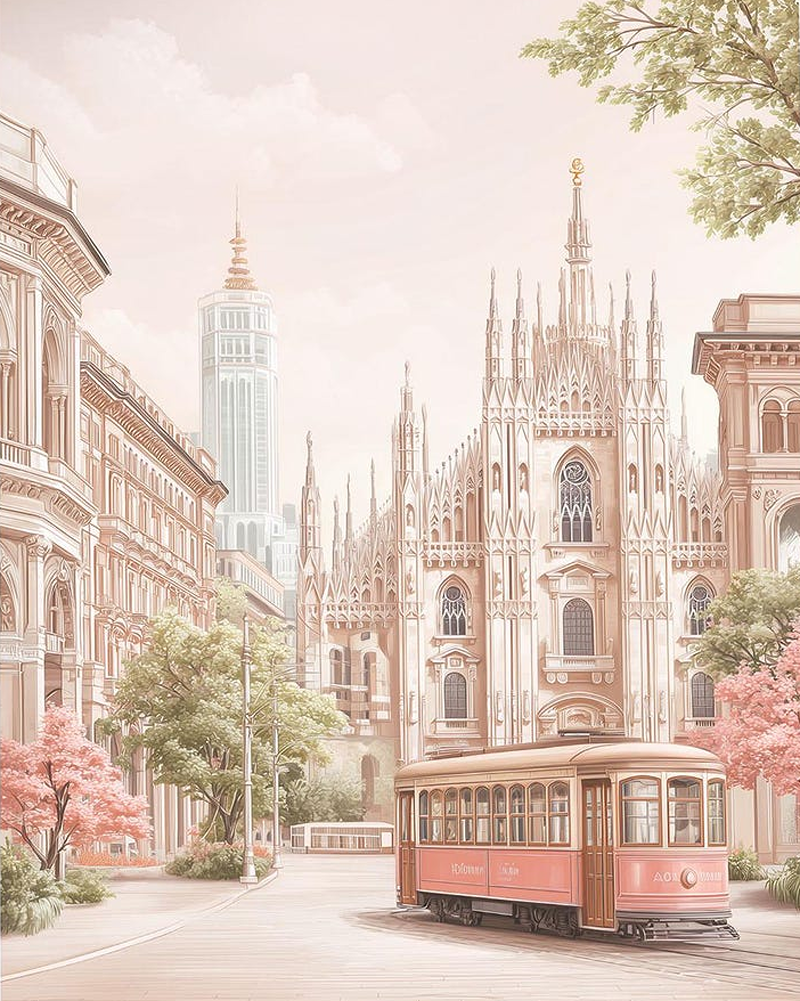
Duomo di Milano is huge, and took almost 600 years to build! So it’s rightly celebrated. Built from pink marble, this Gothic masterpiece has 135 spires, over 3400 statues and iconic rooftop terraces. It holds a giant statue of the Virgin Mary and even one of the nails used to crucify Jesus Christ.
It looks after its historic canals
Like Venice, Milan is a city built on canals (partly designed by Leonardo da Vinci). And unlike ours that are often filled with rubbish, these canals are kept pristine and don’t need armies of volunteers to keep fishing out all the trash left by tourists.
Read more on how to protect our historic canals.
One of the world’s largest tram systems
Milan has one of the world’s largest and best tram systems, which helps to reduce road traffic. The largest in Italy, it features 17 lines that run around 160km of the city, mixing modern vehicles with historic 1928 ‘Ventotto cars’ (the name means 28 in Italian!)
The trams run from 4.30am to 2am, so there is always a faster and greener alternative to driving (just as well, as you don’t want an angry Italian having road rage, they jump up and down and shout a lot as it is!)
Read why England needs more tram transport (we only have a few cities that use them).
It loves its old opera house
La Scala is the main opera house in Milan. Unlike say our Glyndebourne in Sussex, everyone in the country knows about this opera house, which has hosted concerts for Verdi to Puccini, and was immortalised in this lovely song (take a listen, you’ll love it even if you don’t like opera).
Their skyscrapers are covered in trees
It’s best really to keep to four-storey buildings (like Paris) as it’s means more walkable communities and also helps to stop birds flying into windows). Always turn lights out when not in use, use blinds/curtains and desk lamps, and avoid facing indoor foliage to the outside.
But if you’re going to have skyscrapers, the ones in Milan are better. The Bosco Verticale (vertical forest) is made up of two residential towers, but they feature over 900 trees to help purify the air and prevent urban heat island effect.
Instead of birds flying into reflective glass, they nest in the trees that are planted outside the glass. This acts as a virtual ecosystem that also shelters insects, which birds eat. It also has over 1200 ladybirds who live here, with safe places to hibernate in winter.
Birthplace of the Christmas Panettone
Panettone is a popular sweetbread in Italy, and it’s often sold here too. But most versions are made with animal products and also are too dry (it’s much nicer served with vegan vanilla ice-cream). The dessert was apparently created by accident, by a cook who saved a ruined pudding with fruit-filled bread!
Try this recipe for vegan panettone by a Swiss Italian chef (keep dried fruits and bread dough away from pets).