Eat Your Organic Veggies! (simple recipe ideas)

Garlic is one of England’s favourite vegetables, although it has more of a Mediterranean history (it does however grow in England, including on the Isle of Wight, where there is a famous garlic farm). Try this recipe for vegan garlic Alfredo (Jessica in the Kitchen).
Garlic first arrived in England back in 1548, and was used to treat skin disease, cholera and even helped soldiers during the 1918 influenza epidemic. It fell out of favour until Victorian times, when people discovered French food.
Garlic can increase bleeding, so check medication if you have any medical conditions or are due for surgery.
Keep garlic (and all alliums – onions, leek, shallot, chives) away from pets (and foods often cooked with them, like salt and spices). Also don’t feed birds or wildfowl garlic bread, it choke or harm. Read more on food safety for people & pets.
How to Buy & Store Garlic
Soft-neck garlic is most common (elephant garlic is less strong – a type of leek).
Fortunately, garlic is one of the vegetables in supermarkets that often is not in plastic packaging, so try to buy it loose. Or visit a farm shop to buy organic garlic.
Farm shops are also more likely to sell wild garlic, which is milder in taste and delicious with pasta.
How to Prepare & Cook Garlic
Store fresh garlic in a cool dry place (not the fridge). You can chop garlic with a knife or if you’re not a natural chef, a good garlic press is a tool to last a lifetime.
Scraps from alliums (onion, garlic, shallots, chives, leeks) and citrus/rhubarb scraps could harm compost creatures, due to acids. So just bin them, to naturally break down.
How to Mince Garlic with a Knife
- First of all, invest in a good knife, that’s half the battle over!
- Once you’ve removed the skin and separated the garlic bulb into cloves, just hold the tip of your knife in one hand, and use the other to ‘rock’ the blade back and forth.
- If you prefer minced garlic, it’s best to use a garlic press (unless you’re a professional chef).
Homemade Vegan Garlic Bread Recipe

Vegan Garlic Bread (The Veg Space) is a nice treat, crusty white baguettes dripping with garlic vegan butter.
Garlic bread – it’s the future. I’ve tasted it. Brian Potter, Phoenix Nights

To simplify this recipe, just use Flora’s garlic vegan butter (no palm oil), sold widely in shops.
If concerned about garlic breath, apparently eating apples, lettuce or mint afterwards, can neutralise it. Or just have everyone eat garlic, then they won’t notice!
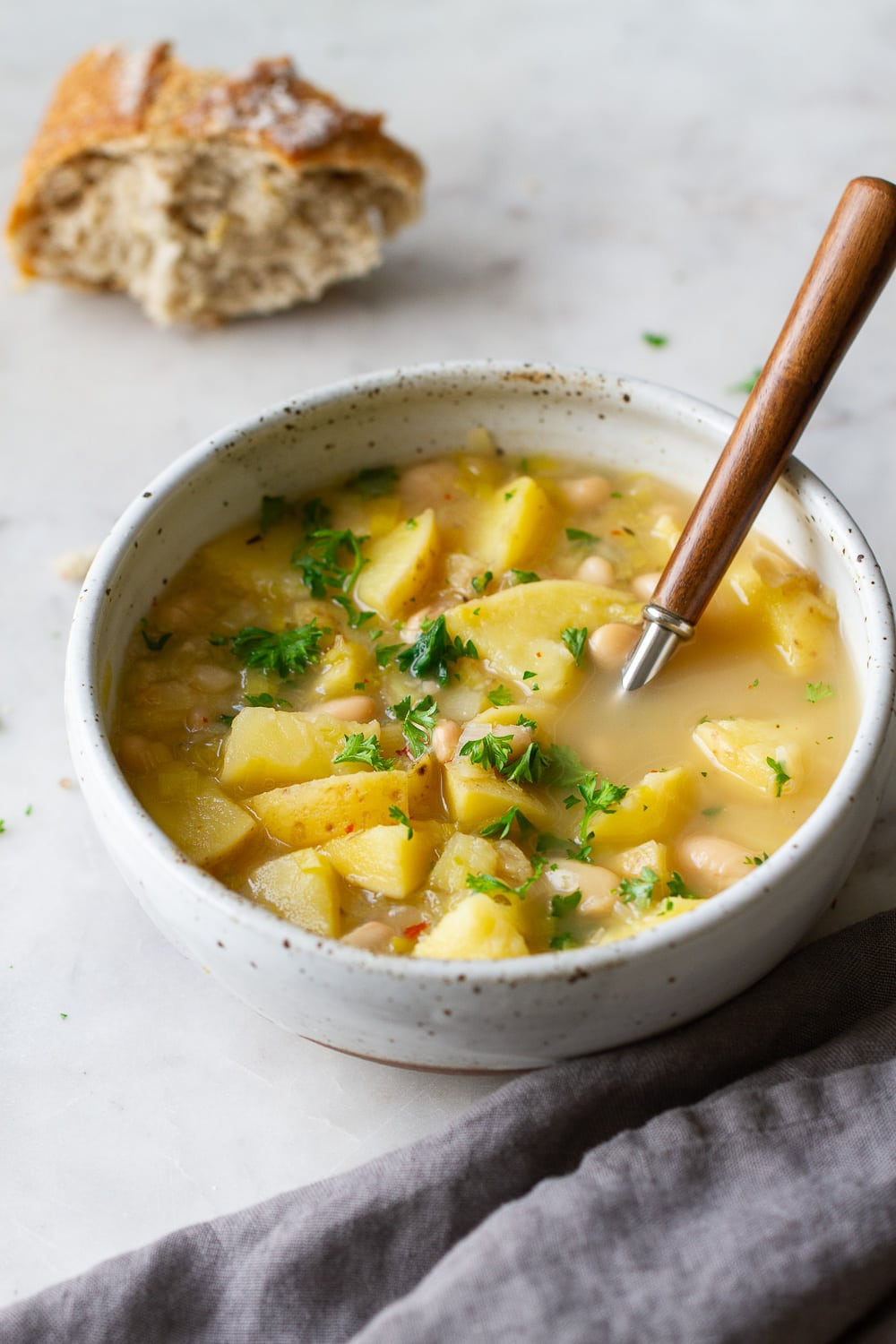
This potato leek soup (The Simple Veganista) will become a household favourite, especially since most canned versions contain milk or cream. This also contains canned beans, so is packed with protein too. And more filling, so you don’t have to eat a loaf of bread with it!
Leeks are affordable and local, so take advantage of those you find in markets and at farm shops, to make these tasty plant-based recipes! Just be sure to rinse leeks well, as most have grit that you don’t want to get stuck in your teeth.
Before cooking, read our post on food safety for people and pets (many foods including leeks, onion, garlic and spices are unsafe near animal friends).
It’s best to just bin allium scraps (leeks, onion, garlic, shallots, chives) as like tomato/citrus/rhubarb scraps, acids could harm compost creatures.
This is a US recipe, so sub Yukon Gold spuds for Maris Piper or King Edwards. Along with leeks, you’ll also need some oil, tinned cannellini beans, good veggie stock (no palm oil), herbs and red pepper flakes. Plus sea salt and fresh cracked pepper, and parsley to serve.
Once you’ve mastered the basic recipe, soup is so easy to make. This one is a case of rinsing and cooking the leeks in oil with spices, then adding and cooking the rest of the ingredients. This is quite a chunky soup, but you can use a stick blender to pulse it for a smoother texture.
If you make a lot of homemade soup, it’s worth investing in a good stick blender, to save the faff of washing blenders all the time. It’s UK law that whoever sells it to you, has to take your old appliance back for recycling.
You could also use Souper Cubes. Sold in Lakeland, these are like giant silicone ice-cube trays. Just pour in cooled leftovers and freeze. Then when you want soup, just pop a portion out and thaw overnight in the fridge, before cooking up to a safe temperature. That way, you can make bigger batches, even if you are only cooking for one or two, with no food waste.
Look in stores for Mr Organic Leek and Potato Soup. It’s both vegan and organic.

This vegan leek potato cup-a-soup (The Veg Space) is the ideal alternative to those palm-oil laden packs in stores. Cup a soup is nice and warming for winter days, and better for you than endless cups of coffee! This recipe uses whole potatoes and stewed leeks, with good veggie stock and vegan cream, for a yummy drink treat in cold weather.
Start with a sturdy, heatproof jar or mug with a tight lid. Glass jars like Mason jars work well because they handle boiling water, and are easy to clean. Make sure your chosen container holds at least 400ml and seals well to stop leaks if you’re packing your soup for work or school.
Wash the container before you use it, then let it dry fully.
A Simple Leek and Pea Risotto Recipe
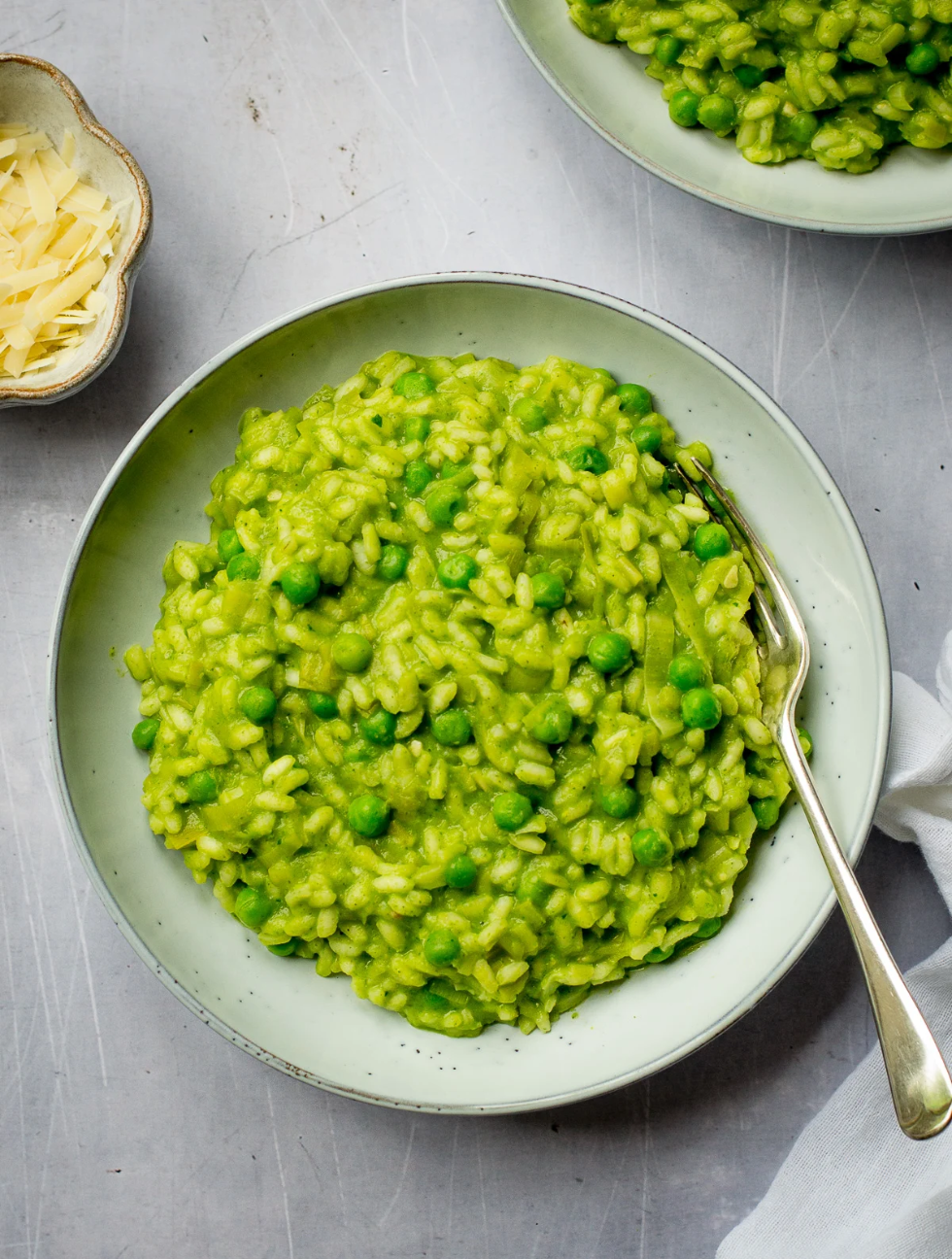
This leek and pea risotto (The Veg Space) is super-simple to make. Pack’d sells organic frozen peas in paper packaging, if you don’t have fresh to hand.
Leeks are affordable and local, so take advantage of those you find in markets and at farm shops, to make these tasty plant-based recipes! Just be sure to rinse leeks well, as most have grit that you don’t want to get stuck in your teeth.
A French-Inspired Leek Pasta Recipe
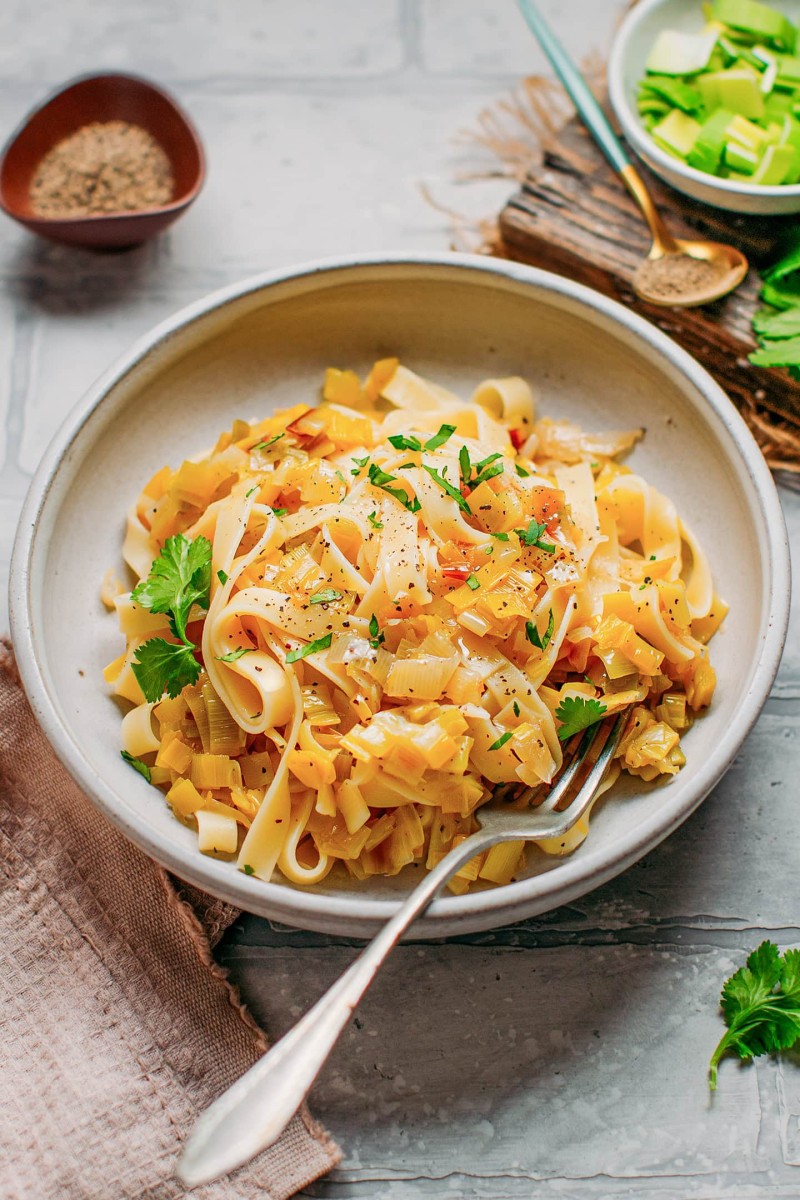
This recipe for leeks and pasta (Full of Plants) offers a unique way to use up a glut of leeks, and a change from tomato sauce! Always rinse leeks thoroughly, you don’t want to munch on grit, in your dinner!
Leeks are affordable and local, so take advantage of those you find in markets and at farm shops, to make these tasty plant-based recipes! Just be sure to rinse leeks well, as most have grit that you don’t want to get stuck in your teeth.
This is a really simple recipe. You basically just fry up chopped leeks in a blend of oil and vegan butter (Flora has no palm oil), then add in some onions and season with salt and pepper. You can even add in some vegan cream, if wished.
Use with plastic-free pasta and plant-based Parmesan (real Parmesan is not even vegetarian, as it contains a cheese that by law contains calf rennet).
Did you know that the Roman Emperor Nero ate so many leeks (to help his voice) that his other name was Porophagus (which means ‘leek eater!)
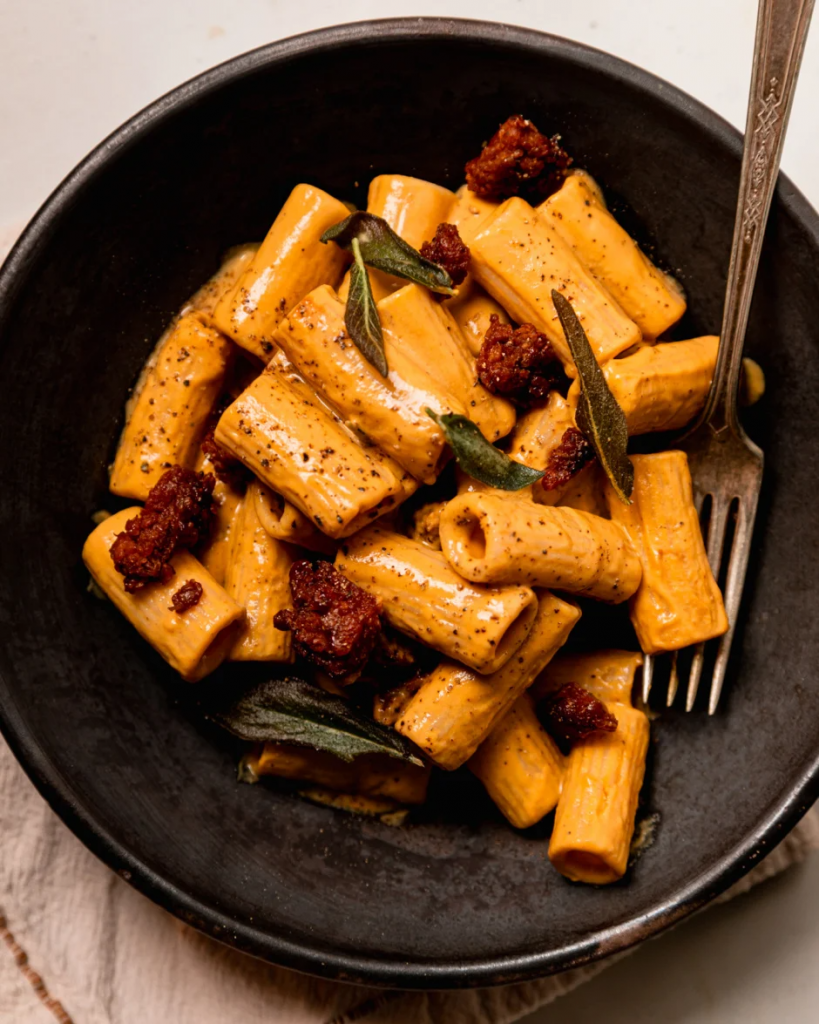
This recipe for vegan sausage & squash pasta (The First Mess) is made with wholesome ingredients, along with some vegan sausages.
Before cooking, read up on food safety for people & pets.
Squash is wonderful to make creamy sauces for pasta, but many people are put off, as it’s so difficult to cut. In fact, a good knife is likely the answer, ensure a damp cloth is underneath your chopping board to keep things steady. Trim off both ends, cut through the middle and then remove the seeds. You can roast it first to soften the skin, before chopping up.
You can now buy plastic-free pasta grown with British wheat from The Yorkshire Pasta Co and Northern Pasta Co. Top with vegan Parmesan (conventional Parmesan is not even vegetarian as it contains a cheese made with calf rennet).
A Vegan ‘Squash Mac & Cheese’ Recipe
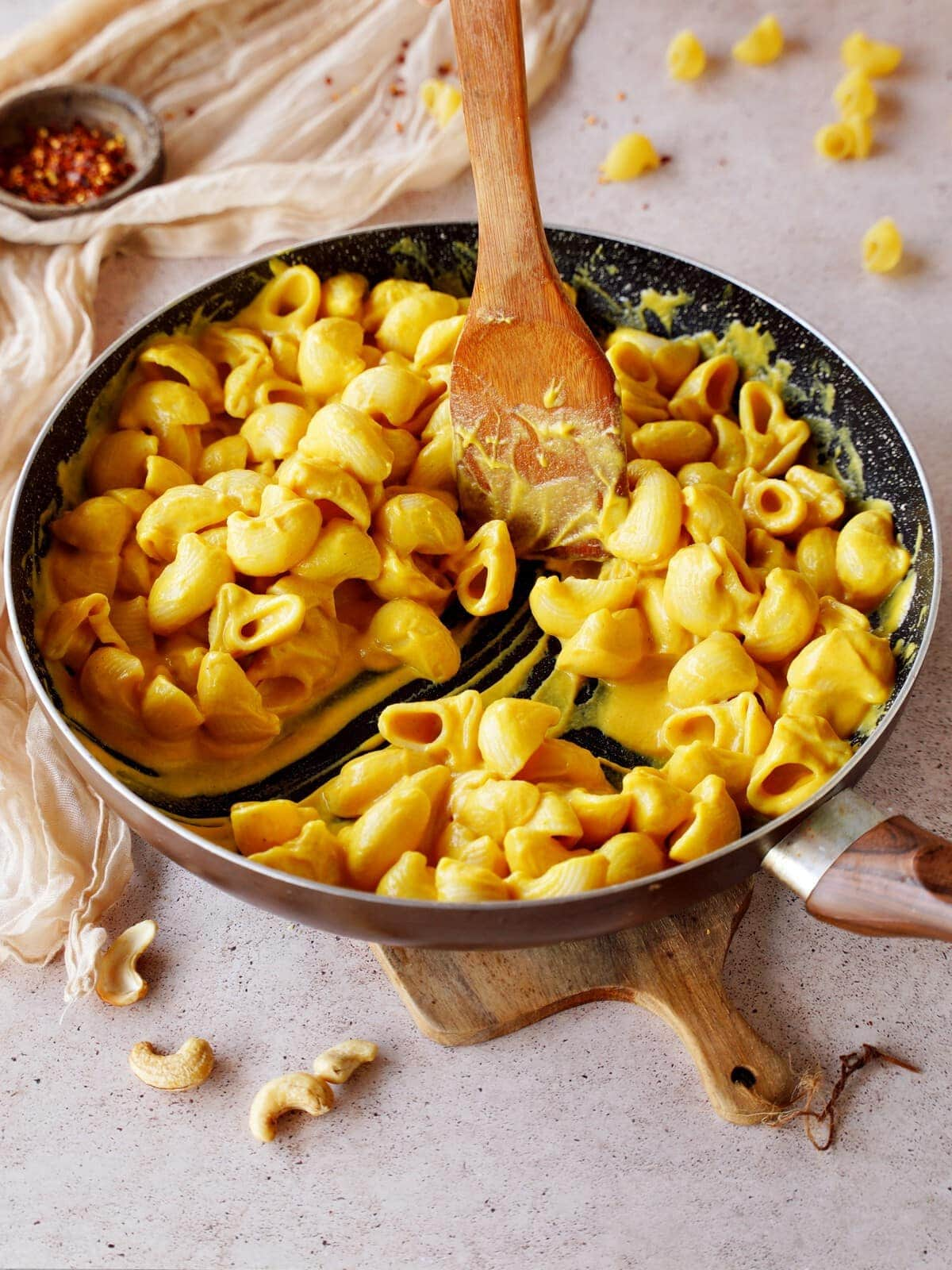
Also try this Vegan Mac & Cheese (Ela Vegan) which again uses squash to replace the creaminess of cheese or cream.
Butternut Squash Pasta Sauce
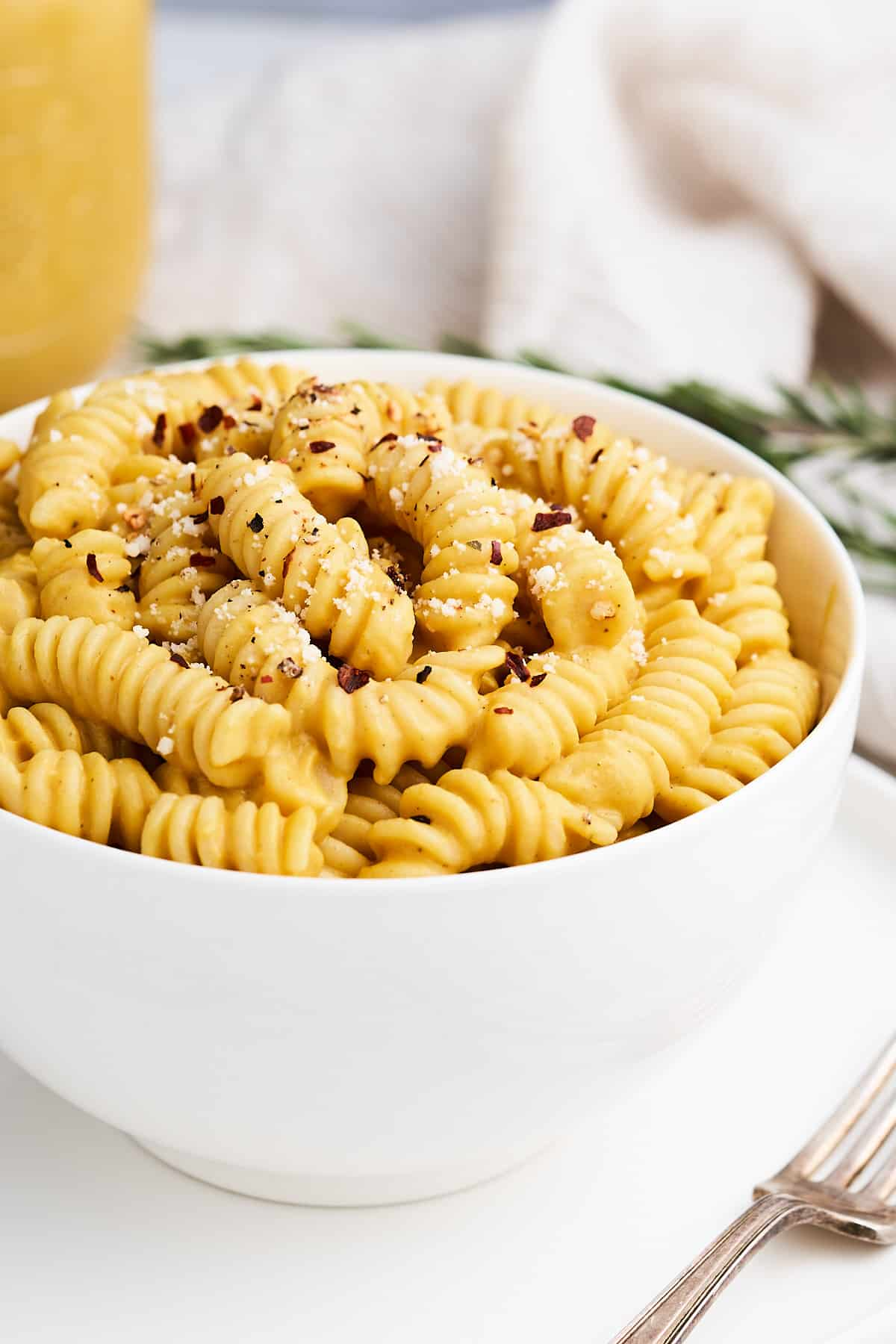
This butternut squash pasta sauce (Broke Bank Vegan) is a rich and creamy sauce that will make you a fan of butternut squash, which is kind of like ‘nature’s candy’ as it tastes just like butterscotch when it’s cooked.
The vegetable is combined with garlic, shallots, fresh herbs and red pepper flakes, along with soaked cashews (for the ‘creamy base’) and nutritional yeast (makes things taste cheesy).
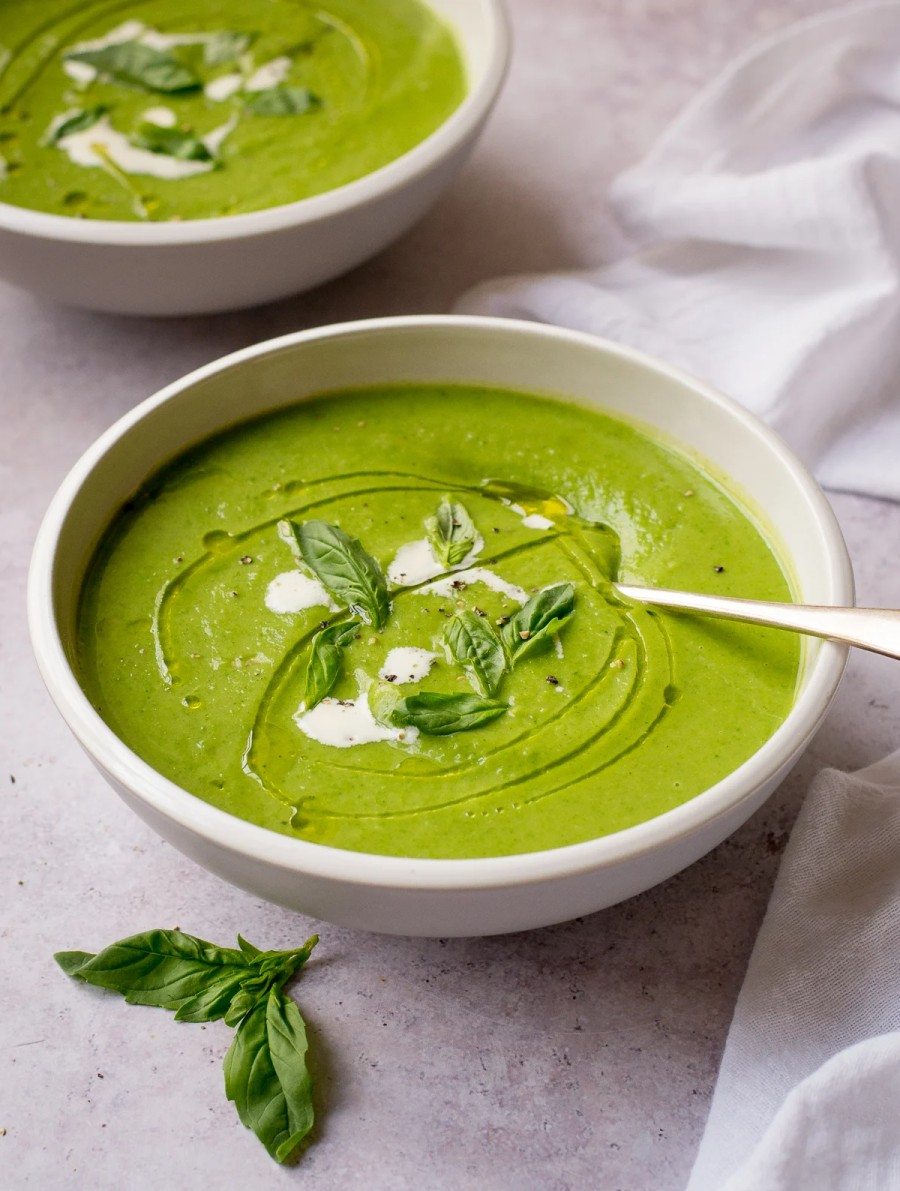
Broccoli & Pea Soup (The Veg Space) is a vibrant green meal with peas and mint, with protein due to tinned cannellini beans. It’s a great simple soup that anyone can make, for healthy vitamins from this popular vegetable.
Check medication before eating broccoli, due to some interactions (usually for hormone/kidney issues, people on blood thinners and those with IBS/allergies).
Keep this recipe away from pets, due to salt, onion and garlic. Read more on food safety for people & pets.
Related to cabbage, broccoli (the name means ‘little flowers’ in Italian) is one of England’s healthiest vegetables, if not everyone’s favourite!
But it can be very tasty, if prepared right. It’s also incredibly high in calcium, so great for your bones (and wonderful for vegans).
How to Buy & Store Broccoli
Look for broccoli with firm stems (no cracks or dried parts). And avoid broccoli that has wilted, as it is no longer fresh.
Store fresh broccoli in a ventilated tub in the coldest part of your fridge. It won’t keep for long, so eat it up quickly.
How to Prepare & Cook Broccoli
- Wash fresh broccoli in cold running water, then drain in a colander and pat try.
- Remove tough leaves and stems, then cut into florets. Slice and peel the stem.
- Steam or boil for a few minutes, depending on the size of the florets. You can also cook them in an air-fryer for a few minutes longer.
If making recipes with alliums (onion, garlic, leeks, shallots, chives), just bin scraps (and the same for citrus and rhubarb), as acids could harm compost creatures.
Broccoli & Cauliflower Soup Recipe
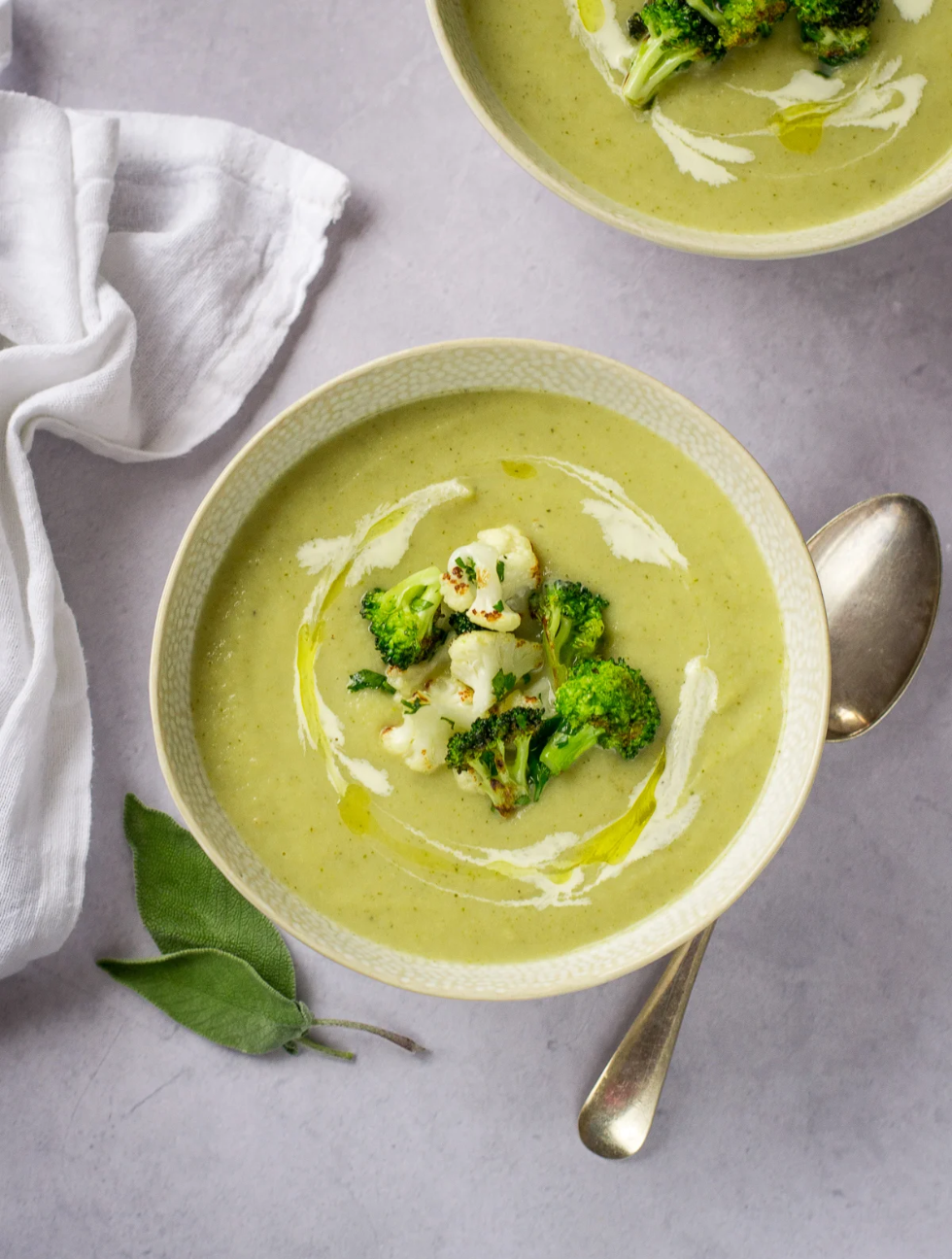
Broccoli & Cauliflower Soup (The Veg Space) pairs these vegetable cousins together, for a simple affordable homemade soup.
If you like making soup, invest in a stick blender, as it saves all the faffing around with washing jug blenders. When buying a new electrical appliance, UK says the store has to take the old one back.
Also invest in Souper Cubes. Made from silicone, just pour leftover soup in, then freeze and the soup is ready to thaw and cook, whenever you want it.

Vegan Cabbage Skillet (The First Mess)
Cabbage might look unassuming, but it deserves pride of place in English kitchens. Packed with vitamin C, fibre and a subtle sweetness, this humble vegetable is more than just a filler for stews.
Cabbage is packed with nutrients, and lasts quite a long time. It’s cheap and rich in vitamins C and K, good for bone health and immunity. It’s also high in fibre, so good for digestion.
Check medication before eating lots of leafy greens, due to interaction with vitamin K. Before cooking, read up on food safety for people & pets.
Just bin allium scraps (onion, garlic, leeks, scallions, chives) as like citrus and rhubarb scraps, acids could harm compost creatures.
Cabbage has been a steady feature of English recipes for centuries, valued for its ability to store well and feed families through the winter. If you’ve got half a head of cabbage sitting in the fridge, it’s time to put it to good use.
Speedy Cabbage Stir-fry
For a quick dinner or side, slice your cabbage thinly and toss it in a hot pan with garlic, a little oil and soy sauce. Add carrots, spring onions or any other veg you need to use up. Cook it quickly until it’s tender but still crisp.
This method keeps all the best parts: bright flavour, nutrients and a lovely crunch. Serve with rice, noodles or alongside flavoured tempeh.
Homemade Bubble and Squeak Cakes!
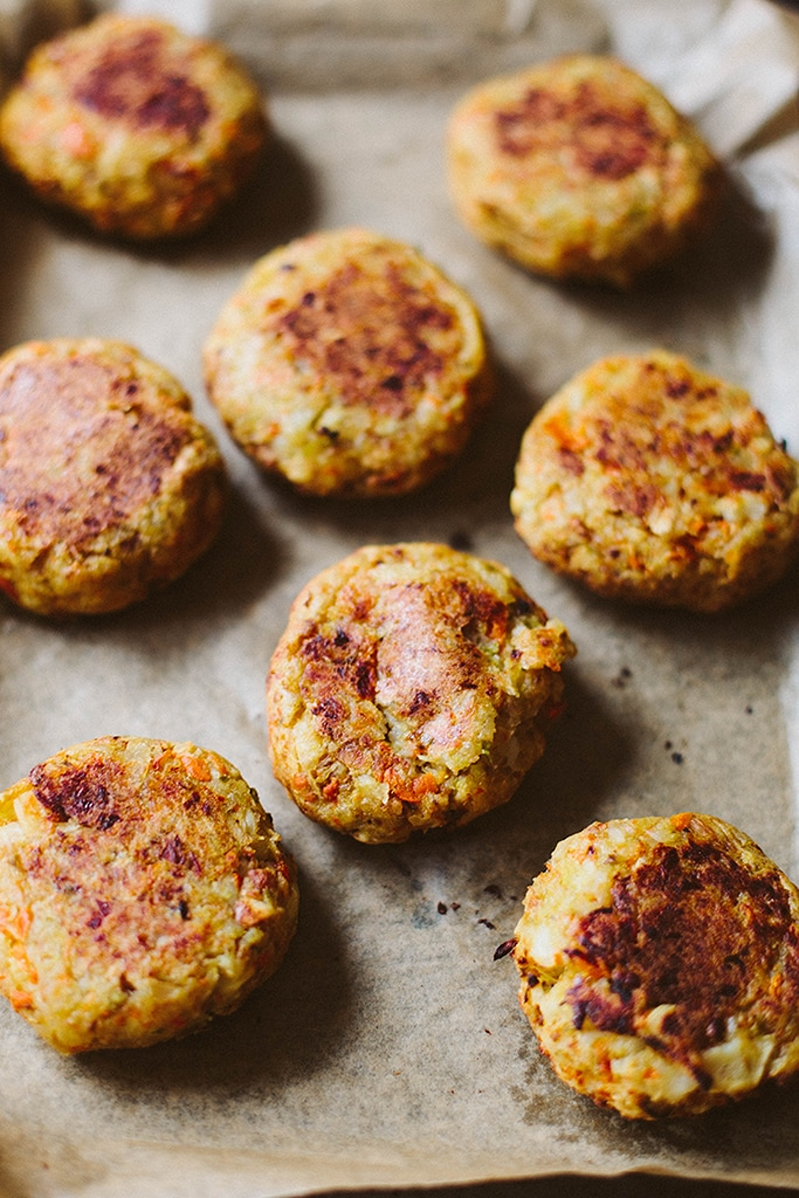
These homemade bubble and squeak cakes (Wallflower Kitchen) are the ultimate zero waste recipe, to use up leftover mashed potato and cabbage. But these are far more nutritious, as they also contain lots more veggies including carrots, parsnips and sprouts.
Before cooking, read up on food safety for people and pets (onion and garlic are unsafe near animal friends).
Just bin allium scraps (onion, garlic, shallots, chives, leeks, as acids could harm compost creatures (same for citrus/tomato/rhubarb).
This is a super-simple recipe that doesn’t take long either. After frying up your onion, you basically process them with the leftover potato and veggies, then form into patties. Then bake them for 25 minutes (or fry in a little oil).
Aimee suggests serving them with vegan sausages and homemade gravy, or simply with ketchup.
Classic Vegan Coleslaw

Grate or finely shred your leftover cabbage, add carrots and apples, then mix with a spoonful of vegan mayo or plain yoghurt, a splash of vinegar and pinch of salt.
Vegan Coleslaw (Jessica in the Kitchen) is so easy to make. Shredded cabbage and grated carrots are combined with onions, vegan mayo, lemon juice, apple cider vinegar, salt, pepper and Jessica’s own vegan sour cream.
Coleslaw is fresh, tangy and endlessly adaptable. Use red or white cabbage, add celery or spring onions, or sprinkle in a handful of seeds. This salad is ideal for summer meals, sandwiches or as a side to baked potato.

This vegan Coronation coleslaw (The Veg Space) is inspired by the popular Indian dish (named after the 1952 Coronation, made with warming spices and sultanas.
Cabbage and Potato Bubble and Squeak
This old English favourite celebrates all sorts of leftovers, especially cabbage. Mix cooked cabbage with mashed potatoes, then press into patties and fry in a little vegan butter or oil, until golden on both sides.
Bubble and squeak brings out the natural sweetness of cabbage and turns it into a hearty meal. Serve with baked beans for extra comfort.
Hearty Cabbage Soup

Roughly chop your leftover cabbage and toss it into a pot with veggie stock, tinned tomatoes, diced potato and carrot. Add herbs like thyme or parsley and simmer until tender.
The cabbage softens and mellows, giving a sweet note to the broth. This soup is warming and filling, perfect for cold days or as a healthy lunch option.
Fried Cabbage with Vegan Bacon
Chop your cabbage into thick pieces and fry in a pan with chopped vegan bacon. This gives the vegetable a smoky richness.
Add a splash of cider vinegar for brightness and season with black pepper. This simple dish makes a great side or a topping for hot jacket potatoes.
Cabbage and Vegan Cheese Gratin
Layer sliced cabbage in a baking dish with grated vegan cheese, a little plant-based cream or milk, and sprinkle some breadcrumbs over the top. Bake until golden and bubbly.
The cheese melts into the cabbage, making a rich and satisfying bake. This is a lovely way to tempt even the least enthusiastic cabbage eaters.
Stirred into Noodle Dishes
Cabbage works well in stir-fried noodle dishes or even tossed into instant noodles for a fast meal. Shred it finely and add near the end so it stays slightly crisp.
Pair it with soy or oyster sauce, sesame oil and whatever protein you like. It’s a simple way to bulk up a quick meal and add a serving of vegetables with very little work.
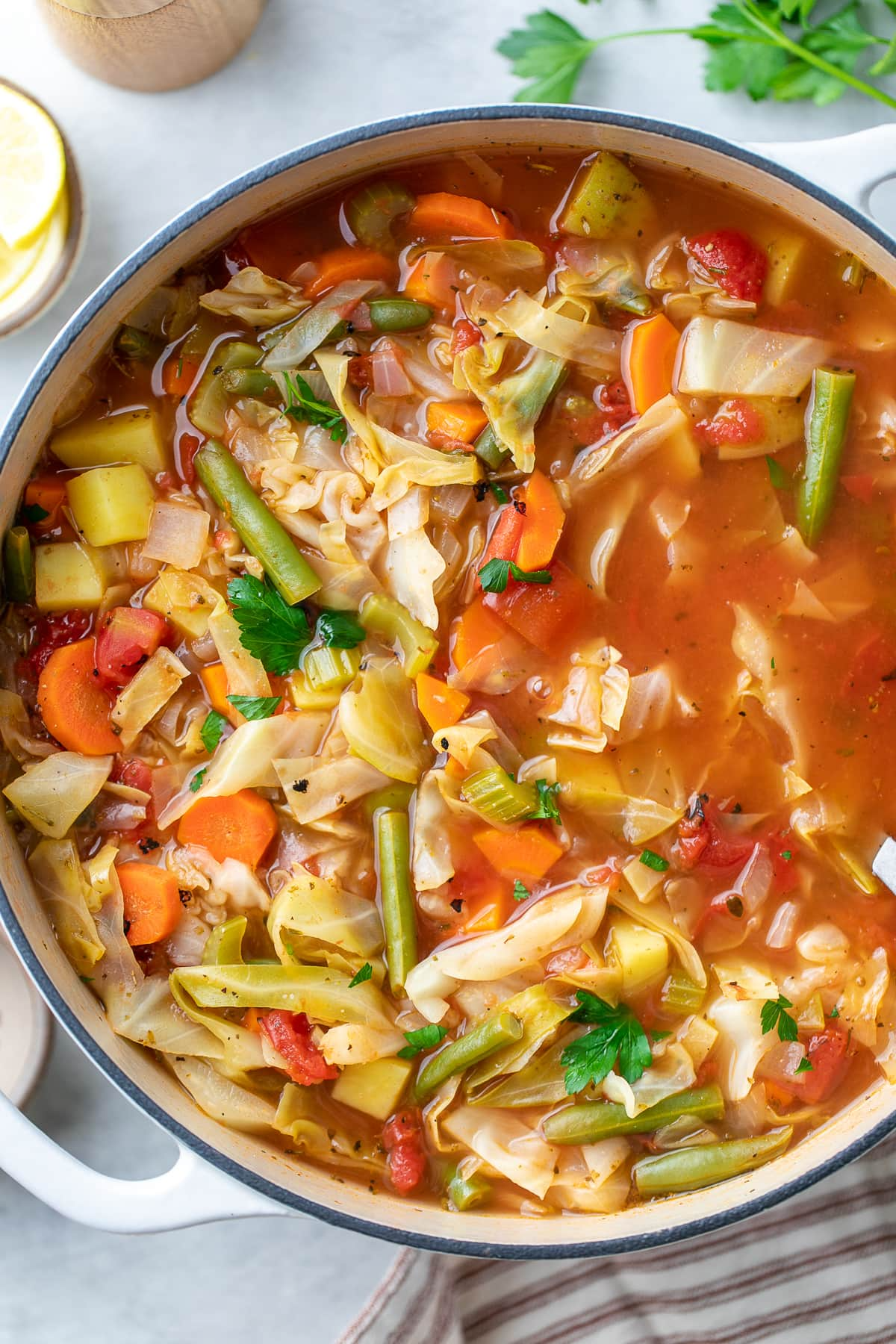
This cabbage soup recipe (The Simple Veganista) is not the kind that you’d find on a health farm! It’s a big tasty and nutritious stew, using one of our most nutritious and readily-available affordable veggies.
Check medication before eating cabbage (due to vitamin K interactions). Read more on food safety for people and pets (leeks, onion and garlic are unsafe near animal friends).
Just bin allium scraps (leeks, onion, garlic, chives, shallots), as acids could harm compost creatures (same for citrus/tomato/rhubarb).
Cabbage is one of England’s most affordable crops, that is readily available and packed with nutrition. It’s eaten widely worldwide. It’s the national food of Russia, and in the east, it’s served as spicy kimchi (avoid fermented foods for pregnancy/nursing or weak immunity).
This follows the basic ‘soup’ recipe. Just fry up the veggies then add stock and herbs, then boil and blend. If you make a lot of homemade soup, it’s worth investing in a good stick blender, to save the faff of washing blenders all the time. It’s UK law that whoever sells it to you, has to take your old appliance back for recycling.
You could also use Souper Cubes. Sold in Lakeland, these are like giant silicone ice-cube trays. Just pour in cooled leftovers and freeze. Then when you want soup, just pop a portion out and thaw overnight in the fridge, before cooking up to a safe temperature. That way, you can make bigger batches, even if you are only cooking for one or two, with no food waste.
Chopped Cabbage Skillet Meal
If you’re after something even more hearty, try this chopped cabbage skillet meal (The First Mess). The cabbage is roasted in spices and combined lentils, rice, fine-ground walnuts and a tangy tomato sauce, roasted on the stove, and ready in an hour.
A Creamy Cabbage Curry Recipe

Or go fusion food, with this amazing Cabbage Curry (Rainbow Plant Life). Creamy due to coconut milk and almond butter, it also contains protein-rich chickpeas.

This vegan French onion soup (Ela Vegan) is a nice simple recipe to replace conventional French onion soup that usually contains beef stock. This cooks onions in vegan butter (Flora is free from palm oil) and adds lentils, good veggie broth, bay leaf and wine. Once cooked, remove the bay leaf, season and serve with grilled bread and vegan cheese.
Keep onions/shallots/garlic/leeks away from animal friends. Read more on food safety for people and pets.
Just bin garlic/onion/allium scraps (plus citrus, tomato and rhubarb) as the acids can harm compost creatures.
This soup contains lentils, which give the soup lots of protein and calcium. Lentils are popular in Italian and Middle East cuisine, and very easy to cook
They are also cheap and filling. In fact, this plant-based French onion soup is way higher in protein than most watery tinned soups, which are not even vegetarian. Who said that vegans can’t get their protein?
If you like making soup, invest in a stick blender, as it saves all the faffing around with washing jug blenders.
When buying a new electrical appliance, UK says the store has to take the old one back. So take the dusty broken jug blender back to the store you buy a new one from, and it will be recycled on for you.
Also invest in Souper Cubes. Made from silicone, just pour leftover soup in, then freeze and the soup is ready to thaw and cook, whenever you want it.
Tomato, Cucumber and Onion Salad
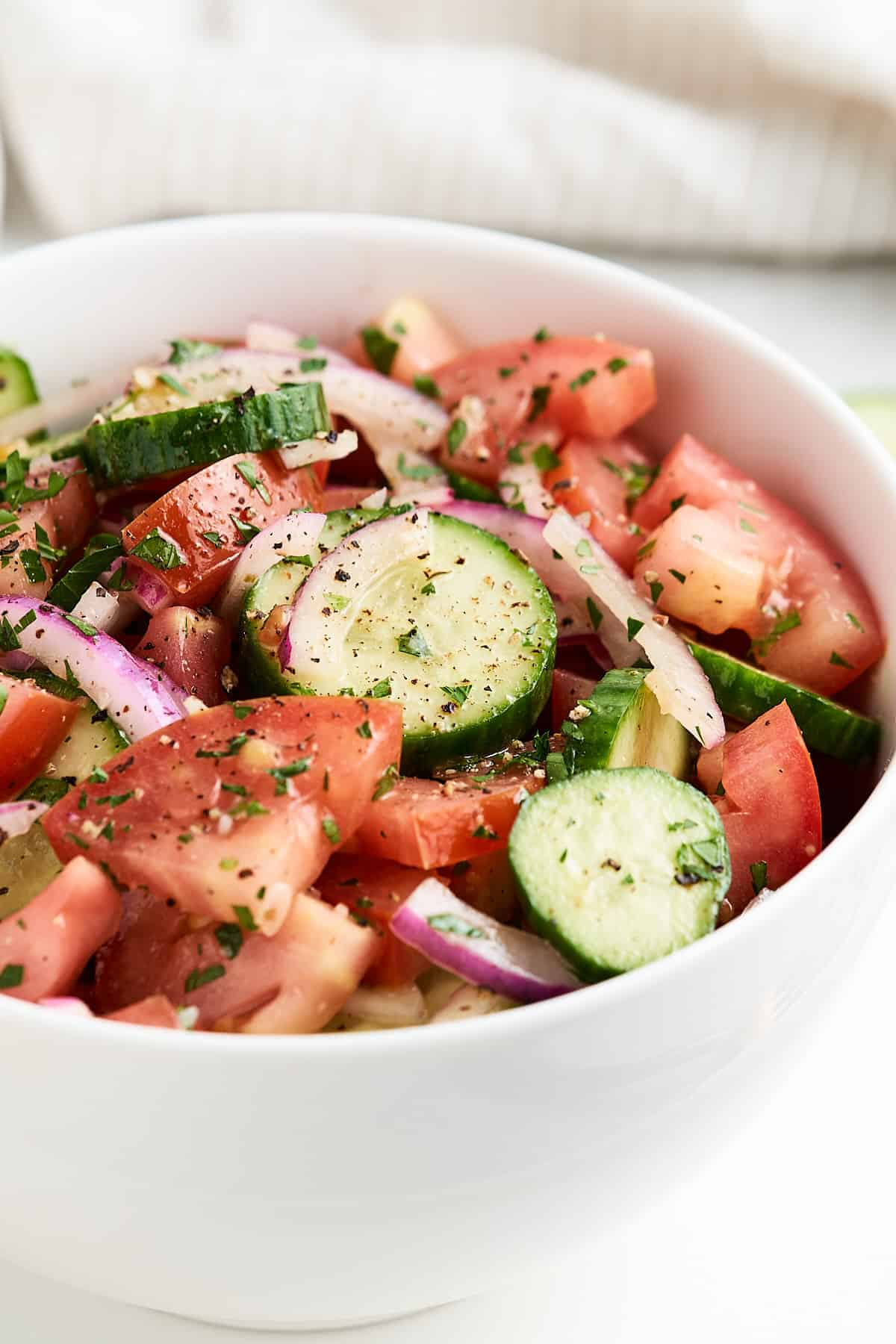
This simple tomato, cucumber & red onion salad (Broke Bank Vegan) is a step up from the ‘slice of lettuce, cucumber and tomato) for a side salad.
Made with Roma, cherry or grape tomatoes, the recipe also uses fresh herbs, garlic, Dijon mustard, seasoning, vinegar/lemon juice for tang and olive oil.
This leek and pea risotto (The Veg Space) is super-simple to make. Pack’d sells organic frozen peas in paper packaging, if you don’t have fresh to hand.
Leeks are affordable and local, so take advantage of those you find in markets and at farm shops, to make these tasty plant-based recipes! Just be sure to rinse leeks well, as most have grit that you don’t want to get stuck in your teeth.
Before cooking, read our post on food safety for people and pets (many foods including leeks, onion, garlic and spices are unsafe near animal friends).
It’s best to just bin allium scraps (leeks, onion, garlic, shallots, chives) as like tomato/citrus/rhubarb scraps, acids could harm compost creatures.
Smashed Peas on Toast (to sub avocado)
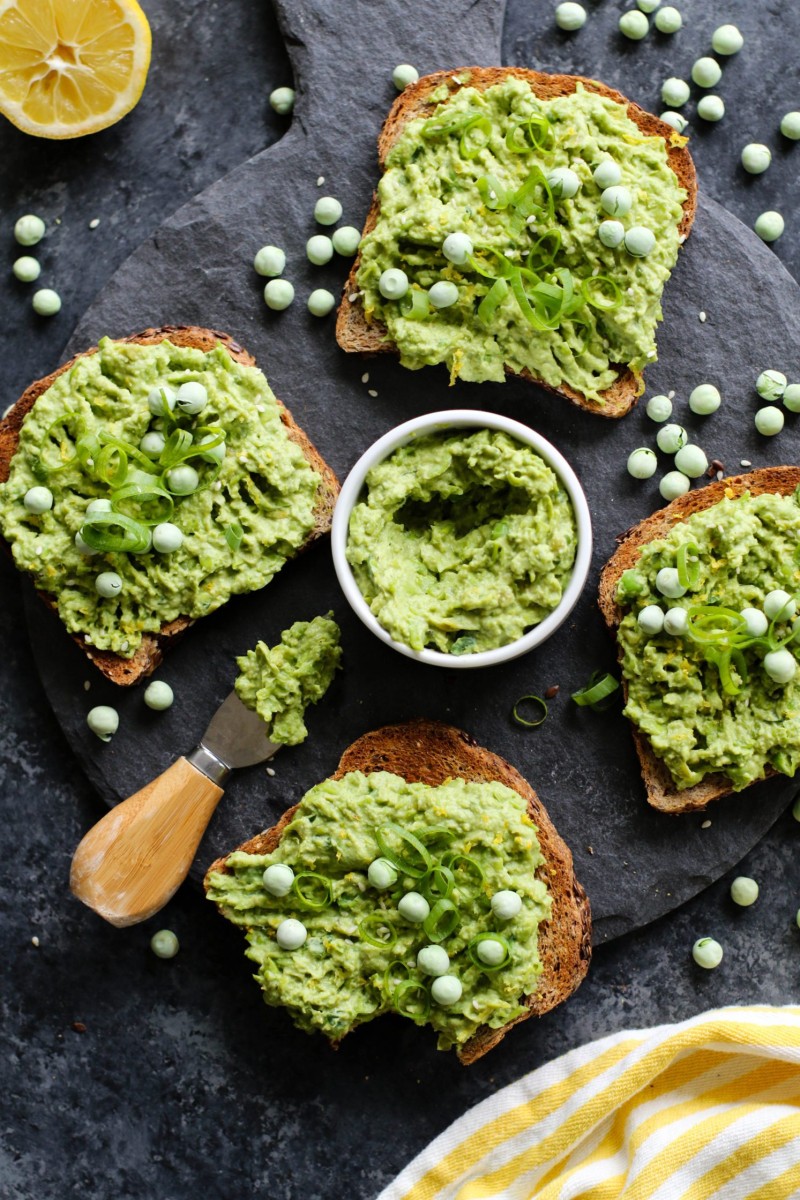
Avocado is delicious and nutritious. But it’s not local and there is controversy over farming methods. Like palm oil, it’s linked to deforestation with pine forests in South America, and even land grabs and organised crime.
Unless you are buying from an organic farmers’ market and know where and how it was grown, it’s best to avoid avocado (also keep away from pets, they are unsafe).
Smashed peas on toast is the ideal swap.
It’s local and seasonal (buy fresh or Pack’d sell organic frozen peas in paper packaging). Either makes a delicious protein-packed breakfast and snack, and also helps to support local farmers.
Chef Jack Croft says the ‘taste’ from avocado on toast comes more from the seasonings (say lime and coriander in guacamole). Try making pea guacamole!

This homemade tomato soup (It’s Liv B) is made with just 4 ingredients: a can of canned diced tomatoes, an onion, some vegan butter (Flora has no palm oil) and salt (plus optional dried basil). And water! You just simmer the ingredients, then cool a little and blend!
Before cooking, read up on food safety for people and pets (many foods including onion, garlic, spices and green tomatoes are unsafe near animals). Just bin tomato and allium scraps (onion, garlic, leeks, shallots, chives) as like citrus/rhubarb scraps, acids could harm compost creatures.
For tinned tomatoes, pop lids inside cans (or pop ring-pulls back over holes) to avoid wildlife getting trapped).
If you like making soup, two little tools will make life a lot easier. An immersion blender (just stick it in the soup pan to whizz up, to avoid the faff of using and washing blenders). And silicone Souper Cubes (sold in Lakeland), you can pour leftovers into these ‘big ice cube trays’, then just ‘pop a frozen soup’ out when you want to heat up on the stove.
Homemade soup can also be adjusted to taste. Add basil or not. Decide whether to leave it chunky, or blend it smooth. Serve with crusty bread or sourdough toast, and a crisp green salad. Cool leftovers before chilling in a sealed container, for up to 3 days.
You can also make simple adjustments to vary your homemade tomato soup:
- Add roasted red peppers or a touch of smoked paprika.
- Add chilli flakes, or a swirl of chilli oil before serving.
- Stir in cooked lentils, for a heartier bowl.
- Add autumn/winter herbs (thyme or rosemary)
- Add grated carrots for sweetness
Troubleshooting:
- Too thin: Simmer uncovered for 5 to 10 minutes to reduce.
- Too thick: Add water, a splash at a time.
- Too acidic: Add a pinch of sugar or a splash of coconut milk.
- Flat flavour: Increase salt slightly, add black pepper and fresh basil.
If you do choose canned tomato soup, look for organic brands like Suma.
Italian Gnocchi with Spicy Tomato Sauce
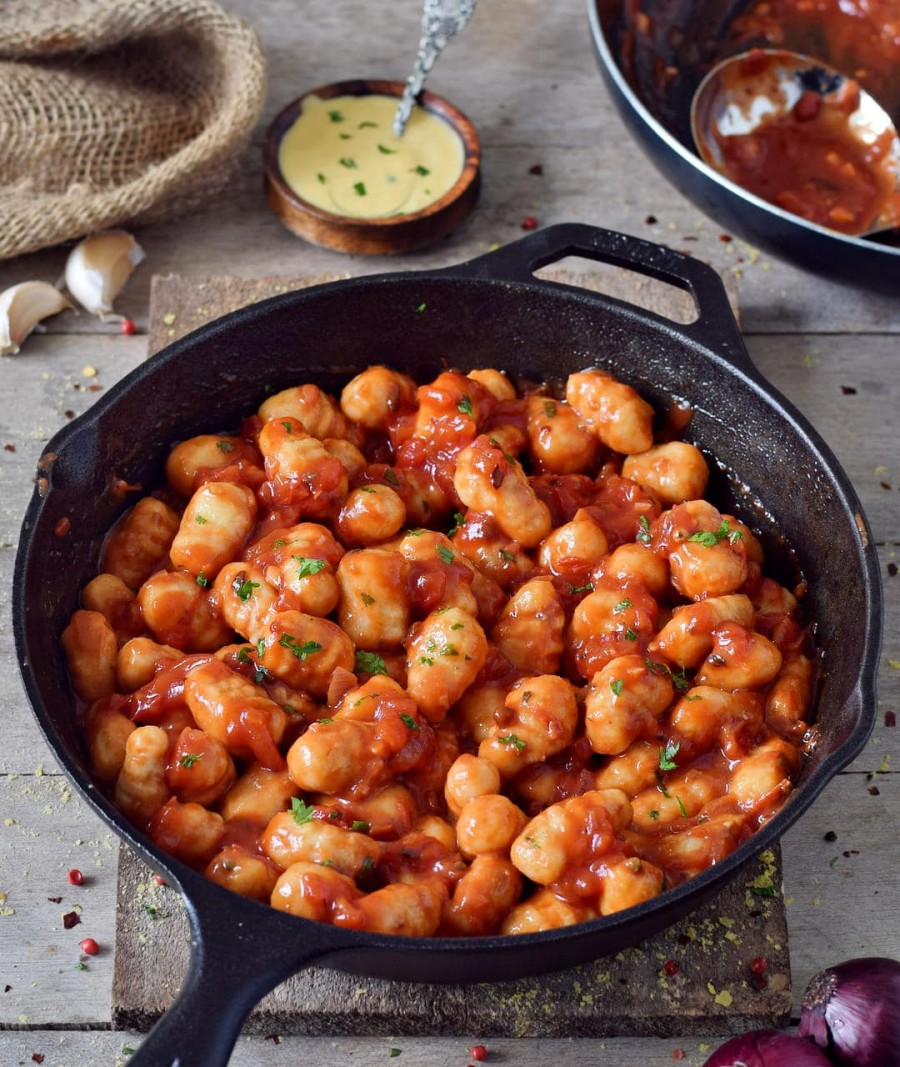
Gnocchi with spicy tomato sauce (Ela Vegan) is a super-simple supper (potato gnocchi is quicker to cook than pasta, in 3 minutes or so). Add to boiling water, then when the gnocchi rises to the top of the pan, it’s ready. Flavoured with red pepper flakes, this a take on pasta arrabbiata (‘angry sauce!)
Gnocchi is so-called as the pieces look like ‘knuckles’ (Italian translation). Mr Organic is a good brand (or bakers can make their own).
Pasta with Roasted Tomatoes, Spinach and Chickpeas

Spaghetti with Roasted Tomato, Spinach & Chickpeas (Munch Meals by Janet) is a super-simple supper with lots of protein from tinned chickpeas, but is very affordable.
Spinach is high in vitamin K, potassium and oxalic acid, so check medication and avoid for kidney stones/disease. Avoid basil for bleeding disorders or low blood pressure (it can slow blood clotting).
Seasoned with salt, pepper, oregano and garlic powder to roast the tomatoes, adding more tomato paste and crushed tinned tomatoes to the dish, alongside optional kalamata olives. Check out Janet’s cookbook.
Serve with plastic-free pasta (unless there is a medical reason, salt the water). Not doing this in Italy makes it ‘silly pasta!’ You will notice the difference in taste.
Serve with vegan grated cheese or learn to make plant-based parmesan. Real Parmesan is not even vegetarian, as by law it contains a cheese made with calf rennet.
Sun-Dried Tomato Pasta Dish Recipe

This sun-dried tomato pasta (Exploring Vegan) is a great way to use up a half-eaten jar of sun-dried tomatoes. This dish is paired with fresh cherry tomatoes, mushrooms and tinned white beans for protein.
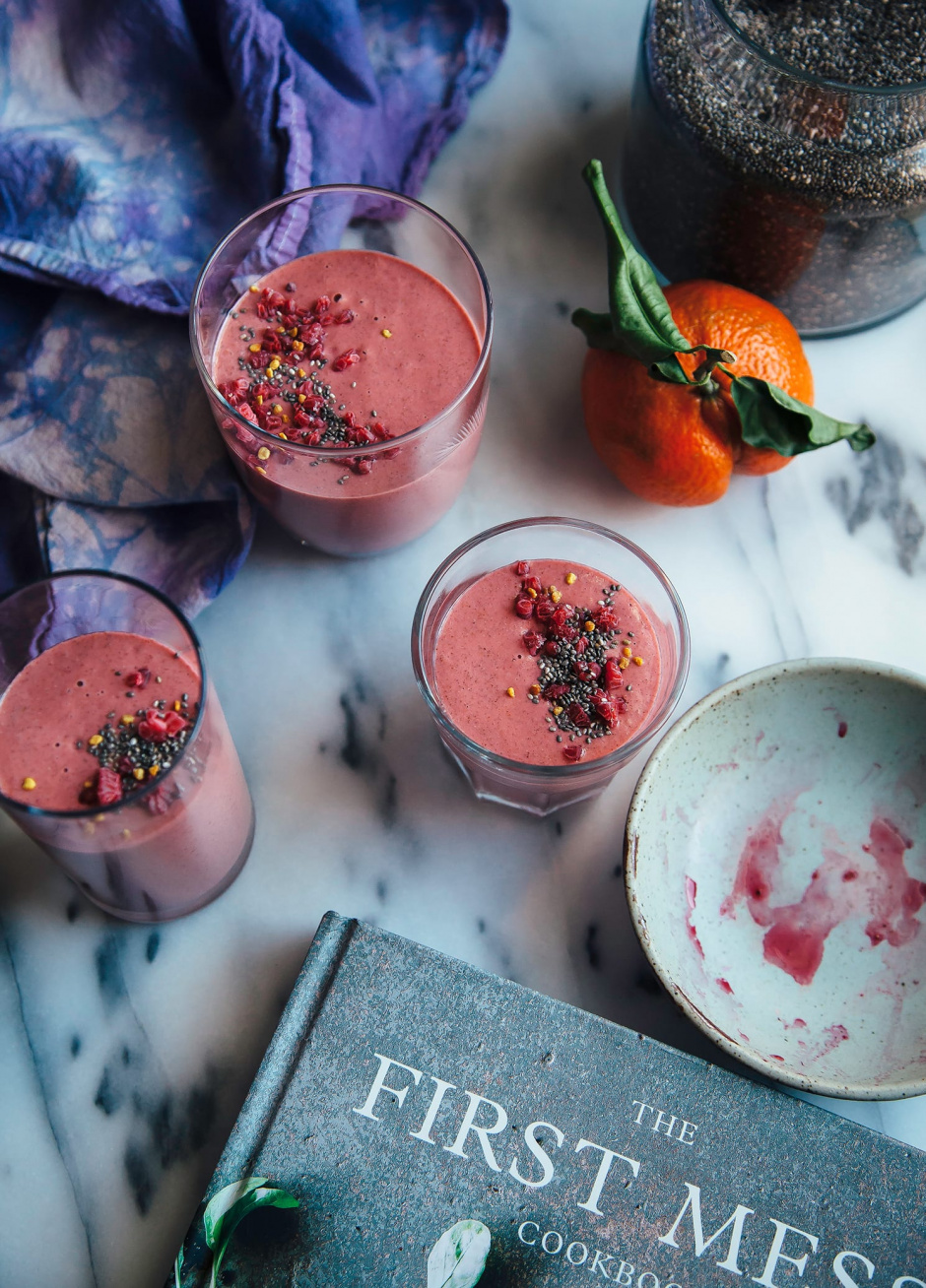
Fed up of tropical mango? Then try this pink beetroot smoothie, full of earthy sweet flavours, and some citrus to balance. This recipe is from Laura Wright’s fabulous book The First Mess, packed with seasonal plant-based recipes.
Beetroot contains oxalates, so speak to GP before taking if you have kidney stones or blood pressure issues. Beets also (temporarily) turn your pee pink! Keep mushrooms, onion & garlic away from pets. Read more on food safety for people & pets.
How to Buy & Store Beetroot
Cut the stalks and leave the root at the bottom (no need to peel) and they do take a couple of hours baking at least (in a lidded casserole with a little water). You can also grate raw beetroot into salad, and use the salad leaves to garnish.
Fresh beetroot keeps for a few weeks in a cool dark place (it’s in season from July to January) and if you do freeze it, boil or steam first, cool and then pop into sealed containers. Defrost it overnight in the fridge (not at room temperature).
Beetroot & Mushroom Bolognese Recipes
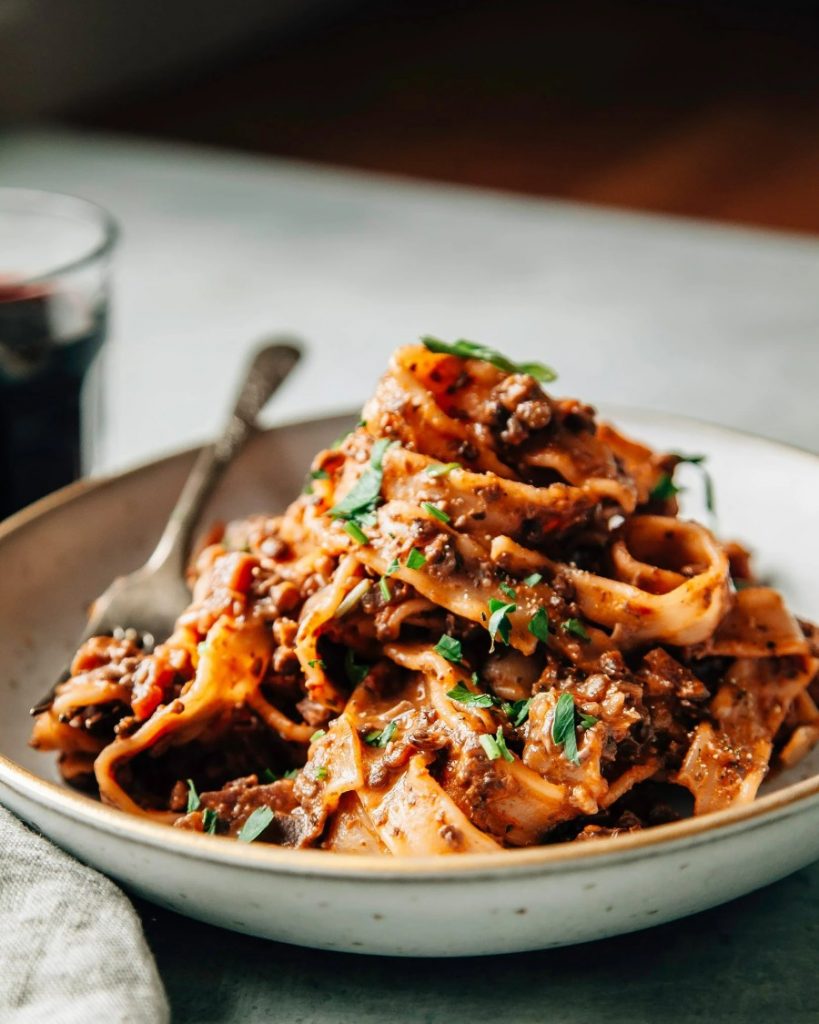
This lovely beet & mushroom bolognese (The First Mess) calls for roasted beets (find them at greengrocers that sell them warm in the morning) with filling lentils. Use pasta in plastic-free packaging. Serve with plant-based Parmesan (conventional Parmesan contains calf rennet).
Earthy Beetroot & Chocolate Cake Recipe

This beetroot & chocolate cake (Rainbow Nourishments) is super-simple to make, and makes use of beetroot, an English favourite vegetable (its natural sweetness lends itself beautifully for cakes). This is an Aussie take on the popular ‘red devil’ combination in the USA of chocolate and beetroots.
This is a classic wet vs dry recipe, though you have to cook and blend the beets beforehand (don’t use vinegared beetroots, it won’t work!) If you don’t fancy cooking them yourself, most indie greengrocers sell them warm and freshly-cooked, if you get there early mornings.
Wait until the plantmilk and beetroot are cool before blending.
The chocolate is given an added kick with espresso coffee. So the earthiness of the beets helps to bring down your ‘mental temperature’ with all that caffeine!
While the cake is cooling, make the chocolate ganache, and chill for a couple of hours. You can make this cake extra colourful by adding the beetroot water to vegan butter (Flora is free from palm oil) and icing sugar, then swirl them together.
Leftovers can be stored in the fridge for a few days, in an airtight container. The cake is more ‘pink’ the day of making, but will still taste as good, if not eaten straight away.
Homemade Vegan Beetroot Cupcakes

These beetroot cupcakes (Rainbow Nourishments) are so simple to make, and pretty too! Beetroot is one of nature’s sweetest vegetables, so great to use as an ingredient in puddings, cakes and bakes.
Beetroot can turn your pee pink temporarily, so unless there’s a medical reason behind it, don’t worry about it! Keep away from pets due to cocoa powder. Before cooking, read up on food safety for people and pets.
Read our post on zero waste baking tools, to learn about silicone baking sheets and cupcake liners.
Beetroot alone won’t make these cupcakes their pretty pink colour, you’ll have to use beetroot powder to do this. Avoid using most red or pink food dyes, as most are either from carmine/cochineal (red beetles) or nasty chemicals.
The frosting is made from a blend of vegan cream cheese, vegan butter (Flora has no palm oil) and icing sugar (Suma is egg-free) and a little vanilla (use real, as fake vanilla is vile and sometimes is made from castoreum (beaver extract).
If you’ve never come across the flavour combination of beetroot and chocolate, you’re missing out! In the USA, it’s a very common flavour named ‘red velvet’, named originally in the Deep South as ‘red devil’ as a contrast to the lighter angel cake! Then as the cake density grew softer, it transitioned from ‘devil to velvet!’
How to Grow Your Own Organic Beetroot
If you have never tried a beetroot straight from the earth, you are in for a treat. Homegrown, organic beetroots burst with natural sweetness (along with carrots, one of nature’s sweetest veggies) and vivid colour. Packed with vitamins and minerals, this humble root vegetable delivers a powerful boost to your heart and immune system.
Read our posts on no-dig gardening (to avoid harming earthworms and stag beetles). And learn about pet-friendly gardens and wildlife-friendly-gardens. If growing or displaying plants indoors, never face them to outdoor gardens, to help stop birds flying into windows.
A few people can’t eat beetroot, you’ll likely know already (check medication inserts). Usually this is people with risk of kidney stones and low blood pressure, and should be limited for people with digestive issues, due to high oxalates.
Some greengrocers sell fresh warm cooked beetroots, and these are far nicer than those plastic-wrapped pickled beetroots you find in shops. If you grow your own, of course you’ll have to cook them yourself.
It’s Easy to Grow Your Own Beetroot
Choose good organic beetroot seeds, and plant in good soil. Beetroot like at least six hours of sun each day, so try to choose a sunny spot, with good drainage (avoid waterlogged ground). Use a soil test kit from a garden centre to check PH and nutrient levels, before sowing.
- You can buy bolt-resistant beetroot. This does not mean it’s to stop it running off! It simply means it can cope with the unpredictable British weather!
- Sow your seeds direct into prepared soil from April to July, or in late summer for an autumn harvest. In mild climates, you can sow in late August for a spring crop. Each seed creates a cluster, so you’ll get several shoots from each one.
- Keep the soil moist, but not soggy. Water regularly in dry weather and use seaweed extract every few weeks, especially for light sandy soil.
- You can protect young crops from birds and leaf miners using fruit protection bags, especially in the first few weeks. Never use netting, it traps birds and wildlife.
Harvest and Use Your Beetroot
Once the roots are 2cm to 5cm wide with wide glossy leaves, it’s time to harvest. Water the area to loosen the soil, then gently pull the beetroot up by the base of the stems. Remove the leaves, leaving 2cm of stem (and don’t peel before cooking), to prevent bleeding when cooking. Otherwise someone may come home, and think you’ve murdered someone!
Storage tips:
- Brush off soil but do not wash until ready to eat.
- Store in a cool, dark place (around 5-10°C), either in sand or wrapped in damp cloth.
- Beetroot keeps up to a month if kept damp and cool. Do not store near apples or potatoes, as they release gases that speed up spoilage.
Ways to use your beetroot:

Before cooking, read our post on food safety for people and pets. Just bin allium scraps (onion, garlic, shallot, leeks, chives) as like tomato, citrus and rhubarb, acids could harm compost creatures.
Note that beetroot has a tendency to turn your pee pink! So unless there are medical concerns, don’t worry too much. It will go back to normal soon enough!
- Bake this delicious vegan beetroot chocolate cake! (Rainbow Nourishments)
- Roast whole beetroots with olive oil and sea salt.
- Slice raw into thin rounds for vibrant salads.
- Pickle in vinegar and spices for a classic British treat.
- Juice with carrots or apples for a bright, healthy drink.
Simple beetroot soup:
Dice two beetroots and simmer with onion, carrot, and stock for 30 minutes. Blend, season well, and serve with plant-based yoghurt and dill.
Easy salad:
Grate raw beetroot, toss with lemon juice, olive oil, vegan goat cheese, and walnuts.
Spaghetti with Roasted Tomato, Spinach & Chickpeas (Munch Meals by Janet) is a super-simple supper with lots of protein from tinned chickpeas, but is very affordable.
Spinach is high in vitamin K, potassium and oxalic acid, so check medication and avoid for kidney stones/disease. Avoid basil for bleeding disorders or low blood pressure (it can slow blood clotting).
Before cooking, read up on food safety for people and pets (many foods including onion, garlic, spices and green tomatoes are unsafe near animals). Just bin tomato and allium scraps (onion, garlic, leeks, shallots, chives) as like citrus/rhubarb scraps, acids could harm compost creatures.
For tinned tomatoes, pop lids inside cans (or pop ring-pulls back over holes) to avoid wildlife getting trapped).
Seasoned with salt, pepper, oregano and garlic powder to roast the tomatoes, adding more tomato paste and crushed tinned tomatoes to the dish, alongside optional kalamata olives. Check out Janet’s cookbook.
Serve with plastic-free pasta (unless there is a medical reason, salt the water). Not doing this in Italy makes it ‘silly pasta!’ You will notice the difference in taste.
Serve with vegan grated cheese or learn to make plant-based parmesan. Real Parmesan is not even vegetarian, as by law it contains a cheese made with calf rennet.
Pasta with Fresh Spinach & Artichokes
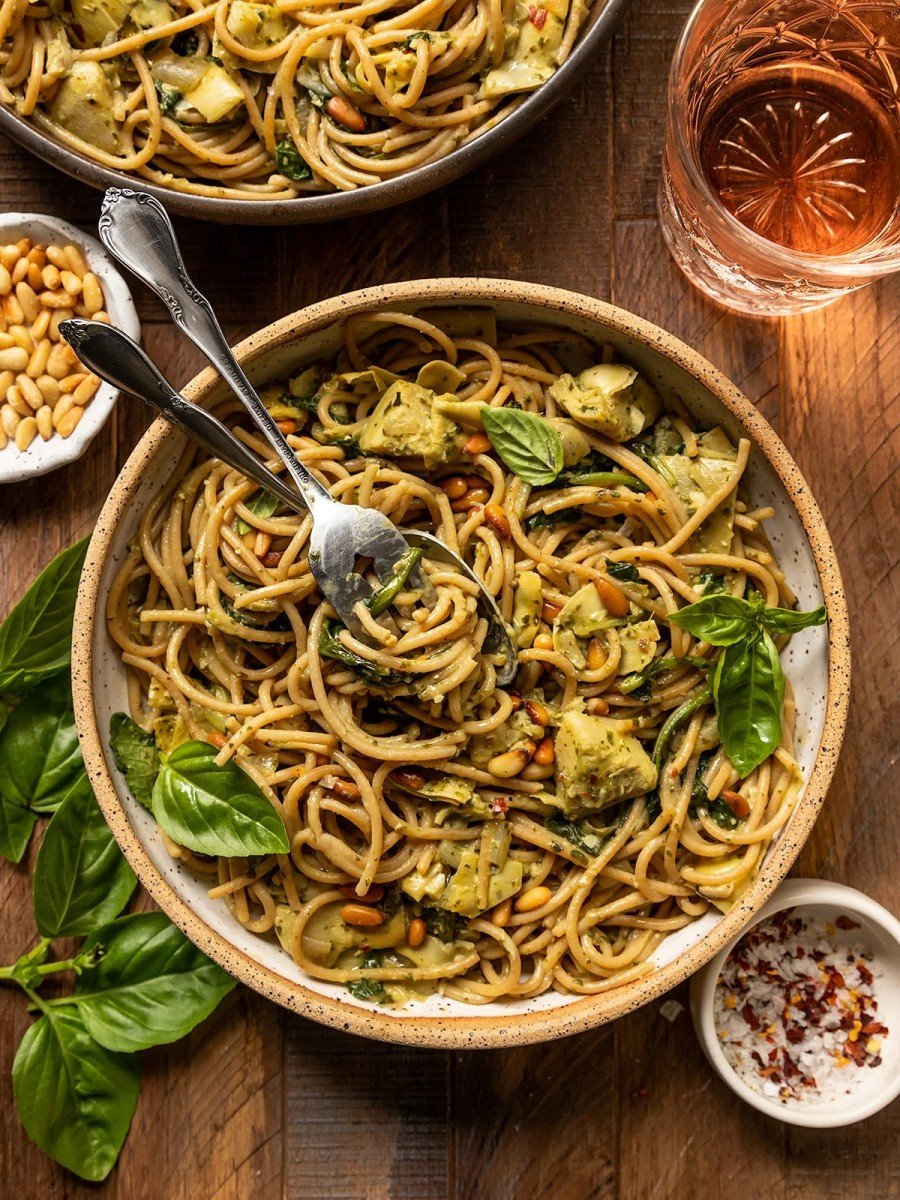
Pasta with spinach & artichokes (Short Girl, Tall Order) makes use of fresh spinach and canned artichokes, so is super-simple and quick to cook.
Like all good Italian recipes, this begins by sauteeing garlic and onion in oil. The ‘cream sauce’ is made with oat milk and cornstarch, and the basil combined with pine nuts, gives a pesto-type flavour.
5-Minute Pear Spinach Smoothie Recipe
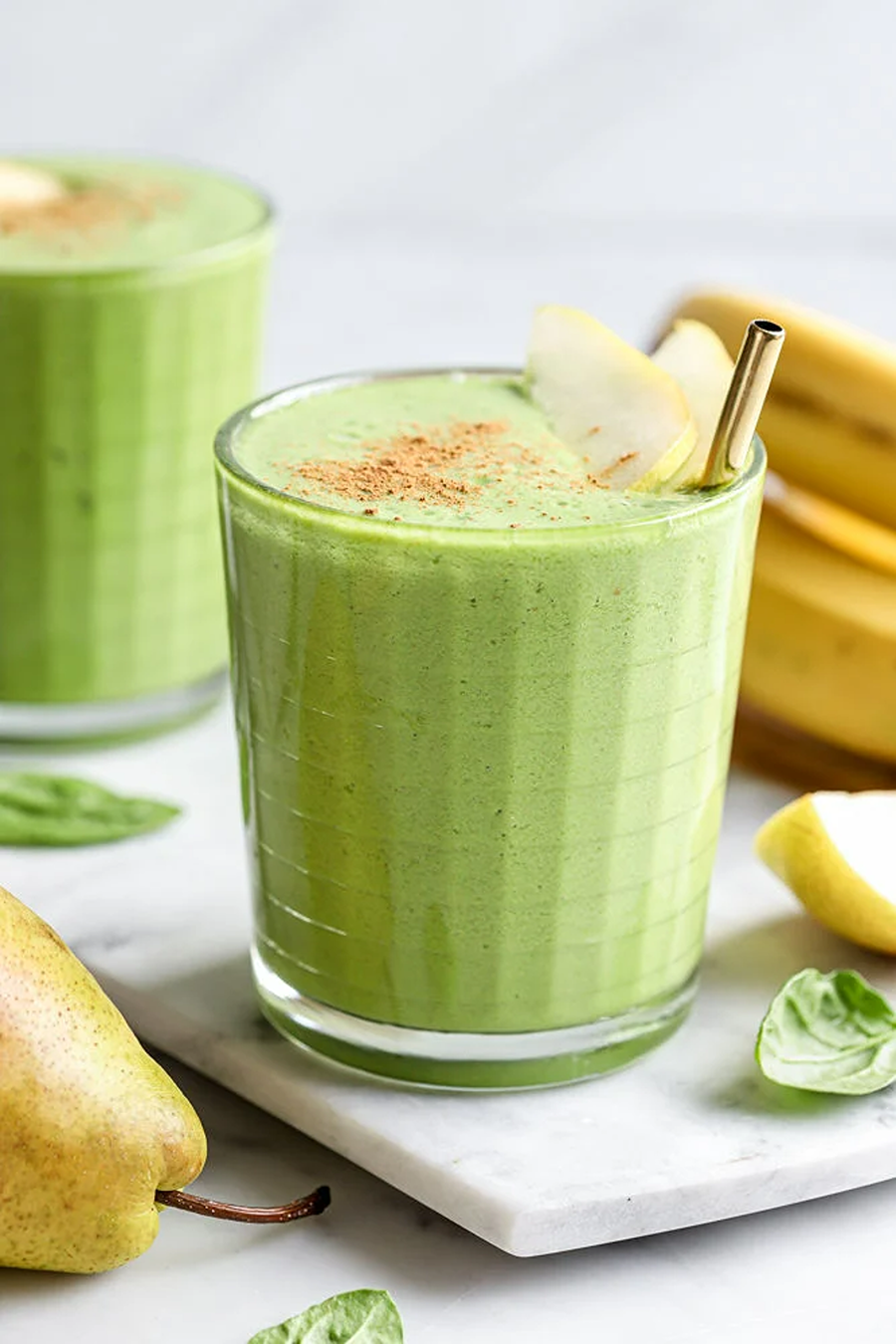
This 5-minute spinach pear smoothie (The Natural Nurturer) is a simple blend of banana, cinnamon and vegan Greek yoghurt with ripe pears and spinach.
Spinach is high in vitamin K, potassium and oxalic acid, so check medication and avoid for kidney stones/disease. Avoid basil for bleeding disorders or low blood pressure (it can slow blood clotting).
Pears are one of the most popular fruits in England, as long as you can find juicy ripe pears, and not rock-hard ones flown in from across the world.
Packed with calcium, there are over 3000 varieties worldwide, but we are in danger of losing many varieties as our orchards are endangered. Pears are nutritious, but very low in calories.
Try to buy pears from farm shops, as most pears in supermarkets are frozen and chilled then sent from abroad, so are nothing like ripe juicy pears in season. They will be cheaper, and taste better!
Pears are in season from September to January, try to buy under-ripe as they bruise easily and continue to ripen at home.
Conference pears are the most common and is good raw or cooked, as are comic pears. Store pears in a cool place. You can eat them raw or poach them in hot water (15 to 20 minutes) or even fry them.

Sweet potatoes are not actually potatoes, but root vegetables that are super-nutritious and tasty, and wonderful in both savoury and sweet recipes. Native to the Americas, they are also not yams (these have more starch and rough skin and better for Caribbean food), so don’t interchange the recipes.
This sweet potato curry (Ela Vegan) can be cooked on the stove or in an InstantPot. Serve with steamed rice.
Sweet potatoes are very low in fat, and packed with nutrition. So do indulge yourself if you see some on sale at the farmers’ market or grocery store, and use them up in these simple recipes!
Sweet potatoes are high in oxalates and potassium, so are best avoided (or eaten in moderation) for people with kidney issues (although they have a lower GI than white potatoes, they should be eaten in moderation for people with diabetes).
Many sweet potato recipes use allium (onion family). If using, just bin scraps, as acids could harm compost creatures.
Avoid feeding leftover mashed potato of any kind to pets, garden birds or wildfowl (due to salt and fats which can smear on feathers, affecting waterproofing and insulation).
How to Buy and Store Sweet Potatoes
Choose firm potatoes without blemishes, and store them (unwashed) in a cool dark dry place (not the fridge) and use within a week or so. The skin is very nutritious, so was the skin and eat that too!
Did you know that before he became President, George Washington was a sweet potato farmer?
No Recipe Ideas to Use Up Sweet Potato
- Dice the potatoes, and pan-fry with onions, veggies and vegan bacon.
- Add cubed sweet potatoes to soups and curries (lovely with ginger and coconut milk).
- Bake the potatoes, then scoop out the pulp, and mix with black beans, vegan cheese and salsa, and serve alongside the shell.
- Use mashed (instead of white potatoes) for a veggie shepherd’s pie.
- Spread mashed on a tortilla and add black beans, cooked spinach and vegan cheese.
- Blend cooked sweet potato with chickpeas, tahini, lemon and spices, to create a unique homemade hummus.
- Add a spoon of mashed sweet potato to morning oatmeal or smoothies (extra nutrition and a subtle sweet taste).
- Blend pureed sweet potato flesh with nut butter, plant milk, ginger/cinnamon, grated carrots and pitted dates, for a sweet warming smoothie.
A Few Simple Sweet Potato Recipes
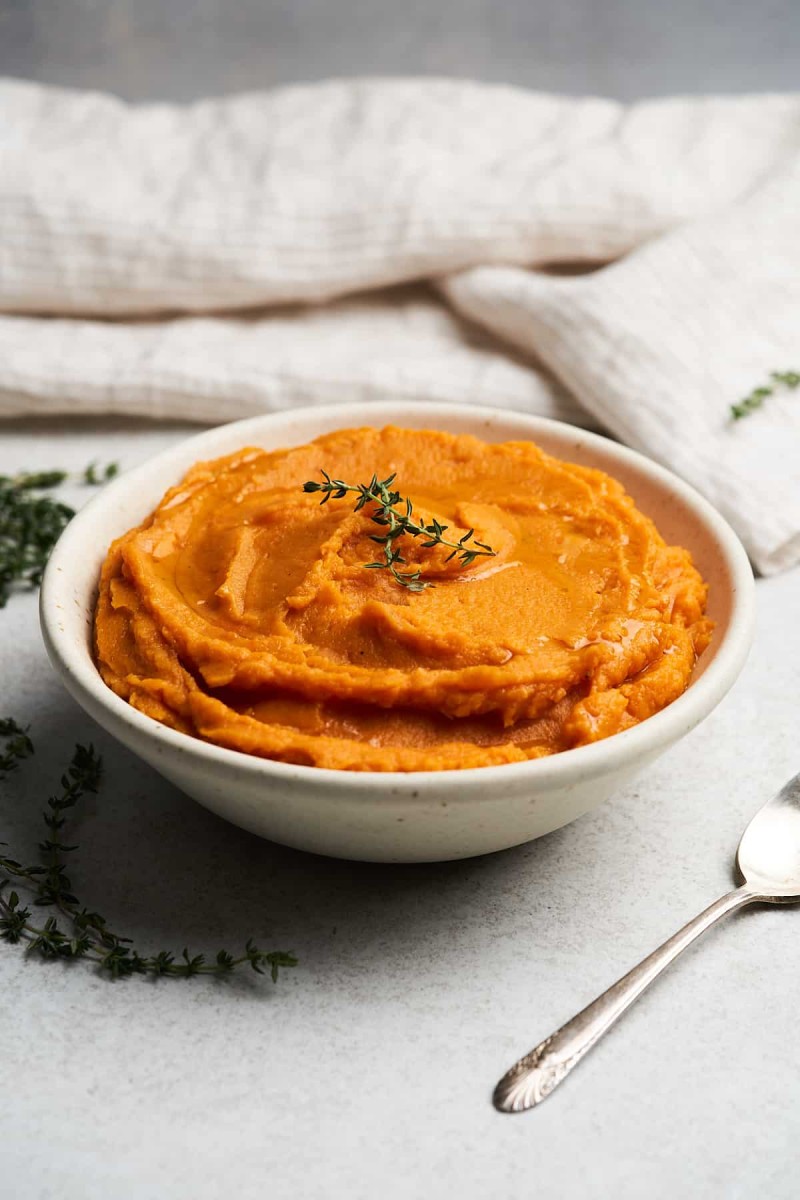
5-Ingredient Mashed Sweet Potatoes (Broke Bank Vegan) just needs the addition of olive oil, soy milk, garlic powder, salt and pepper.
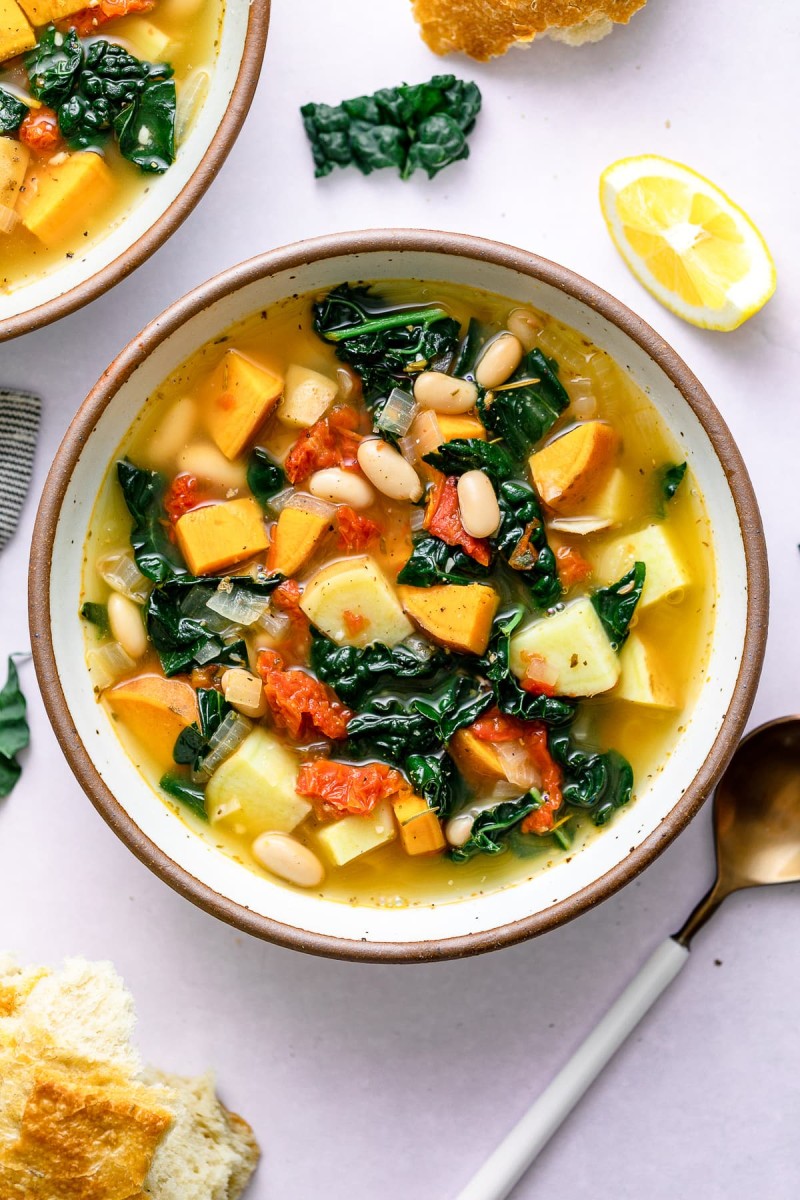
Sweet Potato & Kale Soup (The Simple Veganista) is not just super-nutritious but super-affordable (kale is one of the crops available during England’s ‘hungry gap’ (check medication before consuming kale, due to vitamin K).
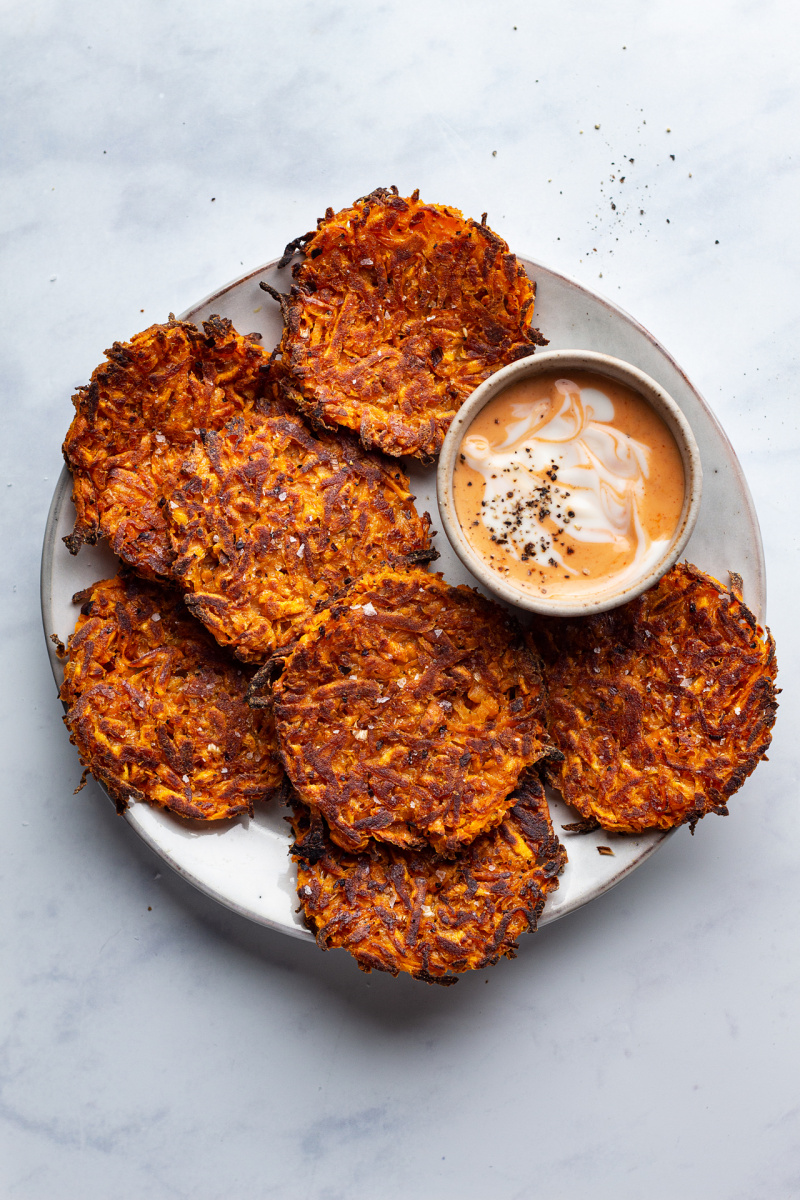
These baked sweet potato hash browns (Lazy Cat Kitchen) only take 15 minutes in the oven. They are are served with a delicious plant-based dipping sauce.
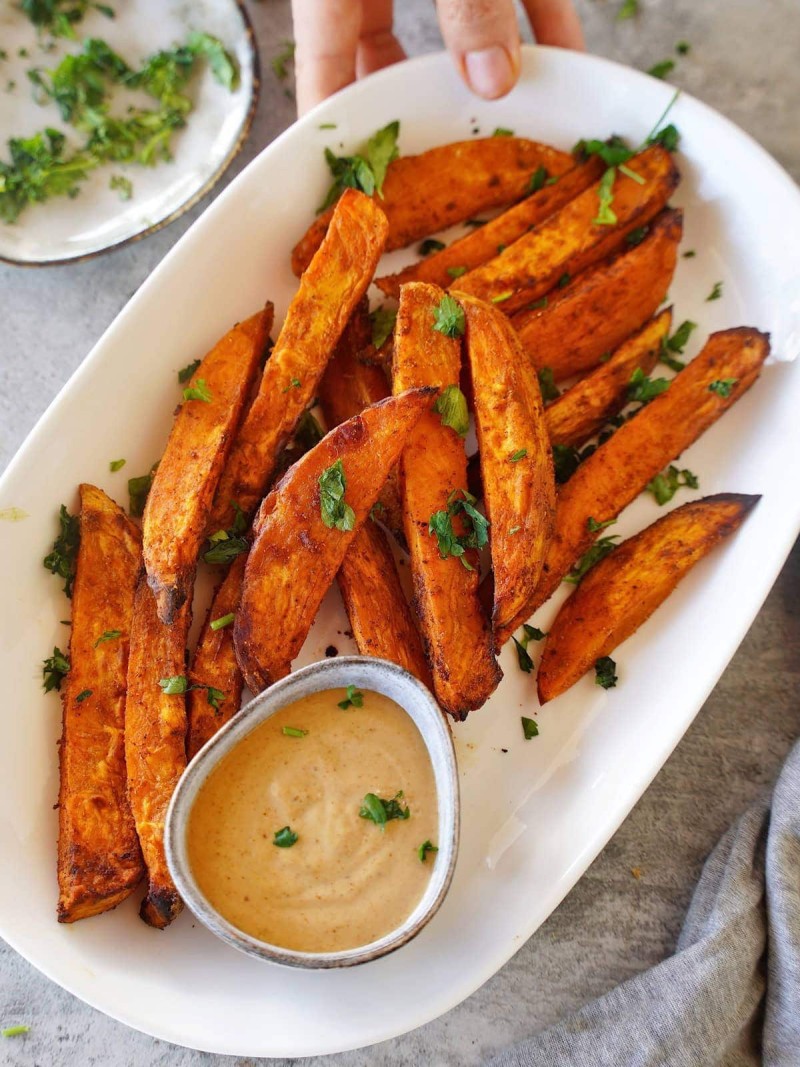
Air-Fryer Sweet Potato Wedges (Ela Vegan) are so easy to make, you’ll never buy frozen chips again! With just a touch of oil, they are served with an onion/garlic/paprika/chilli seasoning.
For children, avoid spices and ensure wedges are ‘soft and squishy’ to avoid choking.
Wholesome Sweet Potato Pudding Recipes!
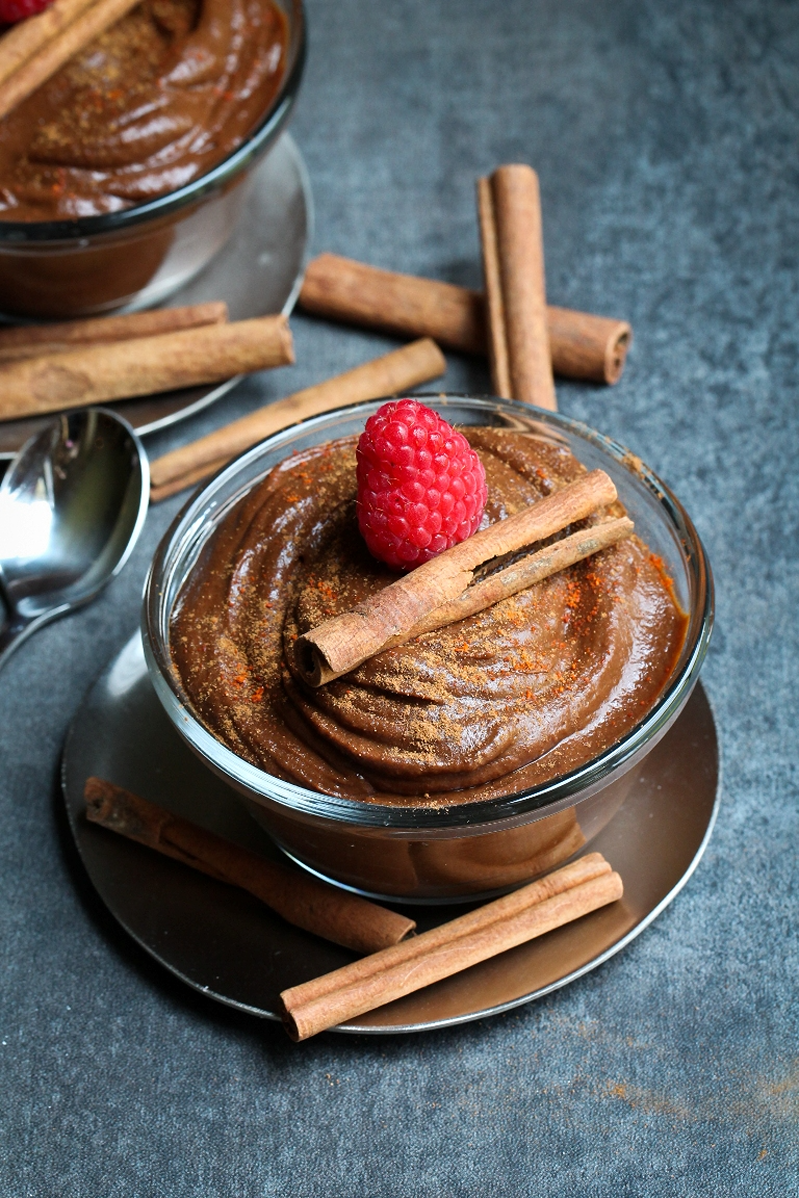
Mexican Chocolate Sweet Potato Pudding (The Vegan 8) is a spicy dessert made with cayenne and cinnamon.

Vegan Sweet Potato Cake (Rainbow Nourishments) has less than 10 ingredients, and is similar to carrot cake. Flavoured with warm spices, and topped with a ‘cream cheese’ frosting.
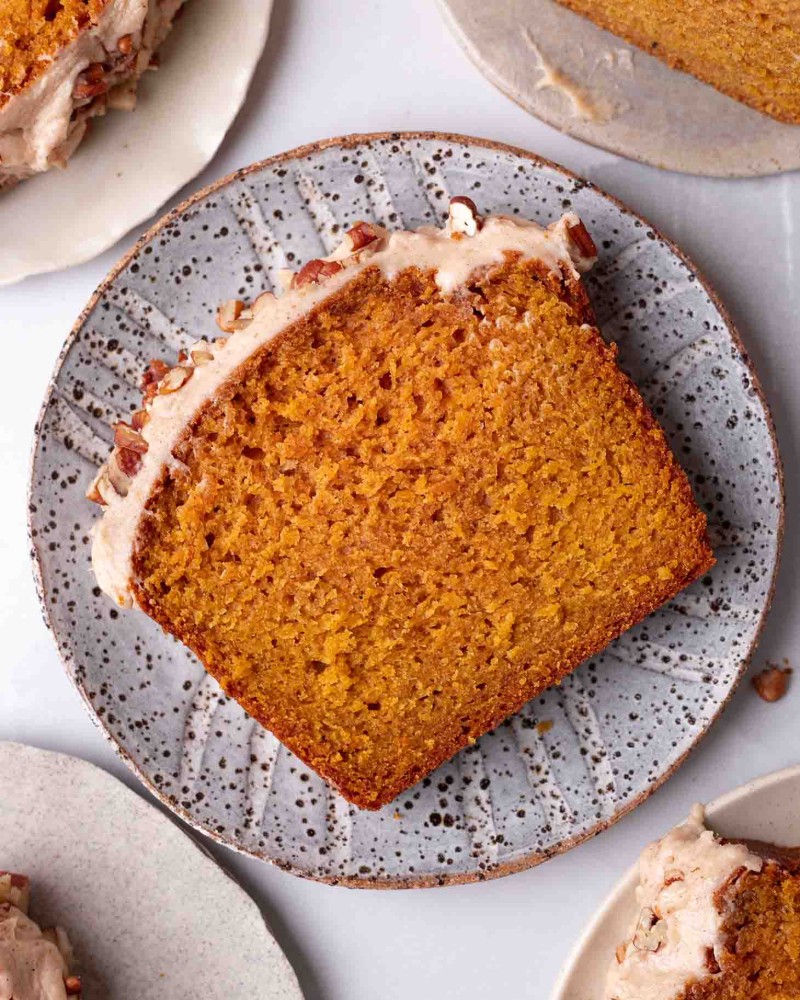
This Sweet Potato Bread (Rainbow Nourishments) only needs a few ingredients, sweetened with brown sugar and natural vanilla, and topped with a delicious vegan cinnamon cream cheese frosting, and pecan nuts.

This sweet potato vegan chocolate cake (Rainbow Nourishments) is made with natural wholesome ingredients. You can sweeten the cake with natural sugar if wished, but it’s worth splurging for the superior taste! Avoid caffeine for pregnancy/nursing.
Use a quality Dutch-processed cocoa powder (don’t skimp) as this makes for the superior flavour, when combined with a little melted vegan chocolate. No margarine is needed, as the cake is bound with a little oil, no eggs required either. Just some good plant milk.
Leftover slices can stored in the fridge for a few days, in an airtight container.

These vegan sweet potato brownies (Rainbow Nourishments) are super-simple to make, and lovely with a glass of chilled oat milk. They don’t need any hard-to-find ingredients (it uses semi-sweet chocolate and maple syrup). Serve with vegan vanilla ice-cream.
You’ll need sustainable almond butter (find in health shops). And natural vanilla (don’t use fake vanilla, it tastes awful and sometimes uses beaver extract, the same with perfumes – castoreum).
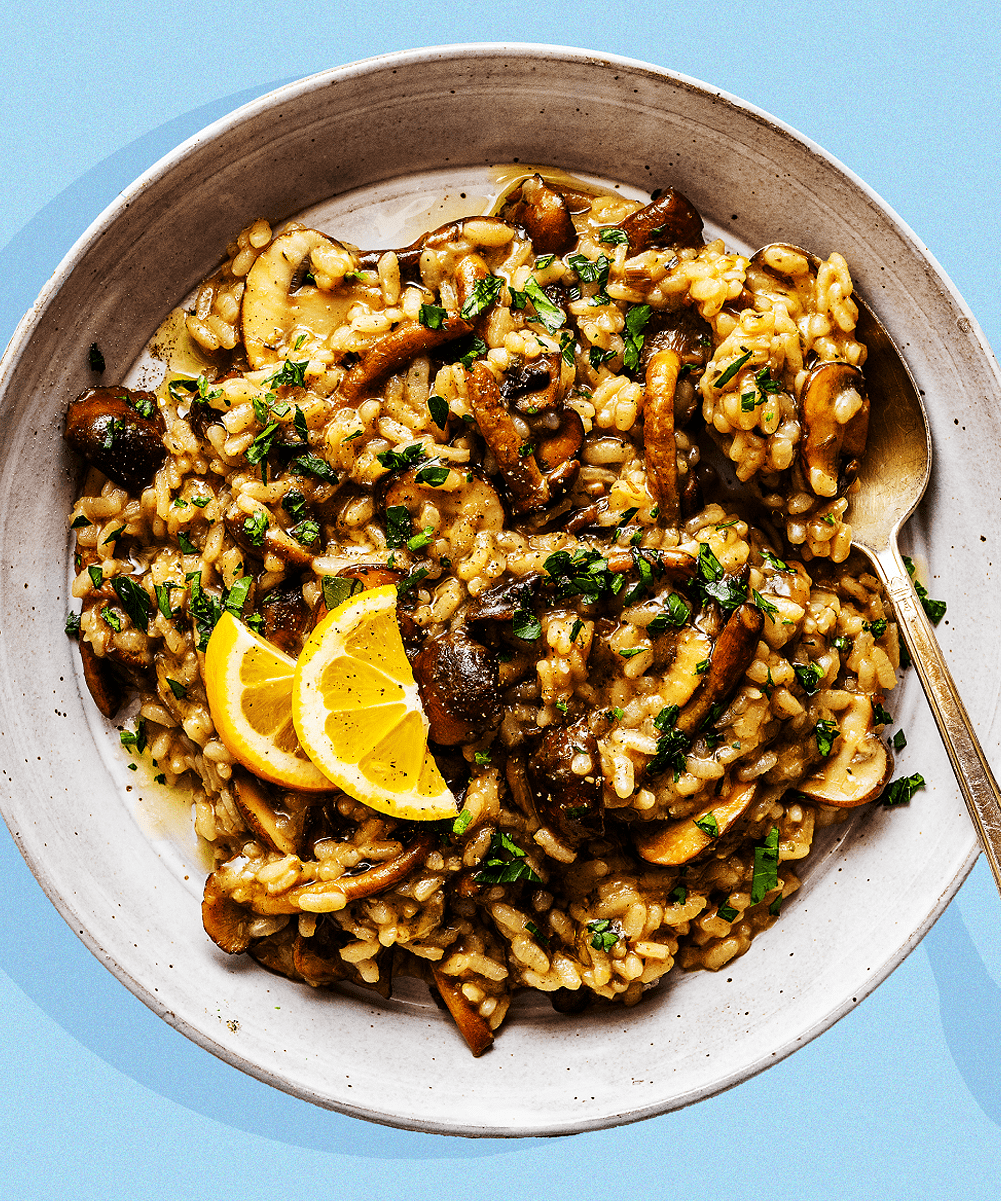
This mushroom risotto (Exploring Vegan) only needs 5 ingredients to make: mushrooms, garlic cloves, risotto rice, vegan butter and dried thyme.
Read up on food safety for people and pets (mushrooms and onion/garlic are not safe near animal friends).
Just bin allium scraps (leeks, onion, garlic, shallots, chives) as acids could harm compost creatures.
Mushrooms are usually sold in paper bags, so if you have some leftover, here are some simple plant-based recipes to use them up. Mushrooms are good to replicate meat in certain dishes (small ones in curries or large ones stuffed with rice).
Homemade Vegan Cream of Mushroom Soup
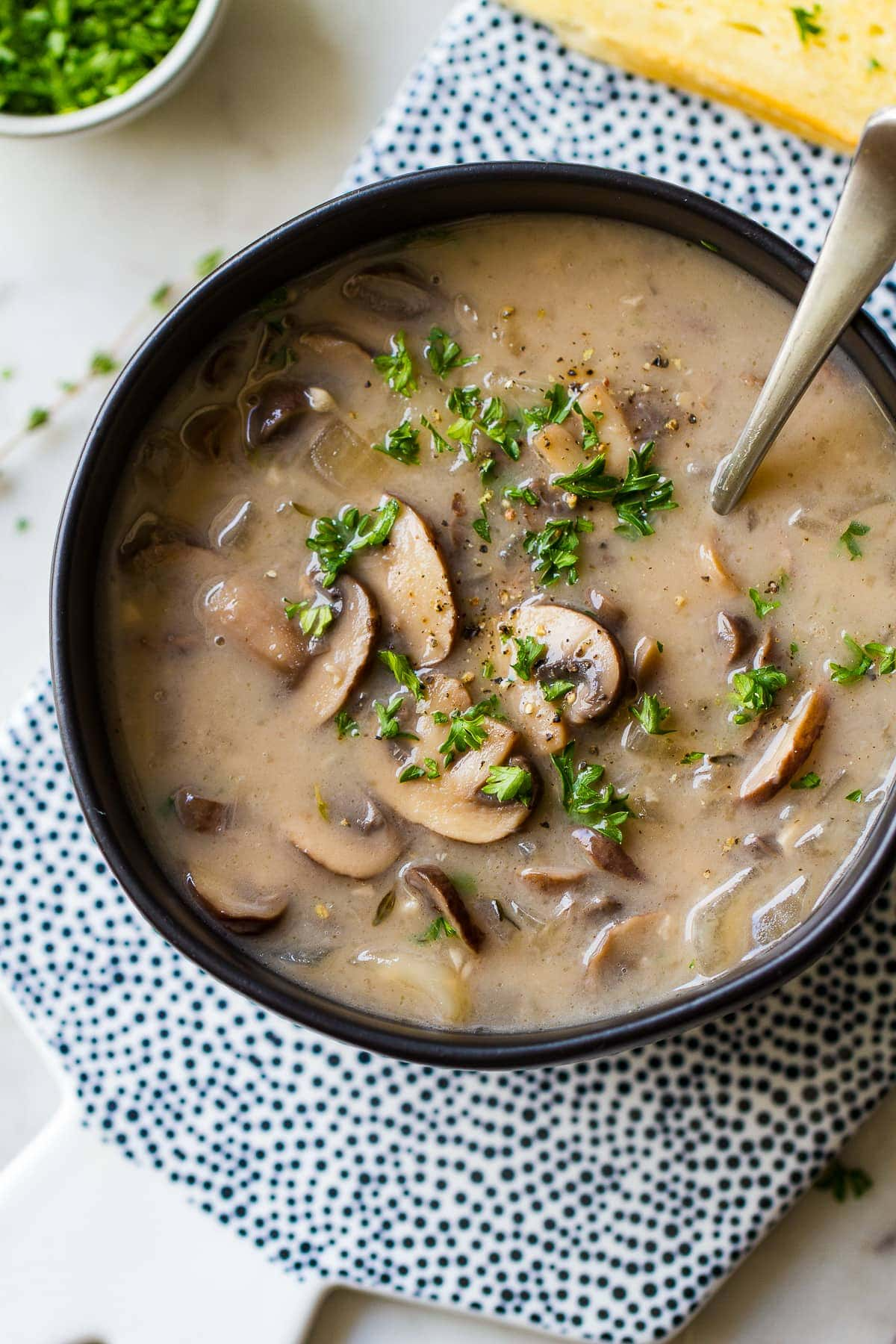
This mushroom soup (The Simple Veganista) replaces dairy with coconut milk, plus adds in lots of flavour, including some wine!
Read up on food safety for people and pets (mushrooms and onion/garlic are not safe near animal friends).
Just bin allium scraps (leeks, onion, garlic, shallots, chives) as acids could harm compost creatures.
Mushrooms are usually sold in paper bags, so if you have some leftover, here are some simple plant-based recipes to use them up. Mushrooms are good to replicate meat in certain dishes (small ones in curries or large ones stuffed with rice).
Homemade Mushroom & Beetroot Pasta Recipe
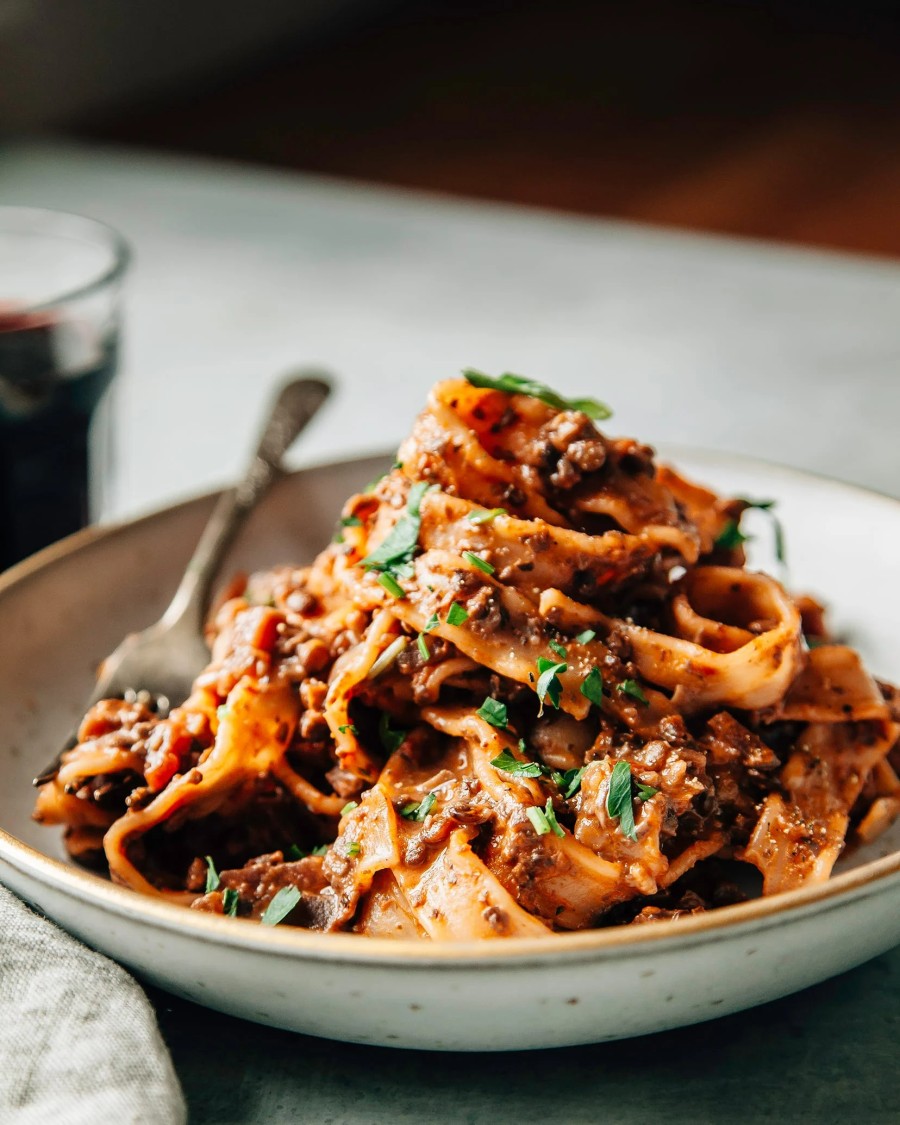
This mushroom and beetroot bolognese (The First Mess) replicates spaghetti bolognese, but uses all-natural ingredients. The sweet beetroot blends perfectly with earthy mushrooms. Serve with plastic-free pasta!
Read up on food safety for people and pets (mushrooms and onion/garlic are not safe near animal friends).
Just bin allium scraps (leeks, onion, garlic, shallots, chives) as acids could harm compost creatures.
Mushrooms are usually sold in paper bags, so if you have some leftover, here are some simple plant-based recipes to use them up. Mushrooms are good to replicate meat in certain dishes (small ones in curries or large ones stuffed with rice).
A Beginner’s Guide to Mushrooms and Fungi

Mushrooms and Company is a super-interesting book on how marvellous mushrooms (some of them mouldy!) support life on earth. In this book, young readers are deep-dived into the fungal kingdom, and introduced to an incredible array of mushrooms.
England has thousands of types of mushrooms, and you really have to know what you’re doing to eat wild ones. We know button mushrooms but wild mushrooms can look exotic.
Learn how to create pet-friendly gardens and wildlife-friendly gardens (use fruit protection bags over netting). If growing indoors, learn how to stop birds flying into windows.
Explore the fascinating mycorrhizal network that lives and operates under our feet, in sometimes surprising ways.
Without fungi, there would be no penicillin, no bread (at least the kinds that depend on yeast to rise), and no blue cheese!
Of course, some fungi can be dangerous—whether it’s moulds that grow on crops (like potato blight) or in buildings (like dry rot), in this book you’ll meet them all.
Learn how:
- Fungi help to keep forests clean and healthy
- Trees and plants rely on fungi to access water and nutrients.
- How fungi help some animals digest their food
- How fungi can provide medicines and food.
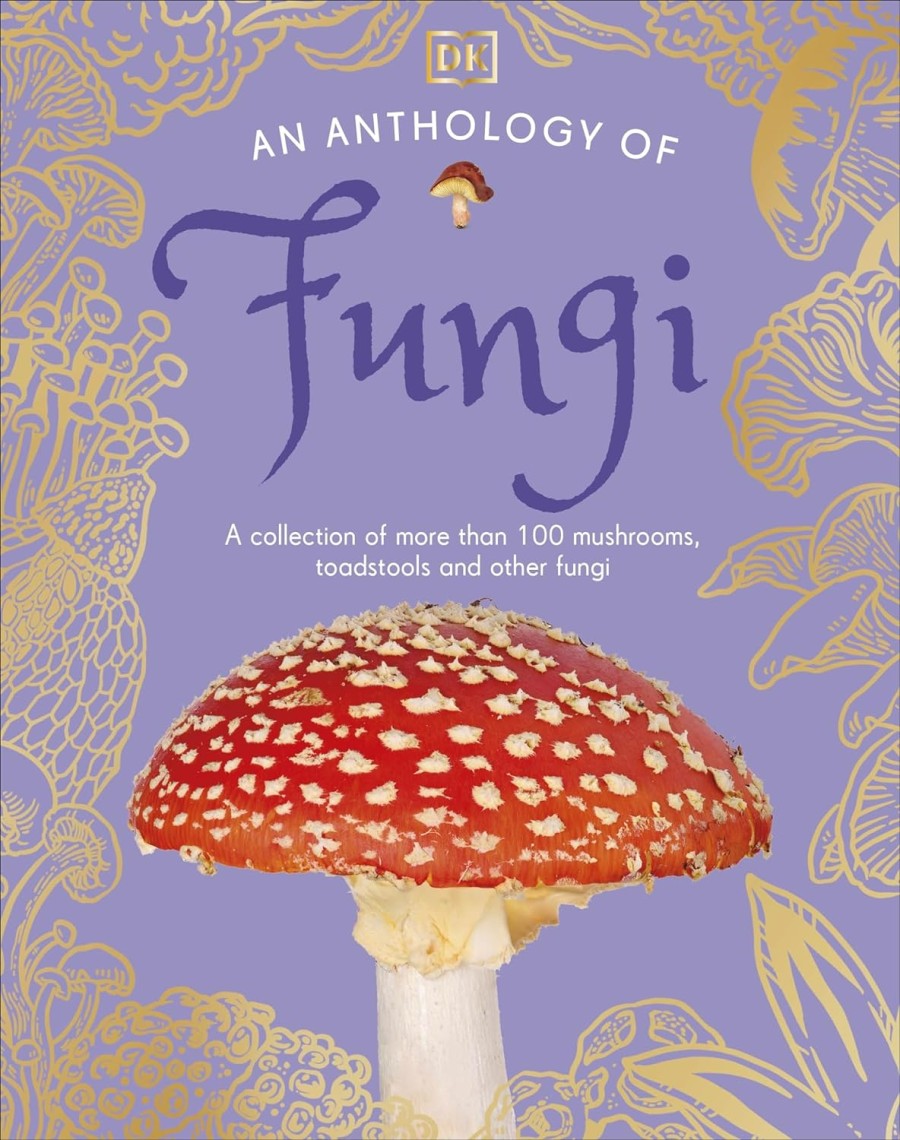
In the quiet corners of forests (beneath the fallen leaves and rotting logs) is where most mushrooms grow. Fascinating fungi are vital to our planet, yet remain shrouded in mystery. England has thousands of types of mushrooms, and you really have to know what you’re doing to eat wild ones. We know button mushrooms but wild mushrooms can look strange and exotic.
Keep all fungi away from pets on walks.
What Are Fungi?
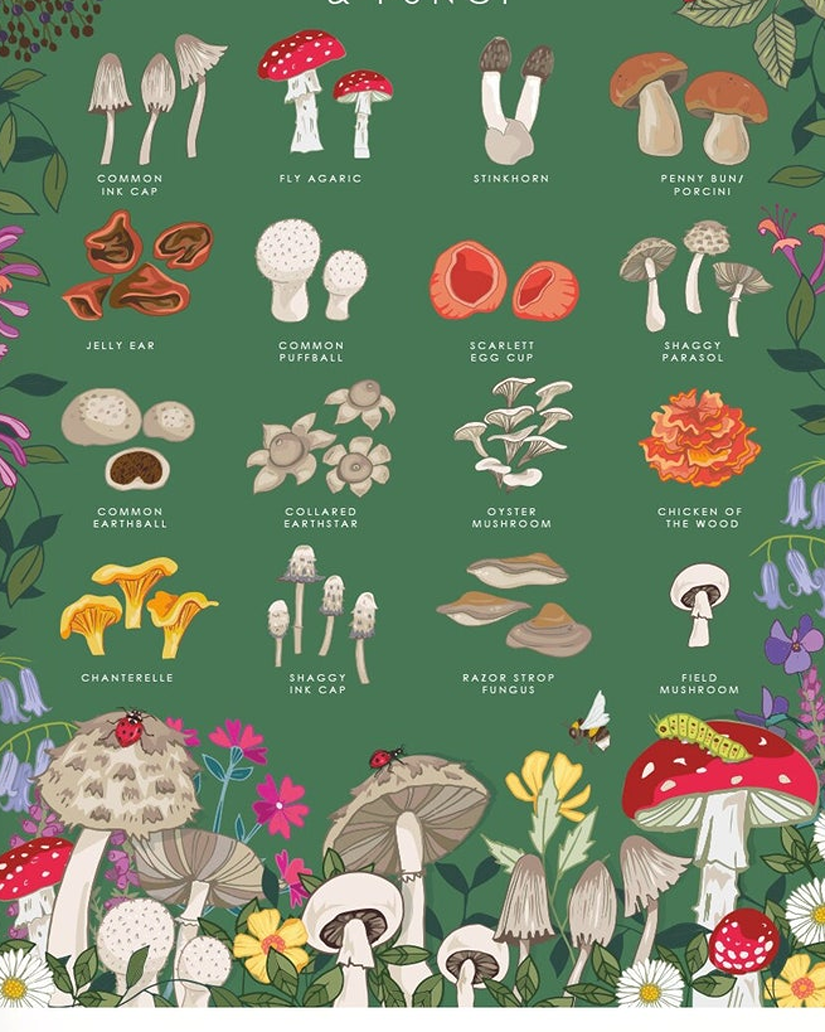
Fungi are neither plants nor animals. They belong to their own kingdom, with over 144,000 species documented. Unlike plants, they cannot produce their food through photosynthesis. Instead, they break down organic matter and reproduce through spores (tiny particles that spread through air and water). The main types of fungi are:
- Mushrooms: From button mushrooms to puffballs (that release spores).
- Yeasts: Microscopic but mighty, yeasts are essential for baking and brewing.
- Moulds: Often uninvited guests in our homes, they can spoil food or produce antibiotics.
The Role of Fungi in Ecosystems
Fungi are unmatched recyclers. They break down tough organic materials like wood, cycling nutrients back into the soil. This process makes them essential for plant growth.
Moreover, fungi form symbiotic relationships with many plants, aiding in water and nutrient absorption. Without fungi, forests would lose their vibrancy, and dead matter would choke the undergrowth.
Common Edible vs. Poisonous Mushrooms
Mushroom foraging requires caution. Some mushrooms are perfectly safe, but others are eye-catching but toxic (all mushrooms are toxic to pets). Always consult an expert when learning to forage.
Ethical foraging respects nature. Always seek permission before collecting mushrooms on private land and follow local regulations. Take only what you need, leaving some mushrooms to ensure future growth and ecosystem health.
The golden rule of mushroom foraging: if unsure, don’t consume. Many mushrooms look similar, and misidentification can have severe consequences.
The deathcap has even been used as a murder weapon! And worryingly, it looks like an edible mushroom, which is why it’s so important to know what you’re doing, before mushroom-picking.
Often found growing under beech and oak trees, although a small amount of wildlife species can eat them, but they are responsible for 80% of all mushroom deaths to humans.
Some claim Charles VI died from being poisoned with this mushroom. And Roman Emperor Claudius was allegedly killed by his wife Agrippina who mixed the juice from this mushroom with his food. But most people die accidentally.
The Little Book of Mushrooms is a beautiful little pocket guide, for the extraordinary organisms found in nature. Some can cure and others can poison. Learn of mushroom folklore and identify wild mushrooms and learn those to avoid.
Cooking and Enjoying Mushrooms

Mushrooms are tasty and also low in calories and high in fibre. They are packed with B vitamins and selenium, and often are used in place of meat for veggie recipes.
Mushroom Soup (Rainbow Plant Life) is a warming recipe to use mushrooms. Before cooking, read up on food safety for people and pets (many foods including mushrooms, onion and garlic are toxic to animal friends).
What are Toadstools?
Toadstools are fruiting bodies of fungi, these appear above the ground in summer and autumn (usually when it’s warm and damp) and should be removed around pets and children, due to being toxic.
They do elsewhere play an important role in feeding off dead plants, to release nutrients back in the soil. Some believe they are so-called as flies like them, and toads feed on flies!
Why Do Mushrooms Grow on your Lawn?
Often you’ll find large easy-to-remove mushrooms on your lawn. This is actually a sign that you have good fertile soil as they love carbon-rich earth.
If you are not a mushroom expert, never eat them, just pull them out from the base (easy to do) and this will stop them spreading. You can compost them or bin them, where they will naturally break down.
If using composted mushrooms, ensure they are broken down before using, to avoid mushrooms going back in your garden. Fresh compost should be avoided near pets anyway, as it contains mould.
Another way to stop mushrooms growing on your lawn is to regularly dethatch a lawn by gently raking upwards to loosen build-up and mow your lawn regularly, limiting water applied to the soil, to decrease moisture and increase drainage.
Although you need shady areas in the garden for people, pets and wildlife, remove areas of over-shade (cut back branches that hang over areas that restrict sunlight etc). Using a nitrogen lawn feed (like alfalfa meal) may help.
Removing artificial grass is also good (this is not good for pollinators and over-heats in summer) as this does not drain water, so you could find mushrooms growing.
The Little Book of Fungi is a beautiful informative and illustrated guide, written by mushrooms experts! It fits an astonishing amount of information into a small books, including the differences between fungi and mushrooms (and the different kinds of mushrooms). Along with habitat, ecology, evolution, lifestyle and reproduction.
A Book on Growing Algae!

Algae is not the same as fungi but The Algae Farmer is written by a mycologist (mushroom experts) on a crop that supplies 70% of the world’s oxygen and can be used in many industries (it’s often used to cushion insoles for vegan shoes).
In this lavishly illustrated colour guide, expert William Padilla-Brown shares the natural history and ecological functions and many regenerative benefits of fresh and saltwater algae.
Learn on how algae is used. Microscopic species like spirulina and chlorella are used, as are large forms like seaweed in foods like ice-cream, smoothies, soups, supplements and pigments. Small-scale growing can be a profitable way to earn a living sustainably.
The book includes case studies of successful algae farmers, and a vision for algaculture’s thriving future. The fastest-growing of all agricultural crops, algae is ideal for urban locations on non-fertile land.
A book to appeal to all sustainable food producers, permaculture enthusiasts and farmers who wish to explore this creative and innovative solution to food insecurity.

Maple-Roasted Brussels Sprouts (Jessica in the Kitchen) is a simple recipe to transform the humble green veggie, that amazingly, some people don’t like? These ‘little cabbages’ have been enjoyed in England for centuries and are packed with nutrition, but many people don’t cook them properly, so don’t like them as much as they likely would!
Brussels sprouts are choking hazards for children/swallowing difficulties (also avoid for thyroid issues and some medications, due to vitamin K). Read more on food safety for people and pets (onion, garlic and other ingredients are not safe near animals).
It’s best to just bin allium scraps (garlic, onion, leeks, shallots, chives) along with tomato/citrus/rhubarb scraps, as acids may harm compost creatures.
How to Buy, Store and Cook Brussels Sprouts
In season from October to March, store Brussels sprouts in a cool dark place or in the fridge, where they keep for a few days.
Remove yellow leaves (you only need to cut larger ones) then cook in cold water with a pinch of salt, and bring to the boil (this will avoid Brussels sprout gas!) You don’t need to ‘make a cross’ in the base, this makes them soggy. Serve with vegan butter (Flora has no palm oil).
To roast Brussel sprouts, toss in olive or rapeseed oil and season with salt and pepper. Spread evenly on a baking sheet and roast at 220°C for about 20 minutes, stirring halfway for even browning.
To steam sprouts, cut larger ones in half, then steam for 6 to 8 minutes until bright-green and fork-tender, remove to avoid over-cooking. To boil, add to a large pot of boiling salted water, and cook for 5 to 7 minutes, test by poking with a fork and drain immediately.
You can also cook Brussels sprouts in an air-fryer.
Health Benefits of Brussels Sprouts
- Brussels sprouts are packed with vitamin C, so good for immunity.
- They include ingredients, for healthy vision.
- They are loaded with vitamin K, for blood clotting and bone health (check medication, to avoid interaction).
- They are low in calories, so great for losing weight.
- They are rich in Vitamin A, folate (folic acid) and potassium.
- They are high in fibre, for good digestion and to avoid constipation.

This recipe for roasted courgette, pea and basil soup (The Veg Space) is super-simple to make, affordable and tasty with fresh bread.
Why Make This Recipe?
It’s not just cheap and filling, but all the ingredients are affordable and easy to find.
Food Safety Tips
Avoid courgettes that are wrinkled or have yellow skin or black spots. Store in the fridge. Choose organic to avoid cross-pollinated seed batches that carry a toxin (Tim Dowling writes how he poisoned himself with homegrown courgettes). Keep this recipe away from pets, due to onion, garlic and salt.
Ingredients Needed?
Very simple affordable ones: onion, garlic, salt, peas and basil!
Courgettes (called ‘zucchini’ in North America) are quite popular in England, especially for Mediterranean recipes like ratatouille. Related to squash, the smallest courgettes tend to be most tasty (if not harvested, they grow into marrows).
Like Making Soup?
If you like making soup, invest in a stick blender, as it saves all the faffing around with washing jug blenders. When buying a new electrical appliance, UK says the store has to take the old one back.
Also invest in Souper Cubes. Made from silicone, just pour leftover soup in, then freeze and the soup is ready to thaw and cook, whenever you want it.
How to Recycle Empty Tins
Before recycling, always pop the lid inside the tin (or pop the ring-pull over the hole). This stops wildlife getting trapped, if they came across them.
Compost Food Scraps?
Unless you’re an expert composter, avoid composting acidic scraps (onion, garlic, leeks, shallots, chives, tomatoes, citrus, rhubarb) as this could harm compost bin creatures. Just bin them, to break down naturally.
Peaceful Politics in Action!
Making your own homemade soup is a peaceful political act! Every meal you make with natural plant-based ingredients and seasonal produce, is helping to create a country where nutritious food matters. Is affordable to everyone – and tastes good too!
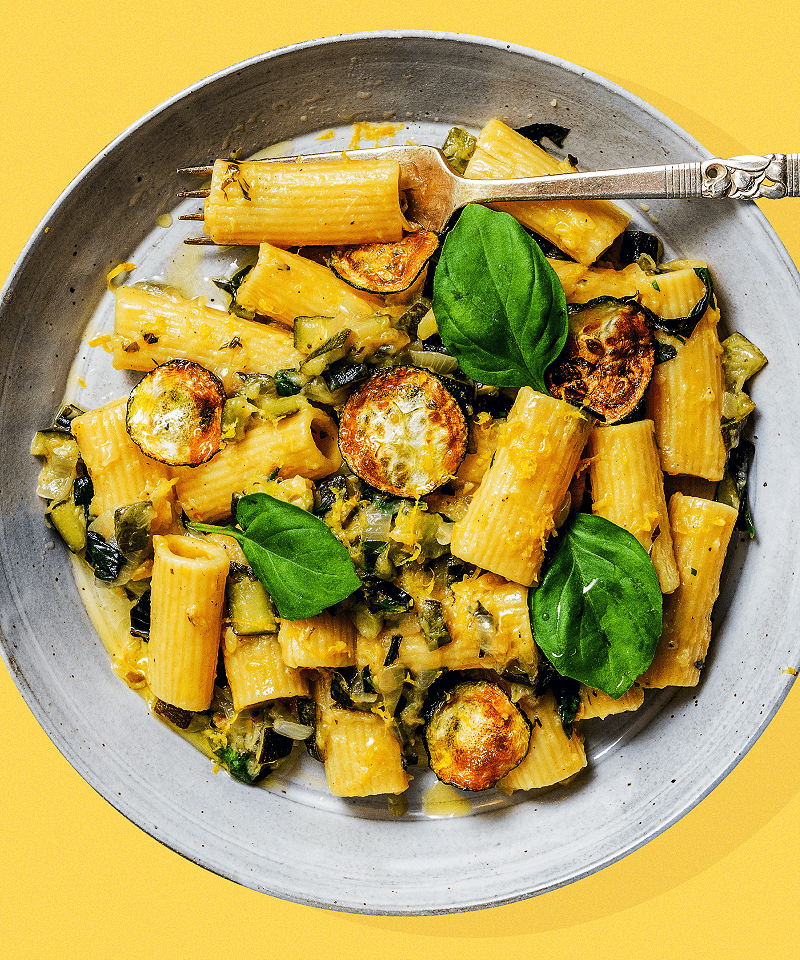
This lemon basil courgette pasta sauce (Exploring Vegan) is a nice unique sauce for your weeknight spaghetti dishes. It takes a while (40 minutes of simmering diced onion and courgette on medium heat) but the result is a ‘jammy sauce’ you’ll want to make again and again, due to the taste.
Choose organic courgettes (cross-pollinated versions can be unsafe).). Read more on food safety for people and pets (citrus, onion and garlic are unsafe near animal friends).
Just bin allium scraps (leeks, onion, garlic, chives, shallots), as acids could harm compost creatures (same for citrus/tomato/rhubarb).
What Brand of Pasta to Use?
The Yorkshire Pasta Company and Northern Pasta Co are both home-grown brands that use British wheat, and sell in paper (not plastic packaging). We think either of these are a great idea to support local farmers, and avoid plastic waste.
How to Cook Pasta (like the Italians)
Bring a pan of water to a rolling boil, and salt the water before adding pasta. Unless you have a medical condition. Not salting water in Italy when cooking, makes it ‘silly pasta!’ You will notice the difference in taste.
Serve with Plant-Based Parmesan
Everything tastes better with a little grated cheese on top. But Parmesan is not even vegetarian, as by law it contains a cheese made with calf rennet.
Instead, just grate your favourite vegan cheese on top. Or learn to make plant-based parmesan! It’s very simple, and once mastered, you’ll never go back!
Homemade Lemon, Basil & Courgette Pasta Sauce
This lemon basil courgette pasta sauce (Exploring Vegan) is a nice unique sauce for your weeknight spaghetti dishes. It takes a while (40 minutes of simmering diced onion and courgette on medium heat) but the result is a ‘jammy sauce’ you’ll want to make again and again, due to the taste.
Why Make This Recipe?
It’s not just cheap and filling, but super-tasty and very simple, from a food blogger who specialises in 5-ingredient recipes using real affordable ingredients.
Ingredients Needed?
Very simple affordable ones: lemons, fresh basil, pasta, onion and salt.
Courgettes (called ‘zucchini’ in North America) are quite popular in England, especially for Mediterranean recipes like ratatouille. Related to squash, the smallest courgettes tend to be most tasty (if not harvested, they grow into marrows).
Which Pasta to Use?
Look in stores for Yorkshire Pasta Company or The Northern Pasta Co (both are made with British wheat, and sold in plastic-free packaging).
Serve with Grated Vegan Cheese
Conventional Parmesan is not vegetarian (it contains a cheese that by law, contains calf rennet). Instead, just grate good vegan cheese over the top.
Before cooking, read up on food safety for people and pets (just bin allium scraps (leeks, onion, garlic, shallots, chives) as like tomato/citrus/rhubarb scraps, acids could harm compost creatures.
For tinned ingredients, pop lids inside cans (or pop ring-pulls back over holes) to avoid wildlife getting trapped).
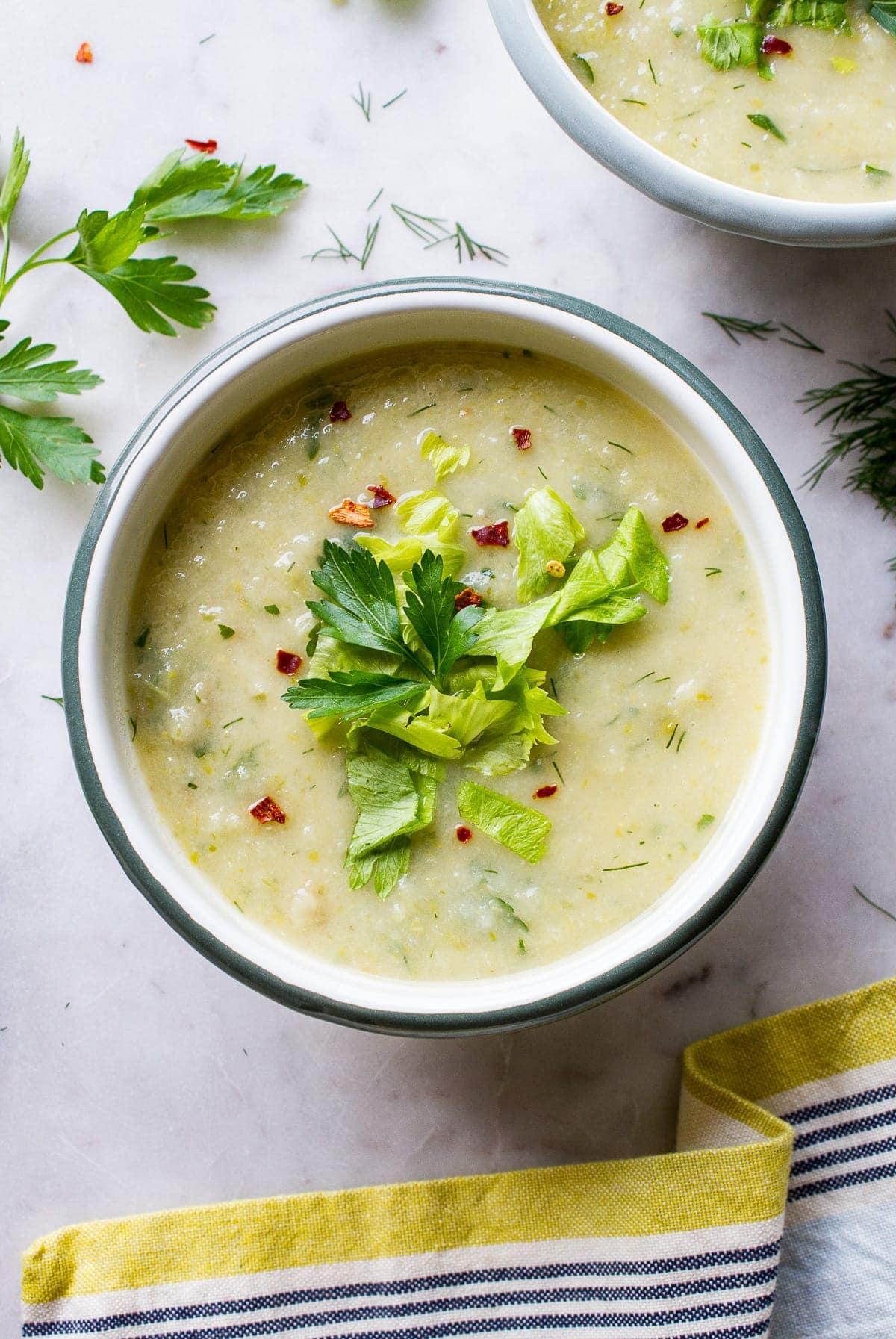
This celery soup recipe (The Simple Veganista) is a soup that’s sure to inspire. In England, celery grows well but is usually confined to serving with carrot sticks and hummus! Instead, discover the real beauty of this low-calorie salad vegetable, in a delicious warming soup.
This soup cooks and blends up fresh celery with potato, leeks, fresh dill and parsley. You don’t need cream, the potatoes do all the work for you. You can add red pepper flakes for a more spicy version. You’ll need good vegan stock and vegan butter (Flora has no palm oil) to make this recipe.
Before cooking, read up on food safety for people and pets (just bin allium scraps (leeks, onion, garlic, shallots, chives) as like tomato/citrus/rhubarb scraps, acids could harm compost creatures.
For tinned ingredients, pop lids inside cans (or pop ring-pulls back over holes) to avoid wildlife getting trapped).
Celery has been eaten for thousands of years. In Egyptian times, it was used for rheumatism and athletes. Most shops sell it in plastic wrap, so look in farm shops instead. Or if it comes in plastic wrap, just leave the plastic packaging at supermarket bag bins, and take home in your own produce bags.
If you make a lot of homemade soup, it’s worth investing in a good stick blender, to save the faff of washing blenders all the time. It’s UK law that whoever sells it to you, has to take your old appliance back for recycling.
You could also use Souper Cubes. Sold in Lakeland, these are like giant silicone ice-cube trays. Just pour in cooled leftovers and freeze. Then when you want soup, just pop a portion out and thaw overnight in the fridge, before cooking up to a safe temperature. That way, you can make bigger batches, even if you are only cooking for one or two, with no food waste.
Easy Vegan Cheese and Celery Sandwich
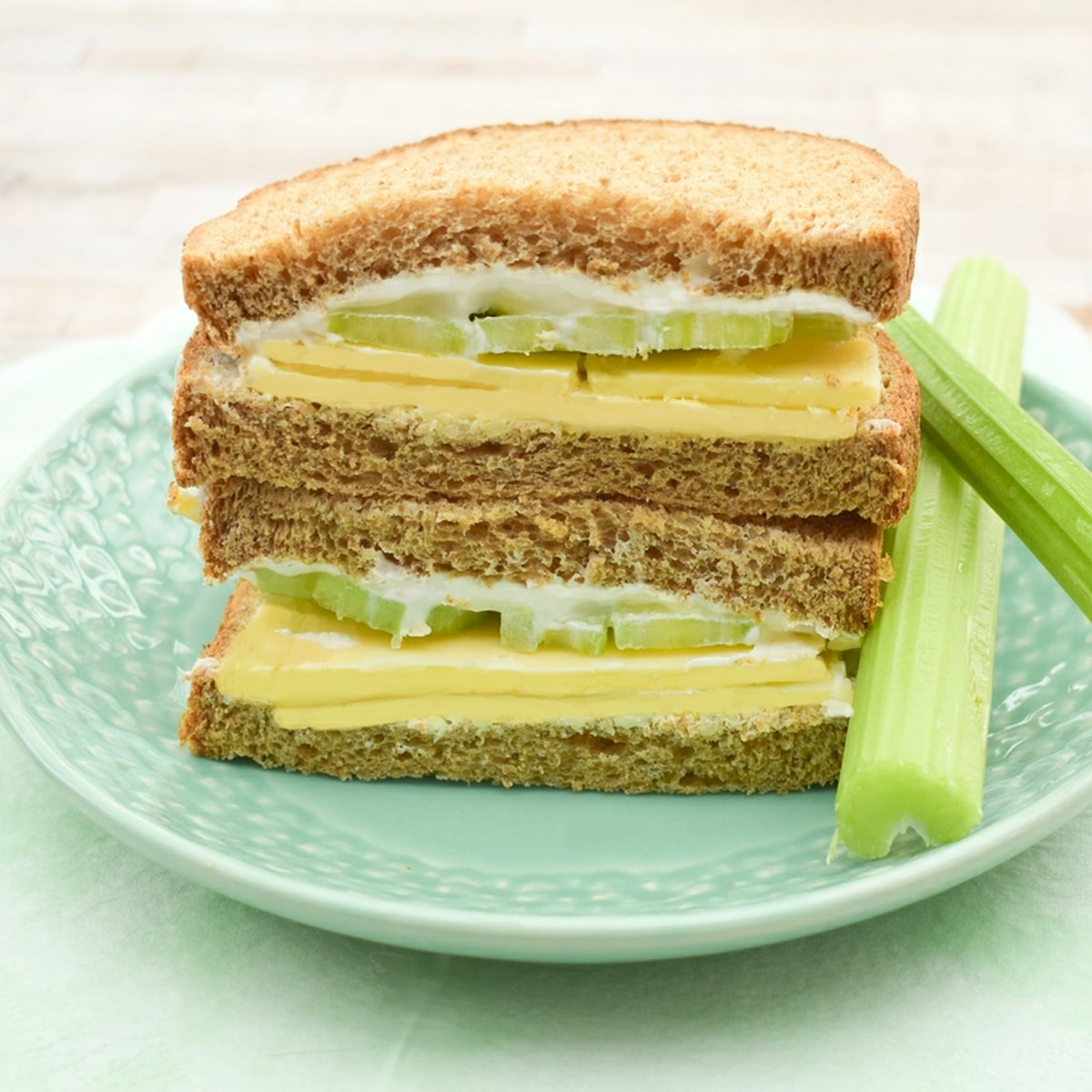
This vegan cheese and celery sandwich (The Vegan Lunchbox) is a copycat version of the M & S version (and this one won’t cost you six quid!) This post is a revelation, for insider knowledge. The blogger suggests always buying blocks of vegan cheese and grating yourself (as grated cheese has a coating, to make it tasty funny).
Also the reason why supermarkets cut sandwiches into triangles is to show more filling (and you eat less crust). Which means they are less filling – more needed, more profits etc. Good reasons to make your own!

This sweetcorn soup (Full of Plants) is a delicious supper, from one of nature’s sweetest vegetables. And just look at the colour! It’s made with fresh or frozen sweetcorn, vegan butter (Flora has no palm oil), garlic, onions and shallots, and thickened with coconut cream.
Sweetcorn is a popular ingredient in England, even only in the green giant tins! It’s naturally sweet, so lends itself well to sweet recipes too. Here are good recipes to use up unopened cans sitting in the cupboard (if opened, transfer leftovers to covered container for food safety.
Before cooking, read up on food safety for people and pets (many foods including leeks, onion, garlic, citrus and spices are unsafe near animal friends). Corn cobs are also choking hazards.
For tinned ingredients, pop lids inside cans (or pop ring-pulls back over holes) to avoid wildlife getting trapped).
It’s best to just bin allium scraps (leeks, onion, garlic, shallots, chives) as like tomato/citrus/rhubarb scraps, acids could harm compost creatures.
If you make a lot of homemade soup, it’s worth investing in a good stick blender, to save the faff of washing blenders all the time. It’s UK law that whoever sells it to you, has to take your old appliance back for recycling.
You could also use Souper Cubes. Sold in Lakeland, these are like giant silicone ice-cube trays. Just pour in cooled leftovers and freeze. Then when you want soup, just pop a portion out and thaw overnight in the fridge, before cooking up to a safe temperature. That way, you can make bigger batches, even if you are only cooking for one or two, with no food waste.
4-Ingredient Corn Fritters
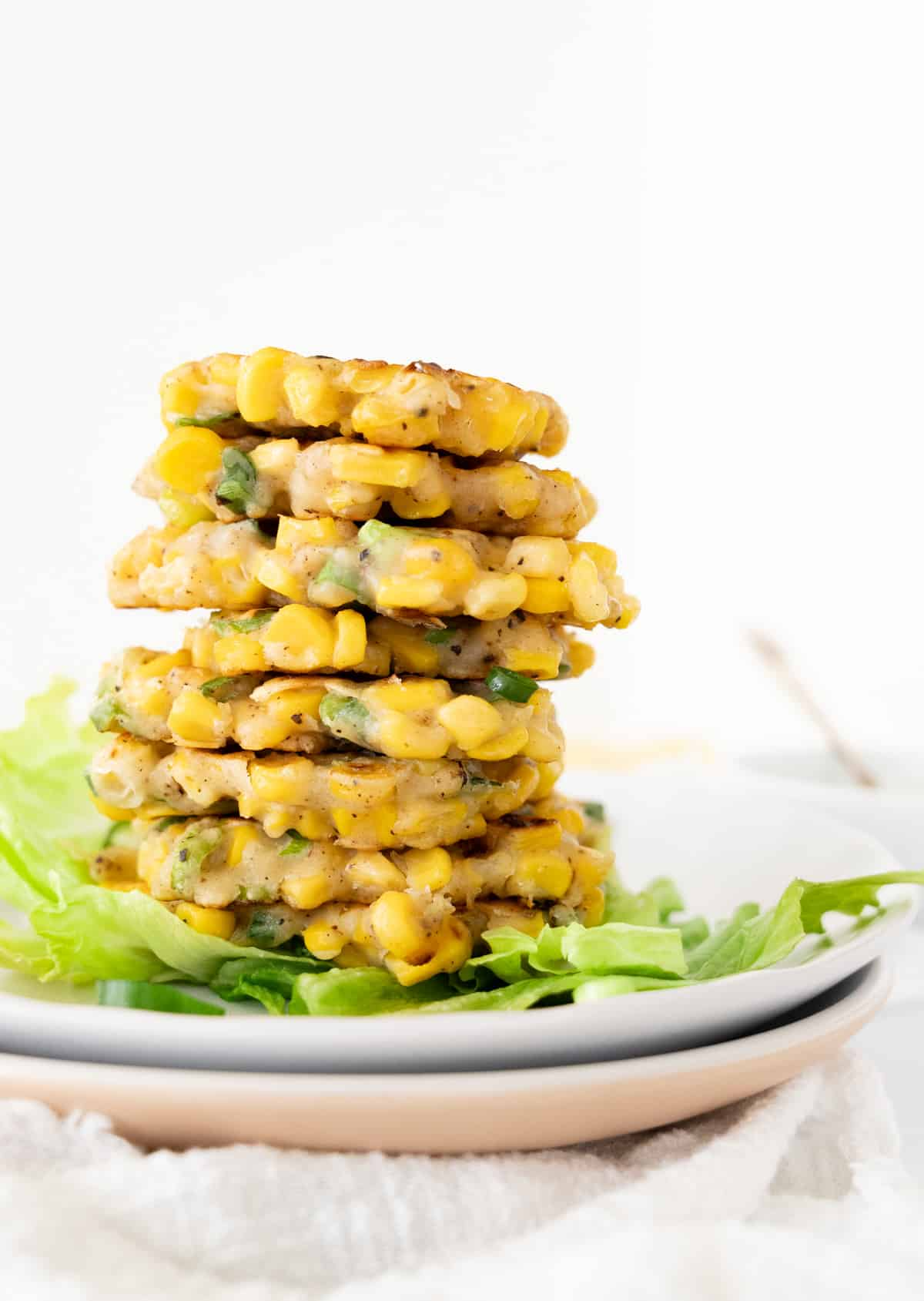
These corn fritters (Plant Based Folk) are made with corn, flour, plant milk and spring onions. And salt and pepper to season (not really ‘extra ingredients!)
A Recipe for Homemade Vegan Cornbread
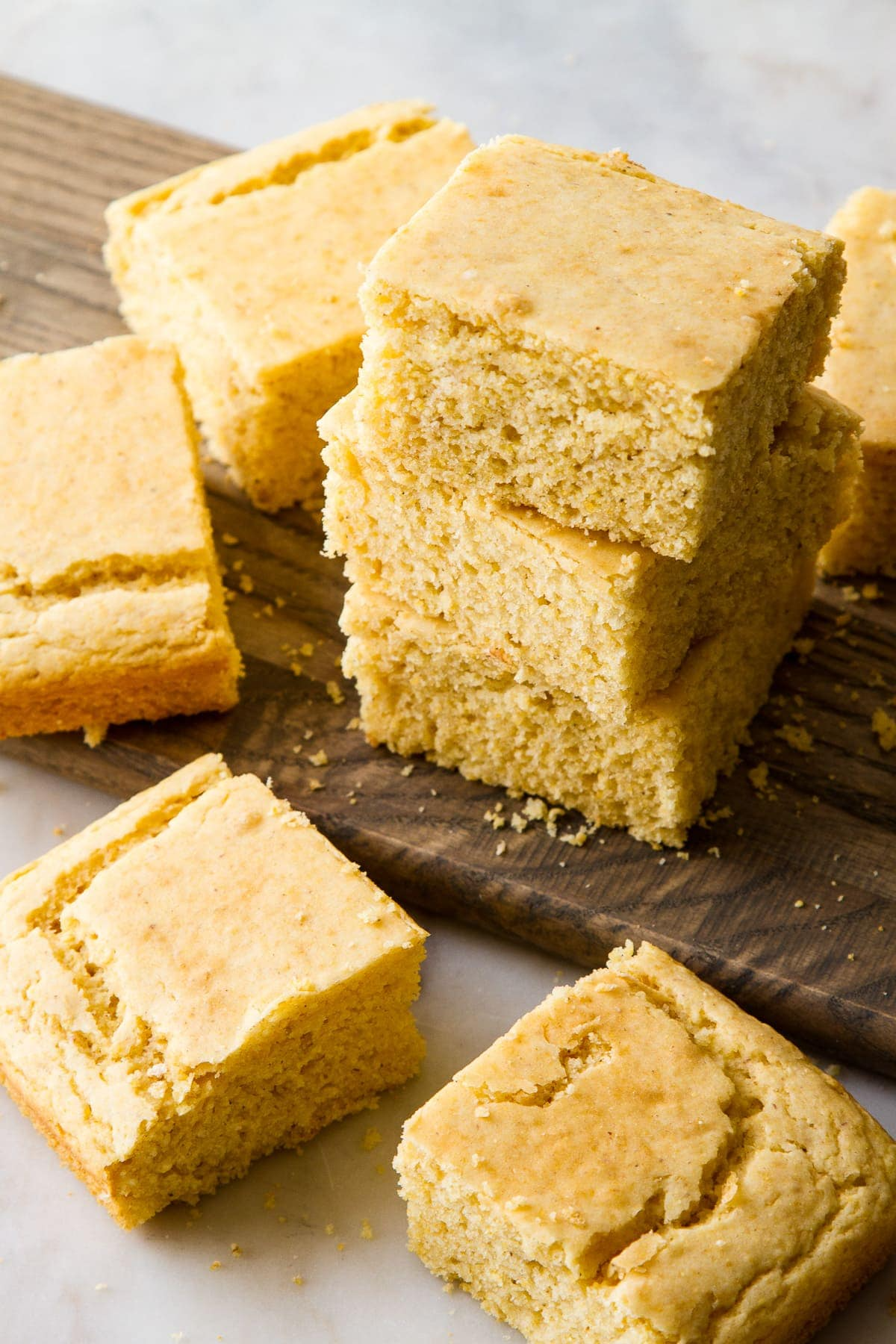
Cornbread (The Simple Veganista) is very popular in the USA, to serve with veggie stews and casseroles. Serve with vegan butter (Flora has no palm oil) or to accompany soups and stews. Cornbread kind of tastes like a homemade scone, but blended with the taste of sweetcorn.

Carrot cake is one of England’s favourite cakes. It’s actually a quick bread (no yeast). But as carrots are one of nature’s sweetest vegetables, it tastes like dessert! Other quick breads you will know are banana bread and gingerbread.
This vegan carrot cake recipe (The Veg Space) is from a trained chef, but is super-easy to make with affordable everyday ingredients, and tastes just as good (if not better) than cakes made with dairy and eggs. Keep this cake away from pets, due to nutmeg.
The fresh grated carrots are combined with walnuts for a tasty cake batter made with soya milk (to replace the egg) and dairy-free cream cheese and vegan butters with no palm oil for the icing. You can decorate the cake with chopped pistachios like the photos, or use more affordable walnuts or pecans if preferred.
Who Should Avoid Eating Carrots
Avoid unpasteurised juice for pregnancy/nursing, children and weak immunity. Read more on food safety for people and pets.
If using tinned ingredients, fully remove lids before recycling (or pop ring-pulls back over holes, to prevent curious wildlife getting trapped inside).
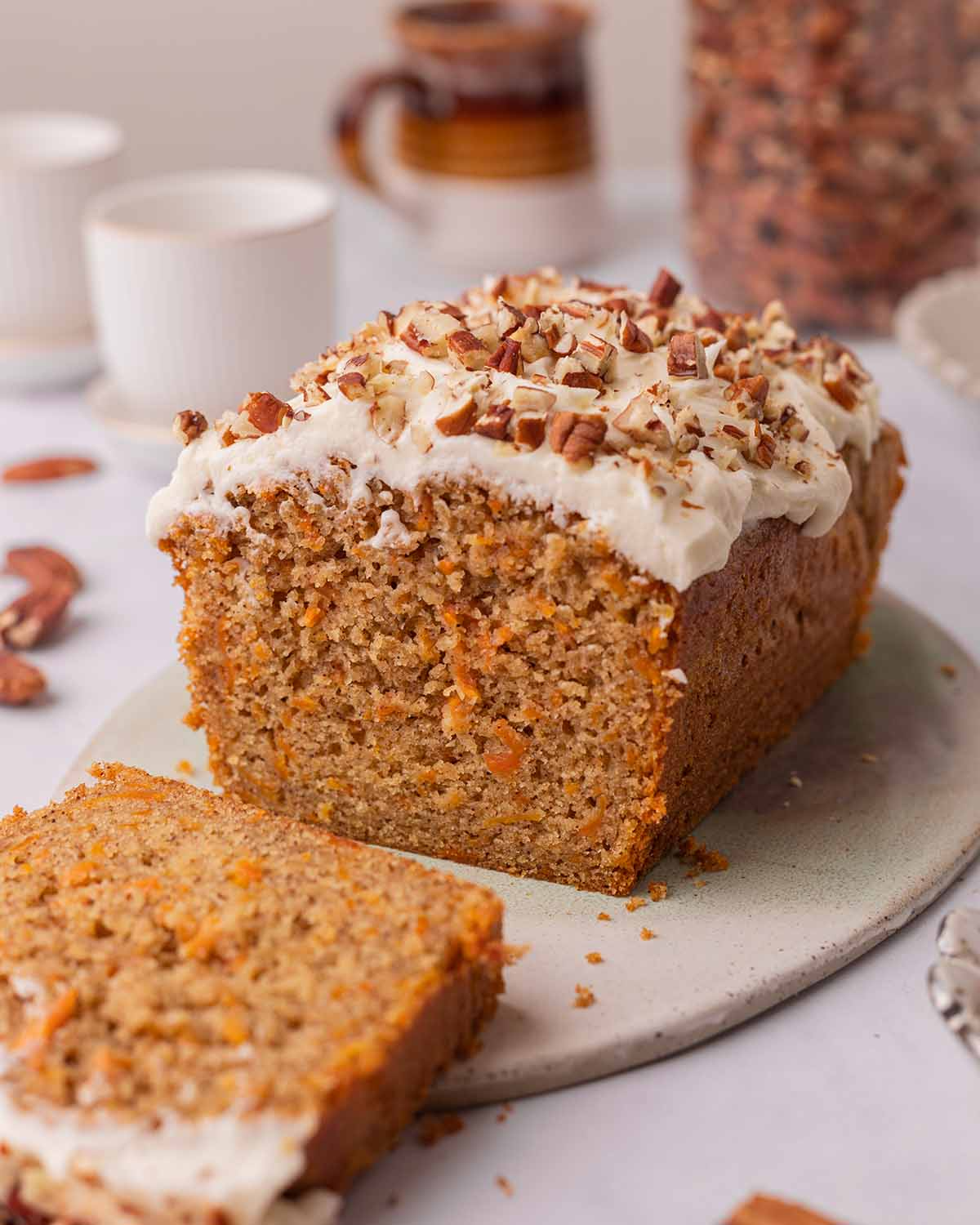
This homemade carrot cake (rainbow Nourishments) only needs a few ingredients.
Tips for Good Carrot Cake
- Never over-mix the batter, fold gently.
- Use an oven thermometer, for best results
- Measure baking soda carefully, to avoid bitter taste.
- A frosted cake will keep in a sealed container in the fridge for a few days. Bring slices to room temperature, before serving.
- Nice served with a drizzle of maple syrup, and a cup of tea!
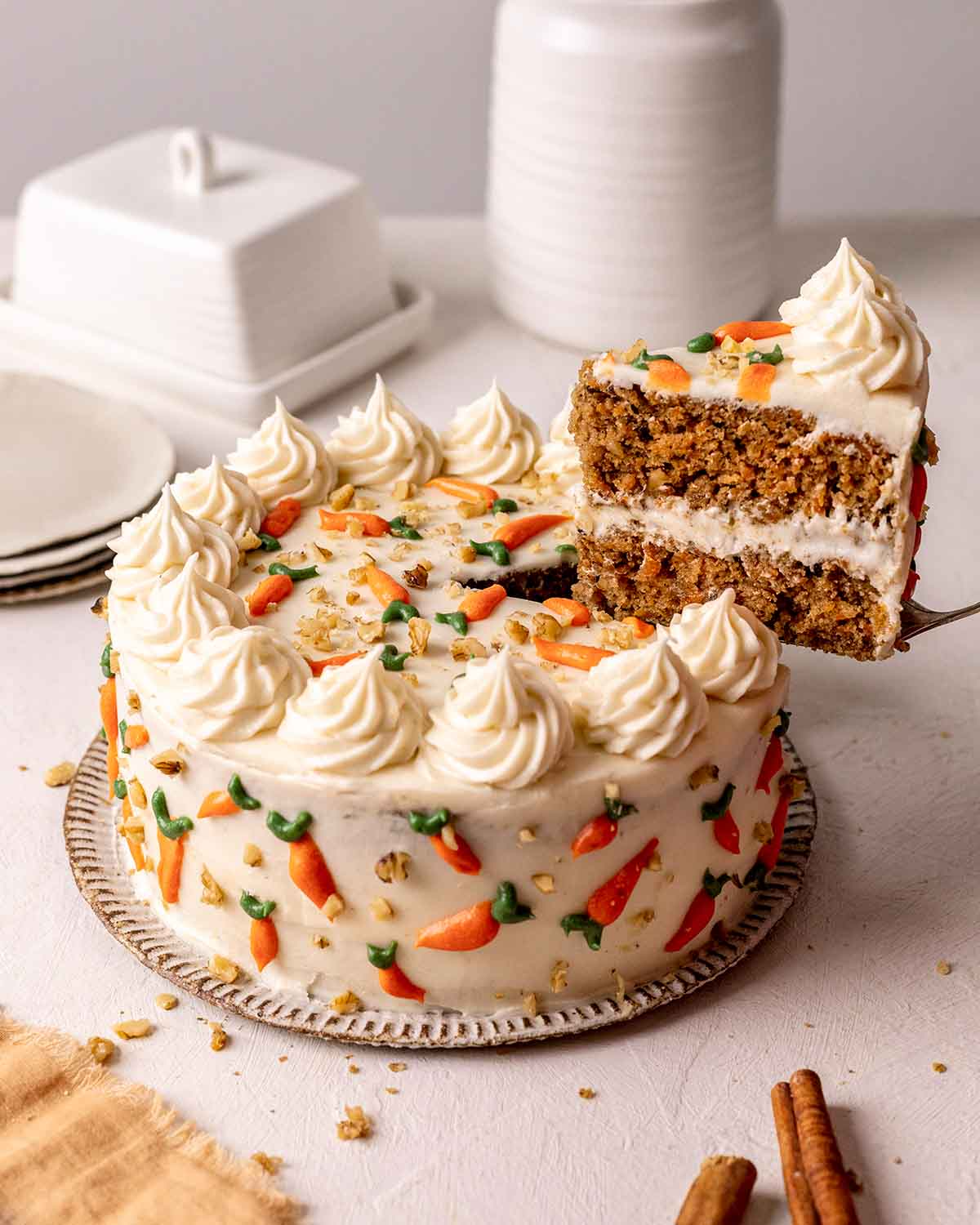
Rainbow Nourishments offers a nice vegan carrot cake recipe, alongside a carrot cake loaf.